


HighPorosity 0.3mm Porous Nickel Plate Alkaline H2 FuelCell HER OER
Bubbles and electrolyte transfer at the same time. The reaction interface stays stable.
Pure nickel resists alkali corrosion. The pore structure does not collapse after long operation.
High porosity raises catalyst loading area.
0.3 mm thin substrate cuts stack height and weight.
10 μm precise size matches coating process. Pore channels do not clog easily.
Gas diffusion layer delivers even mass transfer. Concentration polarization stays low.
Send Inquiry
Product Introduction
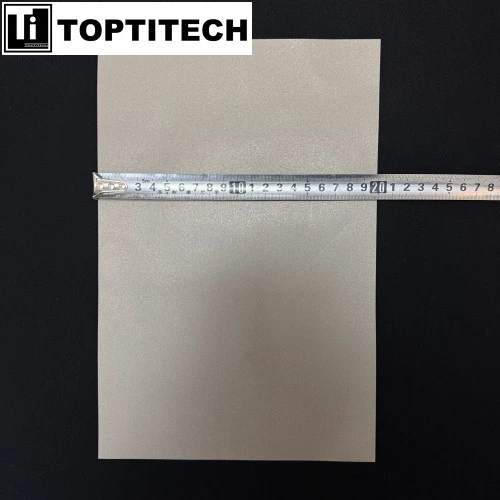
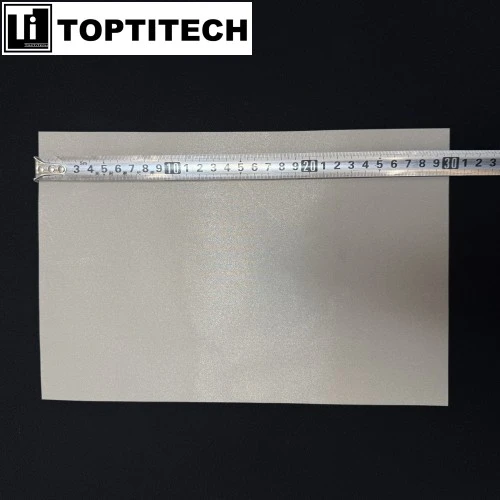
0.3 mm porous nickel plate is a sintered metal sheet. It works as electrode substrate for alkaline hydrogen energy systems.Pure nickel forms the whole plate. Electric current flows through one continuous metal phase. Pores run through the full thickness of the plate. Open holes stay on both sides of the sheet. Electrolyte can reach inner surfaces. Gas produced inside the plate can escape out. High porosity packs large internal surface area into a thin sheet. This surface holds catalyst. The 200 × 300 mm plate fits lab electrolyzer cells. It also works for small stack production. 0.3 mm thickness adds almost no extra height or weight to the stack. Pore size is controlled at 10 μm. It maintains stable performance across batches.
Alkaline water electrolysis uses this plate for both electrodes. Hydrogen forms at the cathode. Oxygen forms at the anode. Nickel works well for both sides. This metal resists corrosion from hot, concentrated potassium hydroxide. Its surface keeps activity during long time operation. The porous plate has a second function. It carries current to the whole electrode. It shares the load evenly. It stops local hot spots from building up.Bubbles formed inside pores fall off easier than bubbles on flat solid surfaces. Active reaction surfaces stay open. Cell voltage stays low. The same plate can act as gas diffusion layer in H2 fuel cells. It also fits metal-air batteries and nickel-metal hydride batteries. These applications need thin, conductive and porous base layers.
Products Description

Material: Pure nickel (Ni 6)
Size: 200 mm*300 mm
Thickness: 0.3 mm
Precision: 10 μm
Technique:Sintered
Applications: Alkaline water electrolysis, fuel cell electrode substrate
Product Features
Continuous nickel skeleton conducts electricity, with low ohmic loss.
The 3D open-cell nickel skeleton forms continuous conductive paths inside the plate. Electrons travel a short path from the catalyst layer to the current collector. The plate has low resistance. The electrolyzer shows low ohmic loss under high current density. This feature helps keep high energy efficiency.
Bubbles and electrolyte transfer at the same time. The reaction interface stays stable.
When bubbles exit through through-hole channels, electrolyte flows into the channels to refill. The electrode surface stays wet. Bubbles do not easily block active sites. Hydrogen evolution and oxygen evolution reactions run steadily. It prevents local dry-out or gas film coverage.


Pure nickel resists alkali corrosion. The pore structure does not collapse after long operation.
Ni 6 pure nickel has low corrosion rate in strong alkaline electrolytes such as KOH and NaOH. Pore size and pore shape stay stable under high temperature and high pressure. Resistance rises slowly. The electrode replacement cycle becomes longer.
High porosity raises catalyst loading area.
95% to 98% porosity creates much larger coating area for catalyst than solid nickel plates of the same size. Catalyst sticks onto pore walls. It increases the active material load per unit volume. More sites are available for hydrogen and oxygen evolution reactions. A thin electrode can reach high reaction speed. Pores mechanically lock the catalyst layer. The catalyst does not peel off easily under electrolyte flow and bubble disturbance.
0.3 mm thin substrate cuts stack height and weight.
0.3 mm thickness reduces stacking gap between electrodes and bipolar plates. Stack height and weight drop accordingly. It saves space for compact electrolyzers or mobile fuel cell systems. The electron conduction path becomes shorter. Ohmic loss gets further reduced.
10 μm precise size matches coating process. Pore channels do not clog easily.
10 μm precision matches catalyst slurry particle size and coating methods. Slurry enters pore channels and forms a thin, continuous catalyst layer. Pore channels remain open. Gas and electrolyte keep normal transport. Coating work does not reduce available reaction area.

Product Applications

Alkaline Water Electrolysis - Cathode (HER) and Anode (OER)
Alkaline electrolyzers use this 0.3 mm porous nickel plate at the cathode. It holds the hydrogen evolution catalyst. The nickel skeleton carries current. The distance to the current collector is short. Open pores release hydrogen bubbles fast. Active sites stay clear. The same plate works on the anode. Oxygen evolution runs at high potential. Pure nickel resists KOH corrosion. Pore structure holds up over long operation. The 0.3 mm thickness keeps the stack compact.
Industrial, Mobile, and Distributed Water Electrolysis Systems
Large alkaline electrolyzers use this plate for both electrodes. Porosity of 80%–95% helps bubbles detach fast. Stack voltage stays steady. It handles variable power from wind and solar. 0.3 mm thickness and low areal density suit compact builds. Mobile and distributed systems use it to cut stack weight and size.
Anion Exchange Membrane (AEM) Water Electrolysis
AEM electrolysis runs in alkaline or near-alkaline conditions. The plate works as a substrate for both cathode and anode. Open pores help electrolyte wetting and gas release. Catalyst coating stays stable during continuous operation.
Fuel Cell Gas Diffusion Layer and Catalyst Support
Alkaline and molten carbonate fuel cells use the plate as a gas diffusion layer. Pore size is uniform. Reaction gas reaches the catalyst layer evenly. Open pores remove product water. Concentration polarization stays low at high current density. The plate also works as a catalyst support. It carries Ni-based or non-precious metal catalysts. High porosity gives more surface for catalyst attachment. Active sites per unit volume increase.
Battery Positive Electrode Substrate for Ni-MH and Ni-Cd Cells
The plate serves as a positive electrode substrate in Ni-MH and Ni-Cd batteries. Its 3D open structure increases active material loading. Capacity and charge-discharge efficiency improve. 0.3 mm thickness suits high-power battery designs.
Laboratory HER/OER Testing and Electrochemical Catalyst ScreeningResearchers use the 0.3 mm plate as a working electrode in lab cells. They coat catalyst and compare HER/OER performance. Pore structure is consistent for repeatable tests. The plate also works for screening catalysts beyond HER and OER, including methanol oxidation. Electrolyte and reactants pass through the open pores and reach the catalyst across a wide area.
Common Problem
What are the main applications of 0.3 mm porous nickel plate?
It is used for alkaline water electrolysis cathodes and anodes, AEM electrolysis electrodes, fuel cell gas diffusion layers and catalyst supports, Ni-MH and Ni-Cd battery positive electrode substrates, and lab HER/OER test electrodes.
How does it resist KOH in an alkaline electrolyzer? What is the service life?
Ni 6 pure nickel corrodes slowly in KOH and NaOH. The pore structure stays stable under high temperature and pressure. It resists collapse. Service life depends on current density, temperature, and alkali concentration. This material suits long-duration alkaline service.
Will catalyst coating clog the pores? Can gas and liquid still flow through?
Pick pore size to match slurry particle size and viscosity. The catalyst sits on the pore walls in a thin layer. The pores stay open. Gas and electrolyte still pass through. Coating does not fully block the active reaction area.
Contact us

Tel: 0917-3873009

Phone: +86 18992731201

Email: zhangjixia@bjygti.com

Fax: 0917-3873009

Address: No. 195, Gaoxin Avenue, High-tech Development Zone, Baoji City, Shaanxi, China

Whatsapp: +86 18992731201
Hot Tags: highporosity 0.3mm porous nickel plate alkaline h2 fuelcell her oer, China, suppliers, manufacturers, customized, usage, pricelist, for sale, in stock, free sample, porous material, 10um Stainless Steel Filter, 304Stainless Steel Filter Element, Sintered stainless steel filter cartridge, sintered woven wire mesh filter, stainless steel filter discs, stainless steel wire mesh pleated filter cartridge
Send Inquiry
You Might Also Like
-
![M10 Female Thread SS316L Porous Filter Element]() M10 Female Thread SS316L Porous Filter Elementview more>
M10 Female Thread SS316L Porous Filter Elementview more> -
![0.45um Sintered Stainless Steel Powder Porous Ozone Diffuser]() 0.45um Sintered Stainless Steel Powder Porous Ozone Diffuserview more>
0.45um Sintered Stainless Steel Powder Porous Ozone Diffuserview more> -
![Sintered Stainless Steel Wire Mesh Filter Tube]() Sintered Stainless Steel Wire Mesh Filter Tubeview more>
Sintered Stainless Steel Wire Mesh Filter Tubeview more> -
![Sintered Wire Mesh Metal Porous Filter Sheet]() Sintered Wire Mesh Metal Porous Filter Sheetview more>
Sintered Wire Mesh Metal Porous Filter Sheetview more> -
![Porous Stainless Steel Filter Disc Gas Buffer]() Porous Stainless Steel Filter Disc Gas Bufferview more>
Porous Stainless Steel Filter Disc Gas Bufferview more> -
![Sintered Wire Mesh]() Sintered Wire Meshview more>
Sintered Wire Meshview more>


