
Products


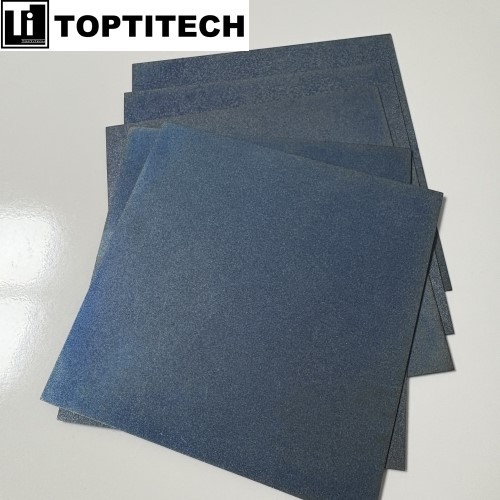
Ru-Ir Coated Porous Titanium Plate For PEM Electrolyzer
Coating Composition: Ru-Ir
Size: 100*100*0.5 mm
Porosity: 30–40%
Send Inquiry
Product Introduction
Ru-Ir coated porous titanium plate is a porous titanium plate that has been coated with a combination of Ruthenium (Ru) and Iridium (Ir). This coating enhances the properties of the titanium plate, providing specific characteristics such as improved conductivity, corrosion resistance, catalytic activity, or other desired properties.
The porous structure provides a large specific surface area, which is conducive to mass transfer and reaction. Ru and Ir are precious metal elements with excellent catalytic activity, electroconductivity, and corrosion resistance in acidic environments.
Technical Specifications (Customizable upon request)
Base Material: porous titanium plate
Coating Composition: Ru-Ir
Size: 100*100*0.5 mm
Porosity: 30–40%
Products Features
High Catalytic Activity
The Ru-Ir coating can significantly improve the catalytic efficiency of electrochemical reactions, reduce reaction overpotential, and increase the efficiency of electrolysis or power generation.


Good Corrosion Resistance
The Ru-Ir coating can protect the titanium substrate from corrosion in harsh electrochemical environments, prolonging the service life of the electrode.
Excellent Mass Transfer Performance
The porous structure of the titanium substrate and the coating ensures good gas and liquid permeability, facilitating the transport of reactants and products and improving the overall performance of the device.
What are the advantages of ruthenium-iridium coated porous titanium plate compared to ruthenium-iridium coated titanium plate?
Enhanced Mass Transfer Efficiency
Traditional Ru - Ir coated titanium plates have served the industry well, but they often face limitations in mass transfer. In contrast, our porous titanium plate is a breakthrough. The porous structure creates a vast network of channels, increasing the surface area available for reactant and product exchange. This means that in applications such as PEM electrolyzers, gases like oxygen and hydrogen can be transported to and from the reaction sites much faster. For example, in a PEM electrolyzer, the porous design allows water molecules to reach the catalyst layer more efficiently, resulting in a significant boost in the rate of oxygen evolution reaction.
Superior Catalytic Activity
The Ru - Ir coating on both traditional and our porous plates is known for its catalytic prowess. However, the porous nature of our plate takes this a step further. The increased surface area provided by the pores allows for a more uniform distribution of the Ru - Ir catalyst. This means that more active sites are exposed to the reactants, maximizing the catalytic effect. In fuel cell applications, this results in a higher power density. This is a remarkable improvement, translating into more powerful and efficient fuel cell systems.
applications
1. Proton Exchange Membrane (PEM) Electrolyzers
In PEM electrolyzers, our Ru - Ir coated porous titanium plate serves as a vital component. It functions as the anode diffusion layer, facilitating the transport of water to the catalyst layer for electrolysis. The large surface area provided by the porous structure allows for efficient oxidation of water molecules, generating oxygen gas, protons, and electrons. The Ru - Ir coating's high catalytic activity reduces the overpotential required for the reaction, increasing the overall energy efficiency of the electrolyzer.
2. Fuel Cells
For fuel cells, this product plays a crucial role as a gas diffusion layer. It enables the uniform distribution of fuel gases (such as hydrogen) and oxidants (such as oxygen) to the catalyst layers. The porous structure ensures that the reactant gases can reach the catalyst sites rapidly, while also allowing the efficient removal of reaction by - products, such as water vapor. The Ru - Ir coating enhances the electrochemical reactions at the catalyst layer, improving the power output and performance of the fuel cell.
3. Chlor - Alkali Industry
In the chlor - alkali process, where brine is electrolyzed to produce chlorine, sodium hydroxide, and hydrogen, our Ru - Ir coated porous titanium plate can be used as an anode. The corrosion - resistant nature of the plate, combined with the catalytic activity of the Ru - Ir coating, allows for efficient and stable operation in the highly corrosive brine environment. This leads to increased productivity and reduced maintenance costs.
Contact us

Tel: 0917-3873009

Phone: +86 18992731201

Email: zhangjixia@bjygti.com

Fax: 0917-3873009

Address: No. 195, Gaoxin Avenue, High-tech Development Zone, Baoji City, Shaanxi, China

Whatsapp: +86 18992731201
Hot Tags: ru-ir coated porous titanium plate for pem electrolyzer, China, suppliers, manufacturers, customized, usage, pricelist, for sale, in stock, free sample, porous material, High purity titanium coil, titanium filter cartridge brand, Microporous sintered titanium liquid filter discs, Perforated sintered titanium liquid filter plates, Filter Mesh Stainless Steel Supply 10 Micrometer Sintered Liquid Filter Metal, h filter cartridge
Send Inquiry
You Might Also Like
-
![40um SS316L Sintered Metal Wire Mesh Filter Cartridge]() 40um SS316L Sintered Metal Wire Mesh Filter Cartridgeview more>
40um SS316L Sintered Metal Wire Mesh Filter Cartridgeview more> -
![225mm Spherical Powder Sintered Bronze Filter Disks With Edge]() 225mm Spherical Powder Sintered Bronze Filter Disks With ...view more>
225mm Spherical Powder Sintered Bronze Filter Disks With ...view more> -
![SS316L Seamless Sintered Candles For Catalyst Filter]() SS316L Seamless Sintered Candles For Catalyst Filterview more>
SS316L Seamless Sintered Candles For Catalyst Filterview more> -
![Sintered Titanium Powder Porous Tube Filters For Liquid Filtration]() Sintered Titanium Powder Porous Tube Filters For Liquid F...view more>
Sintered Titanium Powder Porous Tube Filters For Liquid F...view more> -
![Sintered Nickel Fiber Felt For PEM Electrolyzer]() Sintered Nickel Fiber Felt For PEM Electrolyzerview more>
Sintered Nickel Fiber Felt For PEM Electrolyzerview more> -
![Sintered Metal Filter Titanium For Filtration]() Sintered Metal Filter Titanium For Filtrationview more>
Sintered Metal Filter Titanium For Filtrationview more>