

Products


5um Sintered Copper Powder Getter For Impurity Gas Absorption
Thermally Stable Performance
Room-Temperature Activation
Mechanical Robustness
Manufacturing Compatibility
Send Inquiry
Product Introduction
TOPTITECH's 5um Sintered Copper Powder Getter for Impurity Gas Absorption delivers superior
gas adsorption performance through precision-engineered porous copper matrix structures.
Manufactured via die-compaction and vacuum sintering processes, this getter forms a three-dimensional interconnected pore network with optimized tortuosity and surface area-to-volume ratio. The copper powder metallurgy process ensures consistent pore size distribution and mechanical stability while maintaining high thermal conductivity for efficient heat dissipation during exothermic adsorption reactions. Its 5mm diameter and 2mm thickness configuration provides optimal geometric compatibility for integration into vacuum electronic devices, hermetic packaging, and gas purification systems where active gas removal is critical.
This getter exhibits exceptional chemisorption capacity for reactive gases, including H₂, O₂, CO, CO₂, and water vapor, particularly effective in low-pressure environments. The sintered copper microstructure achieves stable hydrogen absorption through dissociative adsorption mechanisms without requiring activation heating. Surface diffusion-enhanced adsorption kinetics allow rapid impurity gas trapping at room temperature operation. When installed in vacuum systems, the getter actively maintains ultra-high vacuum conditions by continuously scavenging outgassing products from internal components and materials. Its copper-based composition ensures compatibility with standard vacuum brazing and welding processes while resisting performance degradation from typical manufacturing thermal cycles.
Products Specifications
| Material |
copper |
|||
|
Filtration grade/Pore size |
5um |
|||
|
Diameter |
5mm |
|||
|
Thickness |
2mm | |||
|
Technique |
Molding and vacuum sintering process |
|||
Products Features

High-Efficiency Gas Adsorption
The precisely controlled porous copper microstructure enables rapid physisorption and chemisorption of reactive gases (H₂, O₂, CO, CO₂, H₂O) with optimized surface diffusion kinetics, ensuring continuous gas scavenging in ultra-high vacuum environments.
Thermally Stable Performance
Vacuum-sintered copper matrix maintains structural integrity and adsorption capacity across thermal cycles, preventing performance degradation from outgassing or thermal stress in hermetic systems.
Room-Temperature Activation
Unlike alloy-based getters requiring high-temperature activation, the copper powder matrix achieves immediate dissociative hydrogen adsorption at ambient conditions, reducing energy consumption in vacuum applications.

Mechanical Robustness
Die-compaction and sintering processes yield a rigid, crack-resistant structure with uniform pore distribution, preventing particulate shedding during handling or vibration in operational environments.
Manufacturing Compatibility
Pure copper composition allows direct brazing or welding into vacuum assemblies without contamination risks, while the standardized 5mm diameter and 2mm thickness facilitate seamless integration in microwave tubes and electronic packaging.
applications
High-Frequency Vacuum Electronics
Copper getters embedded in klystron and magnetron cavities maintain ultra-high vacuum (<10⁻⁶ Torr) by chemisorbing hydrogen released from hot cathodes during RF operation, preventing electron scattering.
Cryogenic Semiconductor Manufacturing
Mounted in molecular beam epitaxy (MBE) chambers to capture water vapor and hydrocarbons that desorb from chamber walls during thermal cycling between 300K-800K.
Nuclear Reactor Coolant Monitoring
Porous copper cartridges in pressurized heavy water reactors (PHWR) selectively trap tritiated hydrogen isotopes (HT, T₂) from moderator gas streams through isotopic exchange reactions.
Aerospace Composite Curing
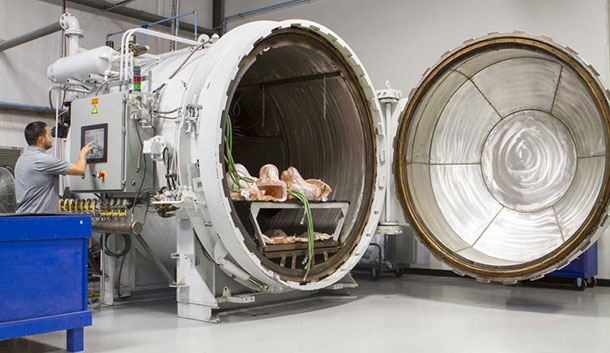
Integrated into autoclave vacuum bagging systems to adsorb oxygen and volatiles released during carbon fiber prepreg curing at 177°C, minimizing void formation.
Lithium-Ion Battery Dry Rooms
Copper getter panels in electrode drying chambers (<1% RH) irreversibly bind residual moisture that escapes conventional desiccant systems during electrode calendaring.
Key Differences: Sintered Copper vs. Titanium Powder Getters
- Gas Selectivity
Copper: Primarily targets H₂, H₂O, and CO through surface chemisorption, with negligible nitrogen interaction.
Titanium: Reacts exothermically with N₂, O₂, and hydrocarbons via bulk diffusion, forming stable nitrides/oxides.
- Activation Mechanism
Copper: Room-temperature operation, relying on physisorption-activated sites.
Titanium: Requires 400-600°C thermal activation to fracture surface oxide layers.

Sintered Copper Powder Getters

Sintered Titanium Powder Getters
- Microstructural Stability
Copper: Maintains open porosity (65-72%) during hydrogen absorption with <3% volumetric swelling.
Titanium: Undergoes crystalline phase transition (α→β) at high temps, altering pore morphology.
- Industrial Deployment
Copper: Preferred in RF vacuum electronics and hermetic refrigeration due to non-pyrophoric handling.
Titanium: Dominates ultra-high vacuum (UHV) systems like particle accelerators where nitrogen scrubbing is critical.
- Failure Modes
Copper: Capacity degrades through surface carbonate formation in CO₂-rich environments.
Titanium: Progressive passivation occurs as reaction fronts penetrate deeper into particles.
This contrast highlights how material choice depends on gas composition, temperature constraints, and system maintenance protocols – copper excels in ambient reactive gas management, while titanium suits high-energy vacuum applications.
Contact us

Tel: 0917-3873009

Phone: +86 18992731201

Email: zhangjixia@bjygti.com

Fax: 0917-3873009

Address: No. 195, Gaoxin Avenue, High-tech Development Zone, Baoji City, Shaanxi, China

Whatsapp: +86 18992731201
Hot Tags: 5um sintered copper powder getter for impurity gas absorption, China, suppliers, manufacturers, customized, usage, pricelist, for sale, in stock, free sample, porous material, high quality molybdenum crucible, Tungsten Coil (W-1, W-2), tungsten crucible electrodes, W1 99.95% Pure Tungsten Filament Wire, Super Smooth Tungsten Crucible, nickel 201 round bar
Send Inquiry
You Might Also Like
-
![2*0.5mm Nitinol Memory Alloy Wire For Bracelet And Necklace]() 2*0.5mm Nitinol Memory Alloy Wire For Bracelet And Necklaceview more>
2*0.5mm Nitinol Memory Alloy Wire For Bracelet And Necklaceview more> -
![1.0mm Porous Nickel Foam As Electrode in Fuel Cell]() 1.0mm Porous Nickel Foam As Electrode in Fuel Cellview more>
1.0mm Porous Nickel Foam As Electrode in Fuel Cellview more> -
![Stainless Steel Fiber Felt 316L High Porosity]() Stainless Steel Fiber Felt 316L High Porosityview more>
Stainless Steel Fiber Felt 316L High Porosityview more> -
![Pure NI200 Nickel Foil]() Pure NI200 Nickel Foilview more>
Pure NI200 Nickel Foilview more> -
![5-Layer Sintered SS316L Wire Mesh for Oil Filtration]() 5-Layer Sintered SS316L Wire Mesh for Oil Filtrationview more>
5-Layer Sintered SS316L Wire Mesh for Oil Filtrationview more> -
![Ni200 Nickel Wire]() Ni200 Nickel Wireview more>
Ni200 Nickel Wireview more>


