

Products
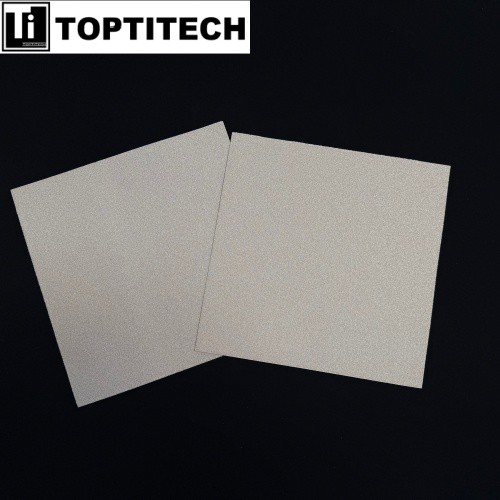


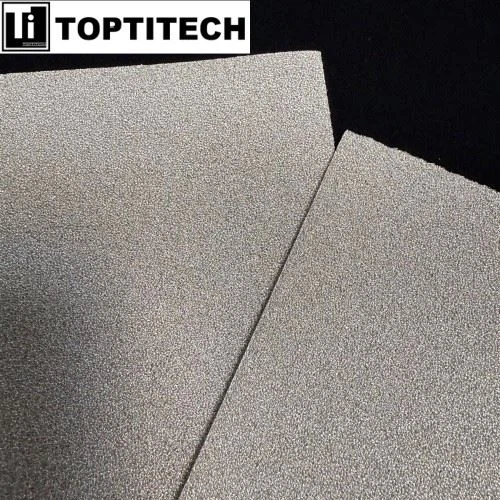

75PPI 95% Porosity Nickel Foam For NiMH Battery Negative Electrode
2. Electrochemical Performance – High-Rate Capability and Cycle Stability
3. Mechanical Integrity – Processability for Production Lines
4. Manufacturing Compatibility – Roll-to-Roll Processing Ready
Send Inquiry
Product Introduction
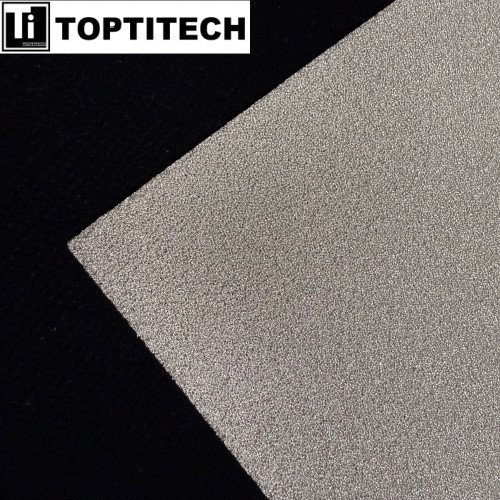
TOPTITECH's 75PPI 95% Porosity Nickel Foam for NiMH Battery Negative Electrode is designed specifically for the negative electrode substrate in NiMH battery manufacturing. The 75PPI 95% porosity nickel foam serves as a high-performance three-dimensional current collector for hydrogen storage alloy loading. The 75 pores per inch (PPI) specification strikes a deliberate balance between active material retention and electrolyte accessibility-finer than low-PPI foams that shed paste, coarser than high-PPI variants that restrict ion diffusion. With porosity exceeding 95% and open-cell ratio approaching full interconnection, this nickel foam maximizes specific surface area for hydrogen absorption/desorption kinetics during charge-discharge cycling while maintaining mechanical integrity for continuous paste-coating production lines. Bulk density at 0.45 g/cm³ ensures a lightweight electrode assembly without compromising structural support for the negative electrode active material.

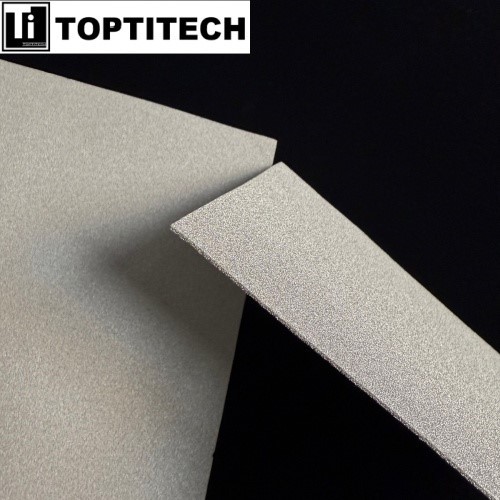
For alkaline rechargeable battery systems operating in 6M KOH electrolyte, TOPTITECH's 75PPI 95% porosity nickel foam delivers reliable corrosion resistance and low contact resistance essential for long-term cycle stability. The three-dimensional conductive scaffold provides uniform current distribution across the electrode cross-section, reducing ohmic polarization and enabling high-rate discharge capability demanded by HEV and power tool applications. Unlike punched metal or expanded mesh collectors that limit active material loading to two-dimensional surfaces, this foam's fully interconnected porous network allows paste penetration throughout the entire thickness, achieving higher volumetric energy density.
Product Specifications

Material: Nickel (Ni)
Purity: 99.5%
Thickness: 1.6 mm
Size: 300x300mm
Pores Per Inch (PPI): 75PPI
Porosity: 95.0%
Bulk Density: 0.45 g/cm3
Pores/cm2: 20.00000
Product Features
01
Structural Advantages – Three-Dimensional Conductive Scaffold
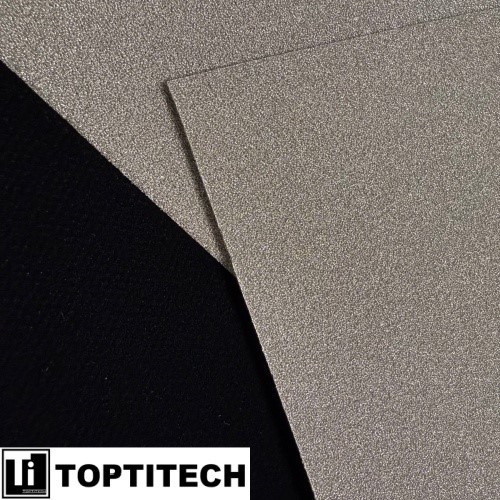
The 75PPI pore size distribution sits at the optimal sweet spot for hydrogen storage alloy retention: finer pores than 50PPI variants prevent paste shedding during electrode coating, while coarser than 110PPI alternatives ensure unobstructed KOH electrolyte penetration into the active material bulk. Porosity exceeding 95% with full open-cell interconnection maximizes specific surface area for hydrogen absorption/desorption kinetics during charge/discharge cycling. The three-dimensional metallic backbone provides uniform current distribution across the entire electrode cross-section, reducing ohmic polarization compared to two-dimensional punched metal or expanded mesh collectors.
02
Electrochemical Performance – High-Rate Capability and Cycle Stability
Research demonstrates that pore-size reduction coupled with surface area enlargement directly improves Ni/MH battery high-rate discharge performance. The 95% porosity nickel foam allows the 6M KOH alkaline electrolyte to flow freely into the electrode interior, ensuring efficient ion transport and abundant active sites for electrochemical reactions. Nickel's inherent acid/alkali corrosion resistance, combined with ≥99% purity specification, delivers reliable long-term cycle stability in alkaline rechargeable battery systems operating at elevated temperatures.

03
Mechanical Integrity – Processability for Production Lines
The material meets industry-standard mechanical requirements: longitudinal tensile strength ≥1.25 N/mm² and elongation ≥5% lengthwise, transverse elongation ≥12% widthwise. These parameters ensure the foam withstands stresses from roll-to-roll paste coating, calendering compression, and jelly-roll winding without fracture or delamination. The lightweight bulk density of 0.45 g/cm³ enables electrode assembly with minimal mechanical clamping while maintaining structural integrity for continuous high-speed production lines.
04
Manufacturing Compatibility – Roll-to-Roll Processing Ready
Maximum width of 930mm supports standard battery electrode slitting and sheeting operations. The foam's compressibility and resiliency provide adaptive contact surface properties that accommodate variations in electrode shape and position during automated stacking. Surface treatment by hydrogen-furnace annealing removes nickel oxide (NiO) oxides to ensure electrochemical activity, with purity verification conducted via spectrometer and tensile testing machine validation.

Applications of 75PPI 95% Porosity Nickel Foam in NiMH Battery Negative Electrode Manufacturing
Paste Filling Substrate for Hydrogen Storage Alloy Slurry
The 75PPI 95% porosity nickel foam acts as the direct paste-coating substrate in continuous electrode production lines. Manufacturers apply negative electrode slurry-composed of AB₅-type (lanthanum-nickel based) or AB₂-type (titanium-zirconium based) hydrogen storage alloys, conductive carbon black, SBR binder, and thickener-onto the foam surface via comma coater or reverse roll coater. The 75PPI pore network captures the slurry into fully interconnected cavities through vacuum-assisted impregnation, achieving uniform active material distribution across the 1.0–1.5 mm foam thickness without clogging. Porosity at 95% permits slurry penetration depth exceeding 90% of the foam's cross-sectional thickness, ensuring both sides of the electrode contribute to capacity.
Calendered Electrode Fabrication for Jelly-Roll Assembly
After paste filling, the composite structure undergoes tunnel oven drying at 80–120°C to remove solvent (water or NMP), followed by calendering between precision rollers set at 0.5–0.8 mm gap. The 75PPI nickel foam's 0.45 g/cm³ bulk density compresses predictably under 10–30 tons of linear force, reducing electrode thickness by 30–40% while locking the hydrogen storage alloy inside the nickel scaffold. Calendered electrodes are then slit into 43–60 mm widths (typical for sub-C or D cells) and spiral-wound with polypropylene separator and nickel hydroxide positive electrode to form cylindrical NiMH battery jelly-rolls.
Tab Welding Point for Current Collection
The negative electrode foam provides a direct welding surface for nickel tabs or terminal leads. Pulsed spot welding (30–50 J energy, 0.5–1.0 ms pulse width) attaches 0.1–0.15 mm pure nickel tab to the foam edge without burn-through, leveraging the foam's ≥95% open porosity to dissipate localized heat. The welded tab connects to the battery can bottom or negative terminal cap, establishing the current pathway from the hydrogen storage alloy through the three-dimensional nickel scaffold to the external circuit.
Alkaline Electrolyte Wetting Medium During Cell Filling
In battery assembly, the 75PPI 95% porosity nickel foam serves as the primary wicking structure for 6M KOH + 0.5–1.0 M LiOH electrolyte injection. Under vacuum filling cycles (typically −0.09 MPa absolute pressure, two to three pulses), the interconnected pore channels draw electrolyte into the negative electrode by capillary action within 10–15 seconds, displacing air trapped inside the porous alloy layer. The foam's 95% porosity provides electrolyte reservoir capacity that maintains ionic conductivity across the separator during high-rate discharge up to 5C.
Manufacturing Process Flow of Nickel Foam

1. Polymer Foam Substrate Selection
Manufacturing begins with open-cell polyurethane foam as the sacrificial template. Polyurethane foam offers a fully interconnected three-dimensional network structure with uniform pore distribution. PPI (pores per inch) specification-typically ranging 75PPI to 130PPI for battery-grade products-determines final foam aperture and surface area. The polymer foam serves as the architectural mold for the metallic skeleton to be built around.
2. Conductive Treatment (Conductivization)
Polyurethane foam is electrically insulating, requiring conductive treatment prior to metal deposition. Three standard methods apply: electroless nickel plating, conductive adhesive coating, or vacuum deposition. Electroless nickel plating baths operate at pH 9.0–9.5 and temperature 45°C, using 30 g/L NiSO₄ as nickel source and 30 g/L NaH₂PO₂ as reducing agent, achieving deposition rates of approximately 40 mg/(cm³·h). The conductive layer ensures uniform current distribution during subsequent electrodeposition-resistivity directly impacts plating uniformity, with higher resistivity slowing current ramp rates.
3. Electrodeposition (Nickel Plating)
The conductivized foam becomes the cathode submerged in a nickel-rich electrolyte bath, typically sulfamate or sulfate-based nickel plating solutions. Current density and plating time control final nickel layer thickness. Sulfamate baths maintain conductivity above 200 mS/cm at 20°C. Two-stage plating-preplating zone depositing 0.5–19 g/m² nickel, followed by main plating zone with electrolyte flow reversal at frequencies between 1 mHz and 0.1 Hz-improves coating uniformity across the three-dimensional substrate. Advanced processes employ pulse electrodeposition with parameters of 2.0 A/dm² current density, 1000 Hz frequency, and 1:5 duty cycle for fine-grained, uniform deposits.
4. Heat Treatment (Polymer Removal and Sintering)
The plated composite undergoes controlled thermal processing in a continuous belt furnace. Temperatures reach 600°C–1000°C in reducing atmospheres such as ammonia decomposition gas (N₂:H₂ ratio 1:3) or pure hydrogen. This single-step sintering accomplishes two objectives simultaneously: pyrolysis of the polyurethane template, and metallurgical bonding of deposited nickel particles into a self-supporting structure. Reducing atmosphere treatment consumes 0.4–1.2 L decomposition gas per gram of nickel processed. Rapid heating to ≥600°C creates burst openings in the nickel layer, allowing polymer decomposition gases to escape while minimizing residual carbon contamination. Final annealing in reducing atmosphere (800–1000°C, 30–60 minutes) transforms brittle as-deposited nickel into ductile material meeting elongation specifications: longitudinal ≥5%, transverse ≥12%. Controlled cooling under N₂/H₂ atmosphere completes the process, yielding continuous nickel foam with porosity ≥95%, tensile strength longitudinal ≥1.25 N/mm², and maximum width 930 mm.
Contact us

Tel: 0917-3873009

Phone: +86 18992731201

Email: zhangjixia@bjygti.com

Fax: 0917-3873009

Address: No. 195, Gaoxin Avenue, High-tech Development Zone, Baoji City, Shaanxi, China

Whatsapp: +86 18992731201
Hot Tags: 75ppi 95% porosity nickel foam for nimh battery negative electrode, China, suppliers, manufacturers, customized, usage, pricelist, for sale, in stock, free sample, porous material, Tungsten Boat for Heating, high purity graphite crucible, custom high purity molybdenum plate, Tungsten Industrial Metal & Alloy Round Rods, nickel 201 seamless pipe, Stainless steel plain weave sintered wire mesh
Send Inquiry
You Might Also Like
-
![30um Inconel600 Customized Special-shaped Porous Filter Parts]() 30um Inconel600 Customized Special-shaped Porous Filter P...view more>
30um Inconel600 Customized Special-shaped Porous Filter P...view more> -
![1.0mm Porous Nickel Foam As Electrode in Fuel Cell]() 1.0mm Porous Nickel Foam As Electrode in Fuel Cellview more>
1.0mm Porous Nickel Foam As Electrode in Fuel Cellview more> -
![3X6mm Hole Size Pure Nickel Expanded Mesh For Hydrogen Production]() 3X6mm Hole Size Pure Nickel Expanded Mesh For Hydrogen Pr...view more>
3X6mm Hole Size Pure Nickel Expanded Mesh For Hydrogen Pr...view more> -
![Sintered Metal Powder Filter Cartridges]() Sintered Metal Powder Filter Cartridgesview more>
Sintered Metal Powder Filter Cartridgesview more> -
![Copper Sintering Filter Element for Muffler Protection Cover]() Copper Sintering Filter Element for Muffler Protection Coverview more>
Copper Sintering Filter Element for Muffler Protection Coverview more> -
![Thickness 1.0mm Tungsten Plate]() Thickness 1.0mm Tungsten Plateview more>
Thickness 1.0mm Tungsten Plateview more>


