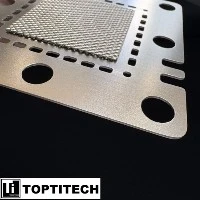

Titanium laminated metal composites integrate the superior properties of titanium with other metals, creating materials with enhanced performance characteristics for aerospace, chemical processing, and electronics applications. The manufacturing processes involve sophisticated metallurgical bonding techniques that overcome titanium's inherent challenges like high strength-to-weight ratio and thermal expansion mismatches.

Explosive welding remains the dominant industrial method for producing titanium composite plates, utilizing controlled detonations to create atomic-level bonding between dissimilar metals at ambient temperatures. This cold-welding process generates exceptionally strong metallurgical interfaces, though it requires stringent safety protocols due to its explosive nature. The subsequent hot-rolling refinement stage in explosive welding-rolling combined methods eliminates residual stresses and improves dimensional stability through thermomechanical processing.
Extrusion bonding proves more effective for tubular and rod-shaped composites. This technique employs high-pressure deformation to achieve interfacial diffusion between titanium cladding and core materials within specially designed dies. The process parameters crucially influence microstructure development and final mechanical properties. Advanced variants now produce multilayer configurations like titanium-aluminum-titanium sandwiches through precision-controlled diffusion bonding.

Modern titanium composite technology has evolved beyond basic titanium-steel combinations to include titanium-copper, titanium-nickel, and titanium-zirconium systems. Material selection considers specific application requirements, with common titanium grades including commercially pure TA1/TA2 and corrosion-resistant TA9/TA10 alloys. The continuous process innovations enable manufacturers to create increasingly complex geometries while maintaining exceptional bonding integrity.