

Products
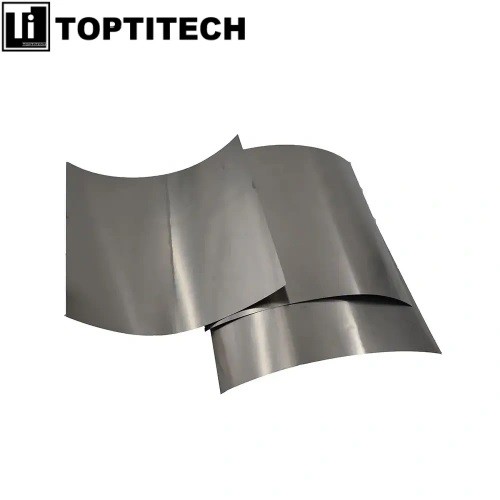


0.01mm-0.5mm ASTM B265 GR1 GR5 Titanium Foil
High Corrosion Resistance
Compliance with ASTM B265 Standards
Excellent Heat and Temperature Resistance
Biocompatibility
Send Inquiry
Product Introduction
Experience the exceptional quality and versatility of the 0.03mm-0.5mm ASTM B265 GR1 GR5 Titanium Foil. Crafted from high-grade titanium alloys, this foil meets the rigorous standards set by ASTM B265, ensuring superior performance and reliability.
With a thickness range of 0.01mm to 0.5mm, this titanium foil offers remarkable flexibility and can be easily shaped to suit a variety of applications. Its outstanding strength-to-weight ratio makes it an ideal choice for weight-sensitive projects that demand both strength and durability.
Products Specifications
| Material |
GR1 GR5 titanium |
|||
|
Thickness |
0.01mm-0.5mm |
|||
|
Size |
Customized |
|||
|
Standard |
ASTM B265 |
|||
|
Surface |
Polished |
|||
|
Technique |
cold roll |
|||
Products Features

Exceptional Strength and Durability: This titanium foil is crafted from high-grade titanium alloys (GR1 and GR5) known for their excellent strength-to-weight ratio. It provides exceptional durability while being lightweight, making it suitable for weight-sensitive applications without compromising on structural integrity.
High Corrosion Resistance: The titanium foil is designed to withstand harsh environments and exhibits excellent corrosion resistance properties. This feature ensures that the foil maintains its performance and structural integrity even in corrosive conditions, making it ideal for long-lasting applications.

Biocompatibility: Titanium is biocompatible, meaning it is compatible with the human body and other biological systems. This makes the titanium foil an excellent choice for medical and healthcare applications, such as surgical implants, where biocompatibility is crucial for patient safety and well-being.
Low Thermal Expansion: The titanium foil exhibits low thermal expansion properties, meaning it expands and contracts minimally with temperature changes. This characteristic makes it ideal for applications that require dimensional stability and precise tolerances, such as in electronic components and critical engineering designs.
Applications
Aerospace Industry
Titanium foil is widely used in the aerospace industry for applications such as aircraft structural components, engine parts, heat shields, and airframe components. Its lightweight nature, high strength, and excellent corrosion resistance make it an ideal material for aerospace applications.


Medical and Healthcare Industry
The biocompatibility and corrosion resistance of titanium foil make it suitable for medical implants, including orthopedic implants like bone plates, screws, and dental implants. It is also used in medical instruments, surgical tools, and prosthetics due to its compatibility with the human body.
Electronics and Electrical Industry
Titanium foil is utilized in the electronics industry for various applications, including capacitor electrodes, battery components, printed circuit boards (PCBs), and connectors. Its low thermal expansion and excellent conductivity properties make it valuable in electronic devices.


Jewelry and Decorative Applications
Titanium foil is valued in the jewelry industry for its unique appearance and lightweight properties. It is used to create intricate designs, such as earrings, pendants, and bracelets. Additionally, titanium foil finds application in decorative architectural elements, artistic sculptures, and interior design projects.
Sports and Recreation
Titanium foil is utilized in sports equipment such as tennis rackets, golf clubs, and bicycle frames due to its high strength-to-weight ratio, providing athletes with lightweight yet durable equipment.

How does titanium foil achieve an extremely thin thickness of 0.01mm-0.5mm?

- Material Selection:
The first step is selecting high-purity titanium or titanium alloys with excellent ductility and malleability. These materials possess superior formability, enabling them to maintain their structural integrity even at thin thicknesses.
- Hot Rolling:
One commonly used method is hot rolling, where the titanium ingot is gradually heated to high temperatures and then continuously rolled in a mill. During this process, the titanium gradually thins down until it reaches the desired thickness range. Hot rolling takes advantage of the excellent plasticity of titanium at elevated temperatures, allowing for easy compression and elongation in the rolling mill.
- Cold Rolling:
Cold rolling is performed to further reduce the thickness of the titanium foil obtained from hot rolling. This process involves subjecting the hot-rolled titanium material to cold working. Cold rolling capitalizes on the high hardness and strength of titanium at room temperature, gradually reducing the material's thickness through multiple passes and compression.
- Annealing:
During cold rolling, the titanium foil may become brittle. To restore its ductility and alleviate internal stresses, an annealing treatment is conducted. The annealing process involves heating the titanium foil to an appropriate temperature and then slowly cooling it. This procedure improves the mechanical properties and surface quality of the titanium foil.
Contact us

Tel: 0917-3873009

Phone: +86 18992731201

Email: zhangjixia@bjygti.com

Fax: 0917-3873009

Address: No. 195, Gaoxin Avenue, High-tech Development Zone, Baoji City, Shaanxi, China

Whatsapp: +86 18992731201
Hot Tags: 0.01mm-0.5mm astm b265 gr1 gr5 titanium foil, China, suppliers, manufacturers, customized, usage, pricelist, for sale, in stock, free sample, porous material, 316 Stainless Steel Cartridge Porous Metal Frits For Solid Liquid Separation, sintered porosity metal powder 316L stainless steel disc filter for pharmaceutical industry, Porous titanium filters for precision filtration, GR1 titanium felt for electrode, Sintered Metal Porous Titanium Sheet High Purity, High efficiency microporous aerator for outlet used in pond and sewage treatment plant
Send Inquiry
You Might Also Like


