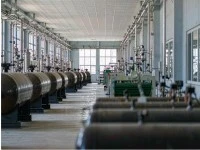

Titanium is a kind of precious metal. Titanium and titanium alloys are widely used in the electroplating production of circuit board enterprises. For example, titanium tanks are mainly treated with black/brown inner layers of multi-layer titanium plates. Tank (sometimes chemical copper alkaline degreasing tank is also suitable, but stainless steel 316 is mostly used.
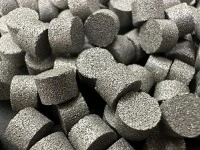
Electroplating tank anode titanium basket, such as copper cylinder, nickel cylinder, tin cylinder using tin balls (the surface is ruthenium-plated, rhodium-plated); gold cylinder insoluble anode (surface is treated with platinum-plated, ruthenium-plated or rhodium-plated); heating tube/ device (sometimes also a thermal pen); cooling tubes, and some equipment casings.

The characteristics of titanium
1. Does not rust;
2. Lightweight, density only 4.51;
3. High strength (tensile strength 28-160kgf/mm);
4. High-temperature characteristics: At high temperatures, the tensile strength and creep resistance are excellent. The highest titanium metal is about 300 degrees, and the titanium alloy still has stable strength at 500 degrees;
5. Low-temperature characteristics: at absolute zero, no embrittlement occurs, and still has good fatigue resistance and fracture toughness;
6. Anti-fatigue toughness: However, there is a significant decrease in fatigue strength in the heat-affected area after welding;
7. Corrosion resistance, acid, and alkali resistance: the corrosion resistance of titanium depends on the stable oxide film on its surface.
Titanium Welding
Titanium will react with oxygen and other gases at high temperatures, causing hardening, resulting in reduced ductility in the welding gap, pores, and reduced corrosion resistance; therefore, inert gas or vacuum protection is used for titanium welding; recrystallization is prone to occur at the weld, In particular, β-titanium causes coarse crystallization, which leads to a decrease in ductility; in addition, the deformation of titanium is large during welding, and it is difficult to correct.
Welding methods: TIG, MIG, resistance welding, plasma welding, particle beam welding, laser welding, etc. After welding, annealing treatment for stress release or solution aging treatment, or even double solution aging treatment is required to improve its strength and toughness and fatigue strength;
Titanium Surface Treatment
1. Enhanced corrosion resistance treatment
Atmospheric oxidation treatment and anodic oxidation treatment; not only can improve corrosion resistance, but also prevent hydrogen embrittlement; in addition, there are platinum plating, palladium oxide/titanium oxide treatments;
2. Improve wear resistance
Nitriding treatment is carried out at a high temperature (800-900 degrees), so that the Vickers hardness of the surface can reach more than 700; through surfacing welding, a proper amount of nitrogen or oxygen is added to the argon gas, so that the surface hardness can be increased by 2-3 times; Through ion plating, a layer of titanium nitride is formed on the surface, the thickness is about 5 microns, and the surface Vickers hardness is as high as 16000-20000; chrome plating, etc.;
Through the above simple understanding of titanium and its alloys, we will also understand some of the roles of titanium and its alloys in the production of circuit boards, which will be inspiring in terms of use and maintenance; titanium is the third largest after magnesium and aluminum Future application prospects as a wide range of metals!
Contact
TEL: +8618992731201
FAX: 0917-3873009
EMAIL: zhangjixia@bjygti.com
ADD: 1502, Block A, Chuang Yi Building No. 195, Gaoxin Avenue, High-tech Development Zone, Baoji City, Shaanxi, China