

Products


Sinter Metal Filter Elements with different interfaces
2. They Have A Higher Dirt-Holding Capacity.
3. They Have A Lower Pressure Drop.
4. They Have A Higher Flow Rate.
5. They Have High Micron Filter Grade.
Send Inquiry
Product Introduction
Sintered metal filter elements with different interfaces refer to filters made of sintered metal materials that are designed with various interface options to suit different applications. The interface is the part of the filter element that connects it to the rest of the filtration system, and it can take many different forms depending on the specific requirements of the application.
Some examples of interfaces that can be used with sintered metal filter elements include:

- Threaded interface: This is a common interface used with sintered metal filter elements. The filter element has a threaded connector that allows it to be screwed onto a corresponding threaded port in the filtration system.
- Flanged interface: This type of interface consists of a flange on the filter element that can be bolted to a matching flange on the filtration system.
- Bayonet interface: This interface consists of a bayonet-style connector that allows the filter element to be inserted and twisted into place in the filtration system.
- Tri-clamp interface: This interface uses a tri-clamp connector that allows the filter element to be securely clamped onto a matching connector in the filtration system.
The choice of interface will depend on the specific requirements of the application, such as the size and shape of the filtration system and the type of connections available. Sintered metal filter elements with different interfaces can be customized to fit a wide range of filtration systems, making them highly versatile and adaptable to various applications.
Sintered metal filter elements offer several advantages over other types of filters, including high durability, resistance to corrosion, and the ability to withstand high temperatures and pressures. They can be made from a variety of materials, including stainless steel, bronze, and nickel, and can be designed with different pore sizes and configurations to suit different filtration needs.

How Are The Sinter Metal Filter Elements Made?
Shaping: The first step in manufacturing sintered metal filter elements involves compressing metal powder into the desired shape using a die or mold under isostatic cool pressing. Common shapes include disks, rings, and cylinders.
Sintering: The compressed metal powder is then heated between 1,100 and 1,300 degrees Celsius until it fuses together and forms a solid through sintering.
Inspection: The metal is inspected for defects and checked for dimensions to ensure it meets specifications.
Surface Treatment: The surface of the metal may be improved by grinding or machining after the inspection process. This is necessary to achieve a smooth finish or a rough surface finish, depending on the application. Welding may also be used to join multiple pieces of metal together, but it can affect the metal's properties.
Welding: Welding methods, such as argon arc welding, may be used to join multiple pieces of metal together if required.
Testing: The filter element is tested to ensure it meets all performance requirements. It is put in a test rig and put through numerous tests.
Packaging: Once the filter element has passed all tests, it is packaged and ready for shipment.

The Benefits Of Using Sinter Metal Filter Elements
1. Versatility: Sintered metal filter elements with different interfaces can be customized to fit a wide range of filtration systems, making them highly versatile and adaptable to various applications.
2. Durability: Sintered metal filter elements are highly durable and can withstand high temperatures and pressures. They are also resistant to corrosion, making them a good choice for harsh environments.
3. High Filtration Efficiency: Sintered metal filter elements have a high filtration efficiency due to their uniform pore size and structure, which allows them to capture even the smallest particles effectively.
4. Easy to Clean: Sintered metal filter elements are easy to clean and maintain, making them a cost-effective solution for long-term use.
5. Customizable Pore Size: Sintered metal filter elements can be manufactured with different pore sizes to suit different filtration needs. This makes them highly adaptable to various applications and ensures that they provide optimal filtration performance.
6. Different Interface Options: Sintered metal filter elements are available with different interface options, such as threaded, flanged, bayonet, and tri-clamp connectors, making them easy to install and integrate into existing filtration systems.
7. Good Chemical Compatibility: Sintered metal filter elements are compatible with a wide range of chemicals, making them suitable for use in many different industries, including pharmaceuticals, food and beverage, and oil and gas.
Applications For Sinter Metal Filter Elements!
1. Oil and Gas: Sintered metal filter elements are commonly used in the oil and gas industry for filtration of hydraulic fluids, lubricating oils, and natural gas. Their high durability and resistance to corrosion make them ideal for use in harsh environments.
2. Food and Beverage: Sintered metal filter elements are ideal for use in the food and beverage industry for filtration of liquids, such as beer, wine, and juices. They are easy to clean and maintain, and the uniform pore size and structure ensure optimal filtration performance.
3. Pharmaceuticals: Sintered metal filter elements are widely used in the pharmaceutical industry for filtration of liquids and gases. They can be manufactured with different pore sizes to suit different filtration needs and are compatible with a wide range of chemicals.
4. Chemicals: Sintered metal filter elements are commonly used in the chemical industry for filtration of acids, alkalis, and other corrosive liquids. The high filtration efficiency and good chemical compatibility make them an ideal choice for many chemical processing applications.
5. Water Treatment: Sintered metal filter elements are used in water treatment applications for filtration of potable water and wastewater. They are highly effective at removing suspended solids and can be customized to suit different water treatment needs.
6. Automotive: Sintered metal filter elements are used in the automotive industry for filtration of engine oil, transmission fluid, and other automotive fluids. The high durability and resistance to corrosion make them ideal for use in automotive applications.
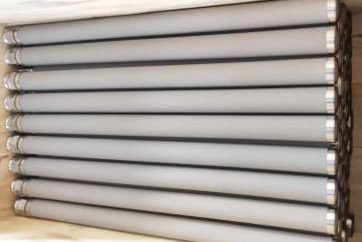
Package and shipment


Contact US

Tel: 0917-3873009

Phone: +86 18992731201

Email: zhangjixia@bjygti.com

Fax: 0917-3873009

Address: No. 195, Gaoxin Avenue, High-tech Development Zone, Baoji City, Shaanxi, China

Whatsapp: +86 18992731201
Hot Tags: sinter metal filter elements with different interfaces, China, suppliers, manufacturers, customized, usage, pricelist, for sale, in stock, free sample, porous material, Pure tungsten metal plate, W1 99 95 Pure Tungsten Filament Wire, tungsten crucible element, nickel wire applications, high temperature cold rolled tungsten boat, tungsten crucible electrodes
Previous:
Tungsten Heaters W1
Send Inquiry
You Might Also Like
-
![Metal Stainless Steel Wire Mesh Filter Disc]() Metal Stainless Steel Wire Mesh Filter Discview more>
Metal Stainless Steel Wire Mesh Filter Discview more> -
![Stainless Steel Mesh Filter With Various Interface]() Stainless Steel Mesh Filter With Various Interfaceview more>
Stainless Steel Mesh Filter With Various Interfaceview more> -
![High Purity Molybdenum Plate]() High Purity Molybdenum Plateview more>
High Purity Molybdenum Plateview more> -
![0.8mm Vacuum Coating 99.95% Tungsten Filament Wire]() 0.8mm Vacuum Coating 99.95% Tungsten Filament Wireview more>
0.8mm Vacuum Coating 99.95% Tungsten Filament Wireview more> -
![Pure Nickel Plate Price for Electrolysis]() Pure Nickel Plate Price for Electrolysisview more>
Pure Nickel Plate Price for Electrolysisview more> -
![Thickness 1.0mm Tungsten Plate]() Thickness 1.0mm Tungsten Plateview more>
Thickness 1.0mm Tungsten Plateview more>


