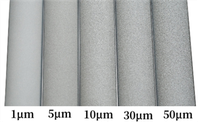

Our commonly known 3D printing, also referred to as additive manufacturing, is a rapid prototyping technology. It utilizes digital model files to construct objects by layering materials such as powdered metals or plastics through an additive process. Compared to traditional methods, it offers various advantages including the ability to manufacture complex objects, material savings, cost reduction, shortened research and development cycles, lightweight and integrated formations, as well as catering to customized requirements.
This technology has found extensive applications in multiple domains such as aerospace, medicine, automotive, humanoid robotics, drones, and more. The recent market attention towards titanium alloys is supported by 3D printing, enabling this material to be widely used in consumer electronics.

Electronics
In July 2023, the folding screen smartphone, Magic V2, released by Honor, marked the first large-scale use of titanium alloy 3D printing. This technology was primarily employed for the hinge's axle cover, marking the first extensive use of 3D metal structural components in phones. Compared to previous stainless steel and aluminum alloys, titanium alloys better combine strength and lightness, reducing the phone's thickness and weight while enhancing its durability. This marks the first large-scale application of 3D printing in consumer electronics.


Biotechnology
Recently, researchers from the Swiss Federal Institute of Technology in Zurich and a US startup successfully printed a mechanical hand using the latest laser scanning technology. This hand comprises bones, ligaments, and tendons made from different polymers. This new technology makes it possible to 3D print flexible special plastics, opening new pathways for the production of flexible robotic structures. The research was published in the latest issue of the journal "Nature".
Development Trend
Titanium alloy materials pose challenges in processing difficulty and low yield, leading to high manufacturing costs. However, 3D printing technology, especially metal powder laser melting, effectively addresses the forming issues of titanium alloy materials, significantly reducing production costs.
According to statistics from Wohlers Associates, the global revenue from 3D printing manufacturing products and services reached around $18 billion in 2022, marking an 18% year-on-year growth. The 3D printing industry has maintained a double-digit growth trend for 25 consecutive years.

Titanium alloy 3D printing achieves a combination of lightweight and high strength, potentially expanding its market in the consumer electronics sector. The flexibility demonstrated by soft robots is an instance of imagination turned into reality. They can adapt freely to people's needs, possessing high flexibility and inherent adaptability. Undoubtedly, a mechanical hand equipped with bones, ligaments, and tendons will have significant safety advantages in interacting with humans. It also holds substantial prospects for applications in biotechnology, disaster relief, rescue operations, and healthcare. The scope of possibilities in the 3D printing market has expanded considerably.