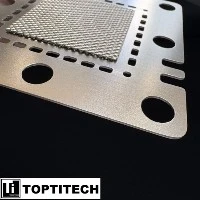

In the manufacturing process of titanium and titanium alloy products, surface pickling is an indispensable key step. It serves not only as an aesthetic enhancer for the product's appearance but also as a guardian of its performance and lifespan. This article delves into the process of surface pickling for titanium products.
The Purpose of Pickling: Why is it Essential?
 Titanium is an extremely reactive metal, but its surface naturally forms a dense, stable oxide layer (primarily TiO₂), which grants it excellent corrosion resistance. However, during processing (such as hot rolling, heat treatment, forging), this natural oxide layer thickens, becomes uneven, and is accompanied by the formation of scale and an alpha oxygen-rich layer (also known as the "oxygen-enriched layer").
Removing Surface Defects: The hard and brittle scale and alpha oxygen-rich layer formed during high-temperature processing can become crack initiation sites in subsequent pressure processing if not thoroughly removed, leading to product cracking.
Restoring Baseline Corrosion Resistance: Inconsistent and incomplete surface oxides compromise titanium's natural passive film, becoming starting points for localized corrosion. Pickling removes these unstable layers, exposes fresh substrate, and forms a new, uniform, and dense passive film, thereby restoring and ensuring its excellent corrosion resistance.
Preparing for Subsequent Processing: A clean, activated surface is a prerequisite for achieving good adhesion before welding, coating, plating, or other surface treatments.
Improving Product Appearance: Removes surface discoloration, weld marks, etc., to achieve a uniform silver-white metallic luster.
Standard Process Flow
A complete pickling line typically involves the following steps, forming a closed loop:
Degreasing: Must first thoroughly remove surface oil and grease. Typically achieved using alkaline degreasers via spray or immersion methods. Incomplete oil removal leads to uneven pickling.
Hot Water Rinsing: Washes away residual alkali and some contaminants.
Pickling: Immerse the titanium product in the prepared HF-HNO₃ pickling bath. Strictly control temperature, concentration, and time.
Temperature: Usually between room temperature and 50°C. Higher temperatures increase pickling rate but make control more difficult.
Time: Ranges from tens of seconds to several minutes, requiring real-time adjustment based on scale thickness and acid concentration, until the scale is completely removed and the surface exhibits a uniform silver-white color.
Cold Water Rinsing: Immediately rinse thoroughly with flowing cold water to terminate the pickling reaction and wash away residual acid and metal salts from the surface.
Pure Water Rinsing (Optional): For high-demand sectors like aerospace and medical fields, use high-purity water for the final rinse to prevent contamination by impurities like chloride ions and avoid pitting corrosion.
Drying: Quickly and thoroughly dry using clean hot air or drying equipment to prevent water spots.
Development Trends and Eco-Friendly Alternative Technologies
As environmental regulations become increasingly stringent, traditional mixed-acid pickling technologies face challenges, prompting the emergence of new techniques:
 Fluoride-Free/Low-Fluoride Pickling: Exploring alternative acid systems (e.g., hydrogen peroxide-organic acid systems) to partially or completely replace HF, reducing environmental pollution and operational hazards.
Environmentally Friendly Pickling & Passivation Solutions: Developing commercial products that integrate pickling and passivation. These typically have lower fluoride content, offer improved processing results, and are more environmentally friendly.
Physical Pre-treatment + Short-duration Pickling: Employing mechanical methods like sandblasting or shot peening to remove most of the thick scale first, followed by short-duration, low-concentration pickling, thereby reducing acid consumption and pollution.
Automation and Intelligenization: Utilizing robots for pickling operations and sensors for real-time monitoring of acid concentration and temperature enables precise closed-loop control of process parameters, ensuring consistent product quality.