

The performance and longevity of titanium rods and their alloys are fundamentally dictated by their surface integrity. Following thermal processing or high-temperature forming operations, surface treatment becomes an indispensable step. This critical phase aims to remove thermally grown oxide scales and various contaminants, thereby deactivating the reactive surface and preparing it for subsequent coating applications. Effective surface preparation is the cornerstone for applying protective or functional coatings that enhance corrosion resistance, oxidation stability, and wear performance.
The specific parameters for successful pickling are exclusively determined by the nature of the oxide and reaction layers present on the titanium surface. These surface layers are a direct consequence of the material's thermal history, particularly during processes like forging, heat treatment, or welding. While lower-temperature exposures generate thinner, more manageable oxides, high-temperature operations introduce significant complexity. Under these conditions, a substantial oxide scale forms, accompanied by an oxygen-enriched diffusion zone beneath it. The complete removal of this diffusion layer is mandatory to restore the substrate's inherent metallurgical properties and ensure coating adhesion.
Multiple methodologies are employed for descaling titanium components, each with distinct advantages. Mechanical techniques offer a practical solution for eliminating thick, tenacious oxide layers and hard surface scales. However, their application may introduce surface deformation, limiting their use for precision components.

An alternative approach involves molten salt bath treatments, which chemically disrupt and loosen the oxide scale, proving highly effective for parts with complex geometries. This method demands precise control over bath chemistry and temperature to prevent substrate attack and manage environmental considerations.

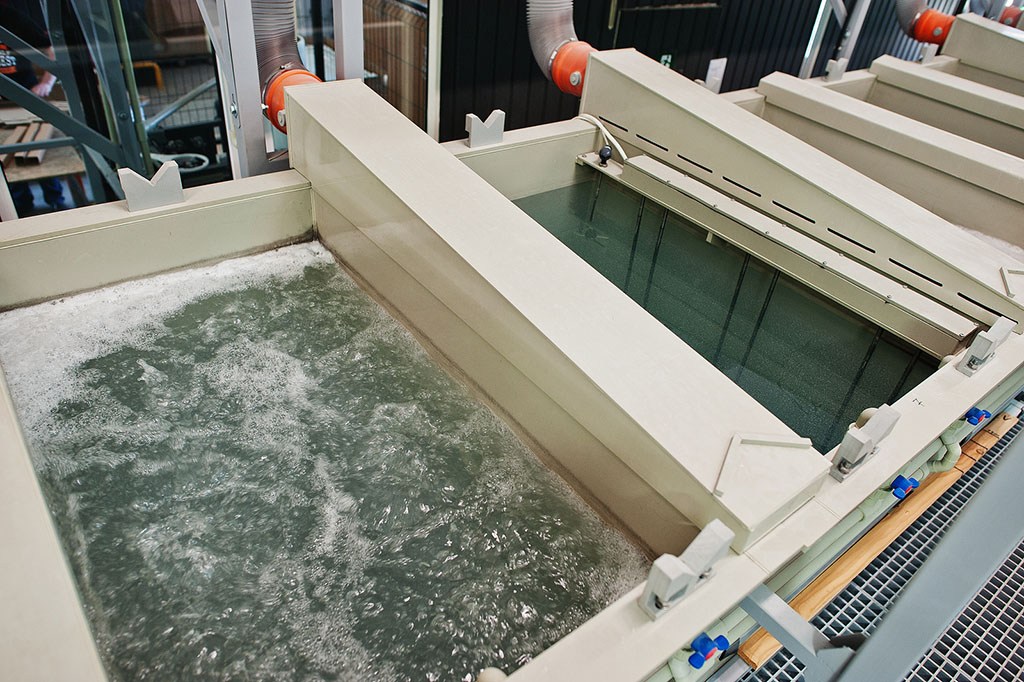
The most prevalent descaling method remains chemical pickling in acidic solutions. This process relies on controlled chemical dissolution of the oxide layer. Its effectiveness stems from the ability to tailor the acid composition, concentration, and operating temperature to match the specific oxide characteristics. For instance, thin oxides formed at moderate temperatures are readily dissolved through standard pickling protocols. The principal challenges involve preventing over-etching of the titanium substrate and the responsible management of spent acid waste streams.
In industrial practice, a synergistic combination of these methods often yields optimal results. A common sequence involves initial mechanical descaling to fracture and remove the bulk of the thick oxide, followed by an acid pickling stage. This two-step process enhances overall efficiency, minimizes chemical consumption, and reduces the potential for surface impairment. For components subjected to extreme temperatures, a salt bath pretreatment prior to pickling is highly effective, as it weakens the bond between the oxide and the underlying metal, ensuring more complete removal of the oxygen-stabilized alpha case.
Ultimately, mastering the surface treatment and pickling of titanium rods is a sophisticated discipline. It requires a profound understanding of the interplay between thermal history, oxide morphology, and chemical reactivity. The strategic selection and sequencing of descaling techniques are paramount to achieving a pristine, metallurgically sound surface. This foundational quality is non-negotiable for unlocking the full performance potential of titanium alloys across their demanding applications in aerospace, medical, and chemical processing industries.


