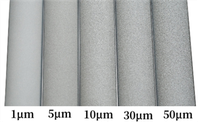


Sintered metal filters are an excellent choice for process filtration applications requiring high strength, corrosion resistance, and temperature tolerance. These filters are manufactured using metal powder without the addition of binders. The production process involves isostatic pressing and high-temperature vacuum sintering, allowing control over pore size and distribution through metal powder selection.
What is isostatic pressing?
Isostatic pressing is a manufacturing technique that shapes materials by applying uniform pressure from all directions. This process involves placing a powder or pre-formed part into a mold and subjecting it to high fluid pressure, typically water or oil. The equal pressure distribution leads to parts with consistent density and mechanical properties.
What is mold?
The mold is an integral part of the manufacturing process, where a material such as plastic, rubber, or metal is shaped by being pressed or poured into the mold. Molds are typically constructed from durable materials like steel or aluminum and designed to match the desired form of the final product.
What is sintering?
Sintering is a process that compacts and forms materials using heat and pressure without reaching the point of liquefaction. It is commonly employed to create solid objects from powders or other particulate matter, including metal powders, ceramics, or polymers.
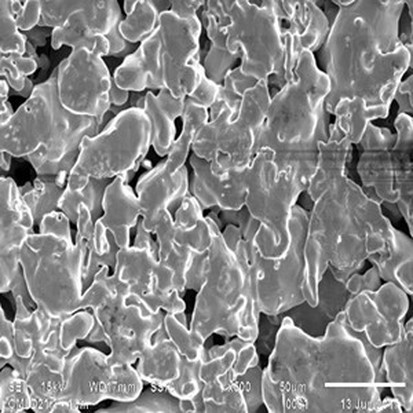
During sintering, the material is initially compressed into a specific shape using a die or mold. The compacted material is then heated to a temperature below its melting point, promoting particle bonding through diffusion. The application of heat and pressure during sintering enables the fusion of particles, resulting in the formation of a dense and solid object.