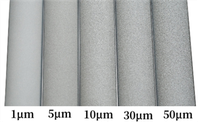

In the welding process, titanium welding wires may exhibit a whitening phenomenon, commonly referred to as alkali return. This occurrence is primarily due to the physical transformation of the pure alkali components within the welding rod during storage, resulting in localized whitening on the surface. This whitening not only affects the visual quality of the welding wire but may also detrimentally impact welding performance.
Effective prevention of titanium welding wire whitening necessitates meticulous storage management. Firstly, these wires should be stored in a dry and well-ventilated indoor warehouse. Such an environment helps mitigate the risk of moisture absorption by the welding rods, thus averting the occurrence of alkali return. Within the storage facility, strict control over the storage environment is imperative to prevent the infiltration of harmful gases and corrosive agents. These substances could chemically corrode the welding rods, exacerbating the alkali return phenomenon. Therefore, maintaining cleanliness within the storage facility, conducting regular cleaning and inspections, and ensuring the purity of the storage environment is essential.
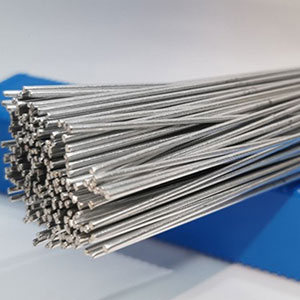
To further optimize storage management, welding rods should be placed on dedicated racks. These racks should be positioned at a height of no less than 300mm above the ground to prevent the influence of ground moisture on the welding rods. Simultaneously, the distance between the racks and the walls should also exceed 300mm to facilitate air circulation and reduce the accumulation of dampness.
Moreover, desiccants should be placed beneath the racks to absorb any existing moisture, further guaranteeing the dryness of the welding rods. The selection and utilization of desiccants should be adjusted reasonably based on the warehouse's humidity conditions and the duration of welding rod storage to achieve optimal moisture prevention effects.
In conclusion, the whitening phenomenon of titanium welding wires is closely linked to storage management. To effectively prevent alkali return, stringent control over the storage environment is essential. Ensuring that welding rods are stored in dry, well-ventilated conditions and implementing necessary moisture prevention measures, such as desiccant placement, can significantly enhance the storage quality of titanium welding wires, prolong their lifespan, and facilitate smooth welding operations.