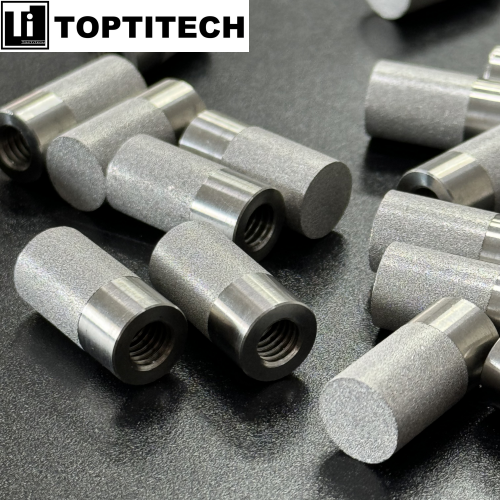

In many sectors, filtering is a crucial procedure, and selecting the appropriate filter element is crucial to getting the best possible filtration results. Because of their remarkable chemical and physical characteristics, sintered and porous titanium filter components are becoming a more and more popular option for high-performance filtration.
1. Understanding Sintered Porous Titanium Filter Elements:
Sintered porous titanium filter elements are manufactured by compacting titanium powder under high pressure and temperature. This process results in a dense, homogeneous material with high porosity. Understanding the structure and characteristics of sintered porous titanium filters is crucial for maximizing their filtration efficiency.
2. Proper Selection for Specific Applications:
To maximize filtration efficiency, it is essential to select the appropriate sintered porous titanium filter elements based on the specific application requirements. Consider factors such as particle size, flow rate, operating temperature, chemical compatibility, and pressure drop. Matching the filter element properties to the application ensures optimal performance.
3. Optimal Pore Structure Design:
The pore structure of sintered porous titanium filters significantly influences filtration efficiency. The design parameters, such as pore size, pore distribution, and pore connectivity, should be optimized based on the filtration objectives. Balancing the desired particle capture efficiency with minimal pressure drop is crucial for achieving maximum filtration efficiency.

4. Regular Maintenance and Cleaning:
Proper maintenance and cleaning of sintered porous titanium filter elements are vital to sustain and enhance their filtration efficiency. Regular inspection, removal of accumulated particles, and cleaning procedures should be implemented according to TOPTITECH's recommendations. Neglecting maintenance can lead to clogging and reduced filtration performance.
5. Integration with Filtration Systems:
To maximize filtration efficiency, it is important to consider the integration of sintered porous titanium filter elements within the overall filtration system. Factors such as pre-filtration, post-filtration, and system design should be evaluated to optimize the overall filtration process and ensure efficient particle removal.
6. Monitoring and Quality Control:
Implementing a robust monitoring and quality control system is crucial for maintaining and maximizing filtration efficiency. Regular performance evaluation, particle analysis, and periodic testing of the filter elements will help identify any deviations and ensure consistent filtration efficiency over time.