
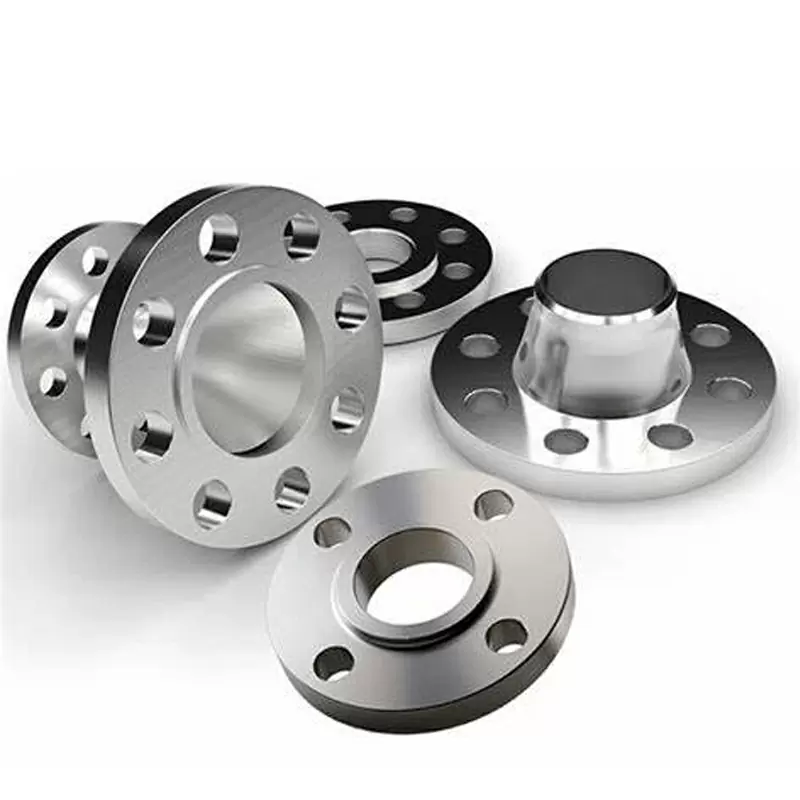
In industrial production, titanium flange forgings, including rolled forgings, serve as critical connecting components crucial to the safety and stability of equipment operation. The manufacturing process and technical requirements for titanium flange forgings must be meticulously controlled to ensure top-tier quality and performance.
Titanium flange forgings are subject to stringent regulations regarding their classification and material specifications.
In compliance with standards such as JB4726-4728:
- Carbon steel and austenitic stainless steel forgings with nominal pressures ranging from 0.25 MPa to 1.0 MPa may be classified as Grade I forgings.
- For forgings with nominal pressures between 1.6 MPa and 6.3 MPa, Grade II or higher standards are typically required, unless specified otherwise.
- Grade III forgings are mandatory for flange forgings with nominal pressures ≥10.0 MPa, chromium-molybdenum steel forgings with nominal pressures >4.0 MPa, and ferritic steel forgings with nominal pressures >1.6 MPa and operating temperatures ≤-20°C.
- Material selection is critical, necessitating the use of high-quality titanium alloys conforming to relevant standards to ensure chemical composition, mechanical properties, and microstructure align with design specifications.
Manufacturing processes for flanges, including neck welding, neck butt welding, socket welding, and threaded flanges, primarily involve forging or rolling techniques.
Special circumstances requiring steel plates or sections mandate adherence to strict guidelines:
- Steel plates must undergo ultrasonic testing to ensure the absence of laminar defects.
- Plates should be cut into strips along the rolling direction and bent into rings for neck flanges. The cylindrical surface of the ring must originate from the steel surface to prevent direct machining of neck flanges from steel plates.
- Full penetration welds are crucial for joining the ring ends, followed by post-weld heat treatment and 100% radiographic or ultrasonic testing per JB4730 standards.
- Flange neck outer slope angles for neck butt welding, socket welding, and threaded flanges must not exceed 7° to ensure optimal sealing performance and ease of installation.
Additional requirements encompass surface quality, dimensional accuracy, and identification and packaging protocols to enhance corrosion resistance and meet specific design and usage criteria. Compliance with these stringent guidelines is paramount to guarantee the integrity and reliability of titanium flange forgings in industrial applications.