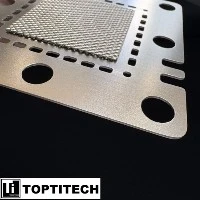

In the realm of industrial filtration, selecting the appropriate filter type is crucial for achieving optimal results. Two prominent options that deserve attention are sintered metal powder filters and sintered mesh filters. While they may appear similar and are sometimes used interchangeably, there are significant distinctions between the two that greatly impact specific applications. In this post, we will explore the intricate world of sintered filters and sintered mesh filters, providing a comprehensive comparison to shed light on their unique differentiators. Through this analysis, TOPTITECH is committed to allowing customers to better choose suitable filters.
1. Production Processes:
Sintered Metal Powder Filters:
Sintered metal powder filters are manufactured through the process of powder metallurgy. Metal powders, such as stainless steel, titanium, nickel, or bronze, are carefully selected and compacted under high pressure. Subsequently, the compacted metal powder is heated to a temperature below the melting point, allowing the particles to fuse together and form a porous structure with interconnected channels.
Sintered Mesh Filters:
Sintered mesh filters are created by sintering multiple layers of woven wire mesh. The mesh layers, typically made of stainless steel, are stacked and subjected to heat and pressure. This process causes the wires at the contact points to bond together, forming a rigid structure with precise and uniform pores.
2. Material Composition:
Sintered Metal Powder Filters:
Sintered metal powder filters can be manufactured using a variety of metal powders, depending on the specific application requirements. The choice of material is based on considerations such as chemical compatibility, temperature resistance, mechanical strength, and the filtration environment.
Sintered Mesh Filters:
Sintered mesh filters are predominantly composed of stainless steel wires, selected based on the desired filtration properties and environmental factors. The choice of stainless steel grade depends on considerations such as corrosion resistance, temperature tolerance, and filtration precision.


3. Applications:
Sintered Metal Powder Filters:
Sintered metal powder filters are widely used in demanding applications that require high strength and resistance to harsh conditions. They find applications in industries such as oil and gas, chemical processing, pharmaceuticals, and aerospace. These filters are suitable for filtering liquids, gases, and aggressive media.
Sintered Mesh Filters:
Sintered mesh filters find applications across various industries, including food and beverage, water treatment, petrochemical, and pharmaceuticals. They are commonly used for water purification, fine particle removal, gas distribution, and other filtration processes.
4. Surface Area and Flow Rate:
Sintered Metal Powder Filters:
Sintered metal powder filters have a relatively higher surface area compared to sintered mesh filters. The porous structure created by the interconnected metal particles provides a larger filtration surface, allowing for efficient particle capture. However, this higher surface area may result in a lower flow rate compared to sintered mesh filters.
Sintered Mesh Filters:
Sintered mesh filters have a lower surface area compared to sintered metal powder filters. The precise and uniform pore structure of the mesh allows for higher flow rates while maintaining efficient filtration. These filters are well-suited for applications that require a balance between flow rate and particle capture efficiency.
Sintered metal powder filters and sintered mesh filters offer distinct advantages and considerations depending on the specific application requirements. Sintered metal powder filters excel in high-strength applications with specific filtration needs, while sintered mesh filters provide reliable and cost-effective filtration solutions with high flow rates. Understanding the differences in production processes, material composition, applications, pore sizes, filtration efficiencies, structural integrity, cleanability, reusabilitya and cost factors helps in selecting the most suitable filter for a given application.