
In the realm of surface treatment for metals, passivation stands out as a crucial technique that acts as an invisible shield, safeguarding metals against external corrosion and extending their lifespan significantly. Particularly for titanium alloys, this process holds paramount importance due to their lightweight, high strength, and corrosion-resistant properties, making them excel in aerospace, medical, chemical, and various other fields. Passivation of titanium alloys serves as a vital assurance for their exceptional performance.
Electrochemical Passivation
Electrochemical passivation entails inducing the formation of a dense and stable oxide film on the surface of titanium alloys through the application of an electric current. Among various methods, the anodizing process garners significant attention. By placing titanium alloys as anodes in an electrolytic solution and applying suitable voltage, a nearly transparent oxide film gradually forms on the surface. This film not only effectively isolates corrosive agents but also exhibits a splendid array of colors through the interference of light, ranging from subtle silvery hues to deep blues and purples, each shade representing a seamless fusion of science and aesthetics.

Key Points of Anodizing
Electrolyte Selection: Typically, a mixture containing phosphoric acid, sulfuric acid, among other components is used, facilitating uniform growth of the oxide film.
Voltage and Time Control: Voltage directly influences the thickness and color of the oxide film, while time determines the extent of the oxidation reaction. Excessive voltage or prolonged durations may lead to overly thick layers or even cause cracking of the film.
Post-Treatment: Following oxidation, thorough cleaning and sealing processes are necessary to ensure the integrity and stability of the oxide film.
Thermal Passivation

Key Elements
Temperature Control: Temperature serves as a core parameter in thermal passivation; excessive heat may result in overly thick or peelable oxide layers, while insufficient heat may fail to produce an effective oxide layer.
Soaking Time: The duration of soaking determines the thickness and uniformity of the oxide layer.
Rapid Cooling Techniques: The speed of rapid cooling directly impacts the structure and performance of the oxide layer.
Chemical Passivation
Chemical passivation involves two primary steps: acid cleaning and chemical passivation. Acid cleaning aids in removing oil, oxides, and other impurities from the surface of titanium alloys, creating a pristine base for subsequent chemical passivation. Chemical passivation entails specific chemical reactions with the titanium alloy surface to generate a dense oxide film.
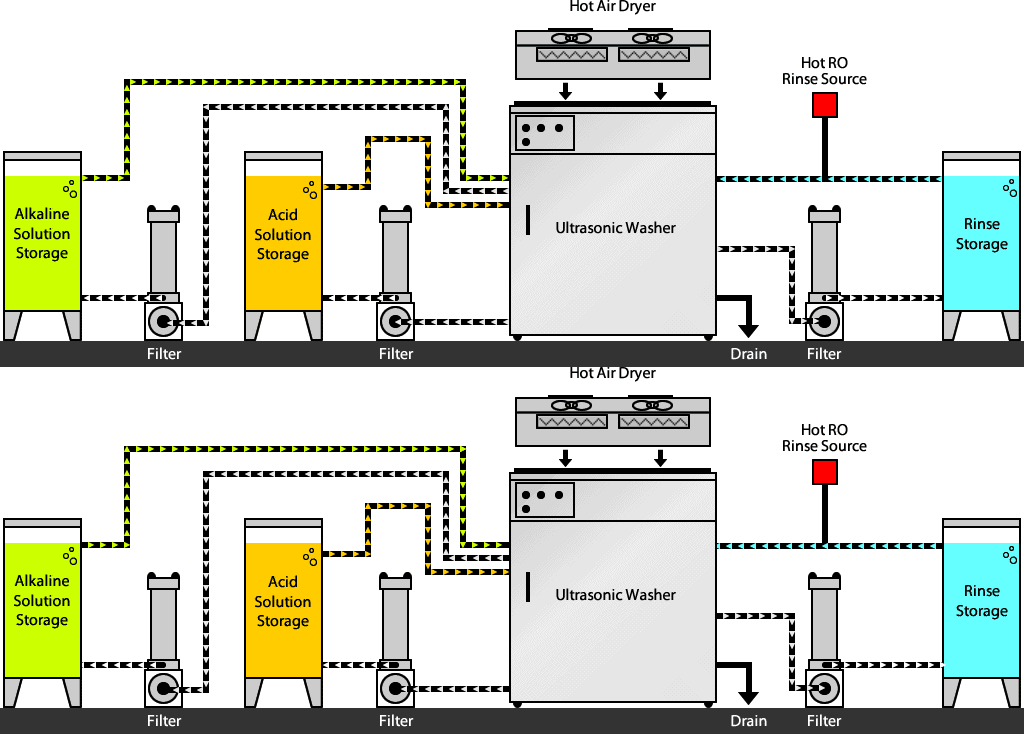
Details of Acid Cleaning Passivation
Pre-Treatment: Mechanical cleaning, degreasing, and oil removal are essential preparatory steps to ensure surface cleanliness.
Acid Bath Selection and Dilution: Nitric acid solutions are preferred due to their strong oxidizing properties and compatibility with titanium alloys. Accurate dilution is crucial to prevent the generation of harmful "yellow fumes."
Time Regulation: Precise control of acid cleaning time is essential; excessive duration may introduce excessive hydrogen elements, affecting the alloy's performance, while too short a duration may fail to achieve optimal cleaning effects.
Post-Treatment: Thorough rinsing and drying are critical steps to ensure the effectiveness of acid cleaning. Rinsing should thoroughly remove residual acid, while drying should prevent water spots on the surface.