

If you have sourced sintered titanium powder filter elements for pharmaceutical, chemical, or high-purity industrial applications, you have likely encountered a confusing price landscape. A 10-inch cartridge might be quoted at $50 from one supplier and $500 from another. While the visual appearance is often similar-a metallic silver cylinder with porous walls-the underlying manufacturing specifications, material provenance, and performance validation differ drastically.
Understanding these price drivers is essential for procurement engineers and plant managers to avoid either overpaying for unnecessary features or, more critically, under-investing in a component that leads to system failure, media migration, or frequent downtime.
Here is a technical breakdown of why the market pricing for sintered titanium filters spans such a wide spectrum.
1. Raw Material: The Titanium Powder Specification
The cost of the raw material is the foundational element of pricing. Not all titanium powders are equal. The market differentiates sharply based on the morphology, purity, and sourcing of the powder.
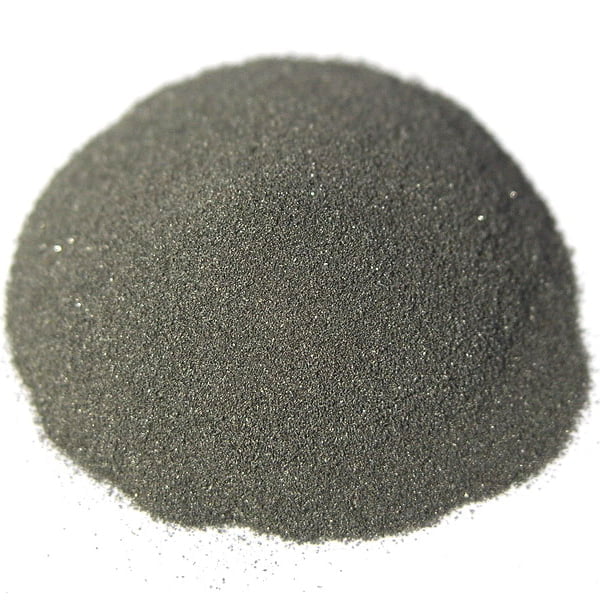
- Spherical vs. Irregular Titanium Powder for Filter Elements
Titanium filter elements commonly use irregular titanium powder, while spherical titanium powder is typically reserved for high-end precision applications. The irregular powder we use, however, ranks among the high-quality options in the market. High-end precision filters sometimes utilize spherical titanium powder produced via gas atomization, a method that yields particles with high flowability and consistent packing density during cold isostatic pressing (CIP), resulting in uniform pore structures and higher mechanical strength. In contrast, standard titanium filter elements rely on irregular or angular sponge fines. Although lower-quality irregular powders can create inconsistent pore channels and stress concentration points-raising the risk of cracking under reverse flow or thermal cycling-our high-quality irregular titanium powder is processed to minimize these issues, delivering reliable performance and excellent value for filtration applications.
- Purity and Grade: For critical applications such as biopharmaceuticals or semiconductor manufacturing, the filter requires high-purity titanium (typically Grade 1 or Grade 2, with impurity content strictly controlled). Suppliers utilizing aerospace-grade titanium (such as ATI or VSMPO sourced materials) incur significantly higher raw material costs. Budget filters may utilize recycled titanium or alloys containing vanadium or aluminum, which, while structurally sound, may lack the specific corrosion resistance (particularly in chloride or acidic environments) required for chemical processing.
- Particle Size Distribution (PSD): The consistency of the particle size distribution, defined by parameters such as D10, D50, and D90, dictates the final pore size. A narrow PSD (often denoted by an X factor < 2.0) is required to achieve a precise micron rating. Achieving this tight distribution requires advanced sieving and classification processes, adding to production costs.
2. Sintering Process: Atmosphere Control and Isostatic Pressing
- Vacuum vs. Atmosphere Sintering: High-end manufacturers utilize high-vacuum sintering furnaces (pressures 10 −3 Pa or lower) to prevent oxidation and embrittlement of the titanium. Sintering titanium requires temperatures typically between 850°C and 1,200°C in a controlled inert or vacuum environment. Lower-cost products may be sintered in less rigorous atmospheres, resulting in surface oxidation (a dull gray appearance rather than a bright metallic luster) which can affect long-term corrosion resistance.
- Cold Isostatic Pressing (CIP): The most significant jump in quality and price occurs when manufacturers employ CIP technology. CIP applies uniform hydraulic pressure from all directions to the powder before sintering. This yields a filter with uniform density, consistent pore size distribution, and high structural integrity, allowing for filtration precision down to 0.2 µm or even 0.1 µm. Cheaper filters often use uniaxial pressing or gravity filling, which results in uneven wall thickness and a broader pore size distribution, often leading to "blow-through" during high-pressure operation.


