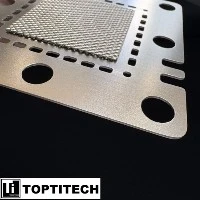

Sintered porous titanium plate PTLs play a critical role in proton exchange membrane (PEM) water electrolysis systems for hydrogen production. These PTLs are essential for efficient gas transport, electrolyte distribution, and electron transfer within the electrolysis cell.


The PTLs, positioned on the anode side of the membrane electrode assembly (MEA), serve as a conductive and porous interface for the evolution of hydrogen gas. As the hydrogen gas is generated at the anode, it can easily diffuse through the sintered porous titanium plate PTLs and collect at the top of the electrolysis cell.
Sintered porous titanium plate PTLs are favored due to their exceptional properties, including high electrical conductivity, corrosion resistance, and mechanical strength. The porous structure of these plates enables effective gas diffusion and electrolyte distribution, minimizing mass transport losses.
1
Outstanding corrosion resistance
The corrosion resistance of sintered porous titanium plate PTLs makes them highly suitable for hydrogen production, especially in acidic PEM electrolysis cells. They provide long-term stability and reliability in harsh chemical environments.
2
High electrical conductivity
With their high electrical conductivity, sintered porous titanium plate PTLs facilitate efficient electron transfer between the electrodes and the membrane. This enhances the overall energy efficiency of the electrolysis process, reducing energy consumption.
3
Efficient gas diffusion through porous structure
The porous structure of sintered porous titanium plate PTLs enables efficient gas diffusion, improving mass transport within the electrolysis cell. This leads to higher hydrogen production rates and enhanced overall efficiency.
In summary, the utilization of sintered porous titanium plate PTLs is vital for PEM water electrolysis to produce hydrogen. These PTLs offer excellent corrosion resistance, high electrical conductivity, and efficient gas diffusion, making them an ideal choice for reliable and cost-effective hydrogen production in PEM electrolysis systems.