
Products


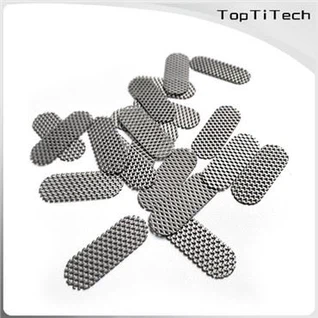
0.6mm Thickness Titanium Fiber Felt For HT-PEMFC
Optimized Gas Permeability
Stable Electrical Conductivity
Superior Thermal Management
Send Inquiry
Product Introduction
0.6mm thickness titanium fiber felt for HT-PEMFC eliminates carbon corrosion issues inherent to conventional GDLs operating at elevated temperatures. HT-PEMFC environments above 160°C accelerate oxidative degradation of carbon-based diffusion layers, while titanium remains inert throughout the entire operating window. This sintered titanium fiber felt delivers 60-80% porosity with fully interconnected three-dimensional pore channels, optimizing oxygen transport and water vapor removal at the cathode. The 0.6mm thickness balances mechanical stability against gas permeability, minimizing ohmic resistance while maintaining sufficient structural integrity under stack compression. High-purity titanium fibers (Grade 1) undergo ultra-high temperature vacuum sintering, ensuring uniform pore size distribution and strong fiber-to-fiber bonding. Unlike carbon paper alternatives that suffer from contact resistance drift over time, the titanium substrate provides inherently stable electrical conductivity across thermal cycles. Applications span high-temperature PEMFC systems requiring corrosion-resistant diffusion media, direct methanol fuel cell stacks, and phosphoric acid fuel cell components. The felt's compressibility ensures conformal contact with both catalyst layer and bipolar plate, reducing interfacial losses critical for maintaining efficiency in extended-duration stack operation.
Engineered for mass transport optimization, 0.6mm thickness titanium fiber felt for HT-PEMFC achieves permeability coefficients comparable to carbon GDLs without the durability trade-offs. The metal fiber structure withstands acidic membrane degradation products that gradually dissolve carbon fiber binders in conventional substrates. Porosity within the 70% range supports rapid gas diffusion while the 0.6mm thickness provides sufficient water management capacity-thicker felts retain excess product water, thinner ones compromise mechanical support. Surface treatment options include platinum coating for enhanced conductivity or PTFE hydrophobic treatment at low loading (5 wt%) to improve flooding resistance without compromising porosity. The three-dimensional fiber network offers high specific surface area for catalyst layer interfacing, reducing contact resistance to below 10 mΩ·cm² in compressed assemblies. Manufacturers of high-temperature fuel cell stacks seeking alternatives to degrading carbon-based GDLs adopt this titanium felt for its combination of chemical inertness, electrical performance, and mechanical durability under the aggressive operating conditions characteristic of HT-PEMFC systems. Customizable dimensions accommodate various stack geometries, with thickness tolerance held to ±0.02mm for consistent stack assembly across production batches.
Products Specifications
Material: GR1 titanium
Size: 100*100mm
Thickness: 0.6mm
Porosity: 70%
Technique: Sintering
Products Features

Carbon-Free Corrosion Resistance
The 0.6mm titanium fiber felt eliminates the oxidative degradation inherent to carbon-based GDLs, which convert to CO₂ under acidic HT-PEMFC operating conditions (160–200°C). This sintered titanium structure remains chemically inert, providing long-term stability in aggressive electrochemical environments.
Optimized Gas Permeability
High porosity (60–80%) with a fully interconnected three-dimensional fiber network enables rapid oxygen transport and uniform reactant distribution across the catalyst layer, reducing concentration polarization losses at elevated current densities.
Stable Electrical Conductivity
Unlike carbon paper GDLs that suffer from contact resistance drift over thermal cycles, the titanium substrate delivers inherently stable ohmic resistance across thicknesses, with interfacial contact resistance maintained below critical thresholds for sustained stack efficiency.
Superior Thermal Management
Titanium's excellent thermal conductivity, combined with the thin 0.6mm profile, facilitates rapid heat dissipation from the membrane-electrode assembly, preventing localized hot spots and maintaining optimal operating temperatures for phosphoric acid-doped PBI membranes.


High-Temperature Dimensional Stability
The sintered fiber structure withstands continuous operation at temperatures up to 480°C without deformation or creep, ensuring consistent gas diffusion characteristics and mechanical support throughout the fuel cell's service life.
Enhanced Flooding Resistance
The 0.6mm thickness strikes an optimal balance for water management: thick enough to provide mechanical support, thin enough to prevent product water retention. When combined with low PTFE loading (5 wt%), this felt outperforms untreated substrates and all carbon GDLs in preventing cathode flooding.
Customizable Surface Treatments
The titanium felt substrate readily accepts platinum coating (platinized titanium felt) for enhanced conductivity and oxidation prevention, or PTFE hydrophobic treatment for improved water rejection without major porosity reduction. Both options extend operational lifetime under high-pressure (1–3 bar) oxygen environments.

Products Applications in HT-PEMFC
Cathode-side gas diffusion layer (GDL) in phosphoric acid-doped PBI membrane stacks – The 0.6mm felt replaces conventional carbon paper GDLs on the cathode to deliver oxygen from flow field channels to the catalyst layer while removing product water vapor and waste heat under 160–200°C operating conditions.
Anode-side hydrogen diffusion medium in direct methanol HT-PEMFC – Deployed on the anode to uniformly distribute hydrogen or methanol reformate across the catalyst-coated membrane, preventing localized fuel starvation and carbon corrosion in high-temperature direct methanol fuel cell systems.
Interfacial contact layer between catalyst-coated membrane and metallic bipolar plate – Inserted as a compressible porous transport layer to accommodate stack clamping pressure variations, ensuring conformal electrical contact without puncturing the membrane in high-compression HT-PEMFC assemblies.
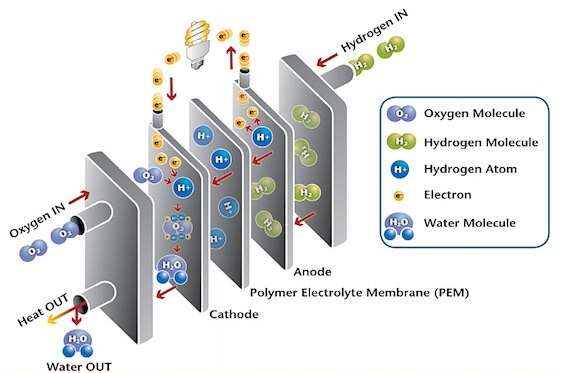
Substrate for thin catalyst layer deposition in membrane-electrode assembly (MEA) fabrication – Used as a direct support for applying anode or cathode catalyst inks via spraying or doctor blading, then sinter-bonded to the membrane to form an integrated electrode structure for HT-PEMFC single cells or short stacks.
Water vapor management medium in dead-ended HT-PEMFC operation – Positioned on the cathode to facilitate passive removal of product water through its interconnected pore network, reducing flooding risk in dead-ended anode or closed-cathode fuel cell configurations where active humidification is minimized.
Thermal distribution layer adjacent to endplate cooling channels – Placed between the end bipolar plate and the outermost MEA to homogenize temperature gradients across large active area cells (≥100 cm²), preventing hot spots near the inlet region during high-current-density HT-PEMFC operation.
Replacement for titanium mesh in corrosion-prone bipolar plate interfaces – Applied as a conformable diffusion layer in HT-PEMFC stacks using graphite composite or coated stainless steel bipolar plates, protecting the plate surface from acid attack while maintaining low interfacial contact resistance over extended thermal cycles.
Gas flow field insert for serpentine or interdigitated channel designs – Inserted directly into machined flow field channels to act as a secondary flow distributor, breaking down bulk gas streams into micro-scale flow paths and improving reactant utilization at the catalyst layer interface without modifying the existing bipolar plate design.
Contact us

Tel: 0917-3873009

Phone: +86 18992731201

Email: zhangjixia@bjygti.com

Fax: 0917-3873009

Address: No. 195, Gaoxin Avenue, High-tech Development Zone, Baoji City, Shaanxi, China

WhatsApp: +86 18992731201
Hot Tags: 0.6mm thickness titanium fiber felt for ht-pemfc, China, suppliers, manufacturers, customized, usage, pricelist, for sale, in stock, free sample, porous material, Grade 1 pure titanium tube, 5 micron sediment pre-filter, porous titanium rod filter, titanium filter, titanium filter cartridge apatite deodorizing, titanium felt underlayment
Send Inquiry
You Might Also Like