

As lithium-battery technology moves toward higher energy output and stricter safety margins, the cleanliness of conductive slurry has become a defining factor in overall cell performance. Even trace levels of metallic particles or fine agglomerates can introduce variability, affecting stability and long-term reliability.
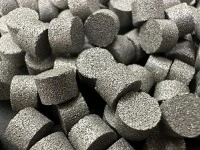
Sintered stainless steel filter cartridges, produced from 316L metal powders through high-temperature diffusion bonding, offer a stable and contamination-free filtration platform. The resulting porous metal network features a uniform pore structure that maintains consistent separation accuracy without the shedding risks associated with traditional filter media.
When applied to conductive-slurry production, this filtration approach brings several practical advantages:

The predictable pore pathways help maintain a clean, well-dispersed slurry system, reducing batch-to-batch fluctuation and supporting higher performance consistency.

The reinforced metallic matrix retains its shape under pressure cycling, enabling uninterrupted operation in continuous manufacturing environments.

Regenerable construction allows repeated cleaning and reuse, significantly reducing cost per filtration cycle compared with disposable elements.
With purity standards tightening across the battery-materials industry, sintered metal filtration has become an essential part of modern production lines. As next-generation technologies-such as solid-state batteries and silicon-rich anode systems-enter large-scale development, the need for ultra-clean materials continues to increase. This filtering solution is now extending beyond conductive agents to critical stages of cathode and anode slurry processing as well.