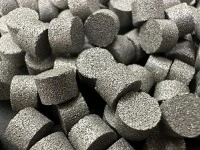

The latest breakthrough in materials science is high-porosity metals, which are made by infusing lightweight alloys such as titanium, stainless steel, and superalloys with microscopic pores. This creates a material that is incredibly strong, yet lightweight and has a unique ability to dissipate heat.
The potential applications of high-porosity metals are immense, particularly in industries such as aerospace, where reducing weight without compromising strength is critical. High-porosity titanium parts can be used in aircraft engines, reducing fuel consumption and emissions, while maintaining the same strength as traditional titanium parts. Similarly, high-porosity stainless steel and superalloy parts can be used in industrial applications such as oil and gas drilling, where high strength and corrosion resistance are essential.
The manufacturing process for high-porosity metals is still in its early stages, but already it is showing great promise. Metal powders are first mixed with a polymer, then heated to create a solid metal matrix with embedded polymer particles. The polymer is then burned out, leaving behind a matrix with small, interconnected pores.

In high-porosity metals, heat is absorbed and dissipated efficiently, making them ideal for high-temperature applications. This unique property is due to the high surface area of the porous structure, which allows for greater heat transfer.

The potential for high-porosity metals to revolutionize the aerospace and industrial sectors is significant. In addition to reducing weight and improving fuel efficiency, they could also lead to cost savings and improved performance. As research and development in this field continue, we can expect to see even more exciting applications for high-porosity metals in the years to come.
Contact
TEL: +8618992731201
FAX: 0917-3873009
EMAIL: zhangjixia@bjygti.com
ADD: 1502, Block A, Chuang Yi Building No. 195, Gaoxin Avenue, High-tech Development Zone, Baoji City, Shaanxi, China