

Condensers: Unmatched Corrosion Resistance in Seawater Environments
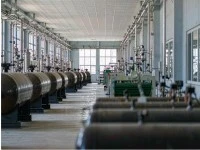
Condensers in coastal and nuclear power plants use seawater for cooling, exposing them to severe corrosive conditions. Traditional copper alloys like aluminum brass suffer rapid attack from hydrogen sulfide in seawater, leading to frequent leaks, reduced efficiency, and costly downtime.
Titanium alloy plates have revolutionized this application. Their exceptional resistance to chemical and electrochemical corrosion-including attack by seawater, chlorides, sulfides, and marine organisms-ensures long-term integrity. The protective oxide film on titanium surfaces is self-healing, maintaining extremely low corrosion rates even in high-velocity flow up to 2 m/s. Titanium-based condensers allow higher cooling water velocities, improving heat transfer and reducing maintenance. The result is enhanced operational stability and minimized risk of unplanned outages.
Steam Turbine Blades: Lightweight Durability for High Efficiency
Low-pressure steam turbine blades face extreme centrifugal forces and aggressive steam containing chlorides and sulfides. Traditional stainless steel blades are heavy and prone to corrosion fatigue, with fatigue strength dropping significantly in corrosive environments.
Titanium alloy blades offer clear advantages, these attributes translate into longer blade life, higher turbine reliability, and lower maintenance costs for modern power plants.
01
40% weight reduction lowers centrifugal stress on rotors, reducing mechanical loads and improving energy efficiency
02
Exceptional resistance to corrosion prevents pitting and crevice corrosion caused by chloride-bearing steam, even under harsh conditions.
03
Superior fatigue strength is maintained even when exposed to corrosive conditions, whereas standard stainless steel can lose up to 60–80% of its fatigue strength in such environments.


Generator Retaining Rings: High Strength and Non-Magnetic Properties
In large turbo generators, retaining rings are critical components that must withstand tremendous mechanical stresses while remaining non-magnetic. They also require high resistance to stress corrosion cracking in moist environments.
Conventional Fe-Mn-Cr alloy retaining rings are prone to stress corrosion cracking, and achieving required high strength often compromises reliability. Titanium alloy plates meet all design criteria perfectly: high specific strength satisfies mechanical requirements, non-magnetic nature ensures proper generator operation, and inherent resistance to stress corrosion cracking eliminates a major failure risk. Several countries now use titanium retaining rings in advanced generator designs.
From seawater-cooled condensers to turbine blades and generator retaining rings, titanium alloy plates consistently outperform traditional materials. Their unique blend of corrosion resistance, light weight, high strength, and fatigue endurance addresses the toughest challenges in power generation. As the industry pushes toward higher efficiency and greater reliability, titanium alloys are becoming a strategic choice for future-proofing power infrastructure.