

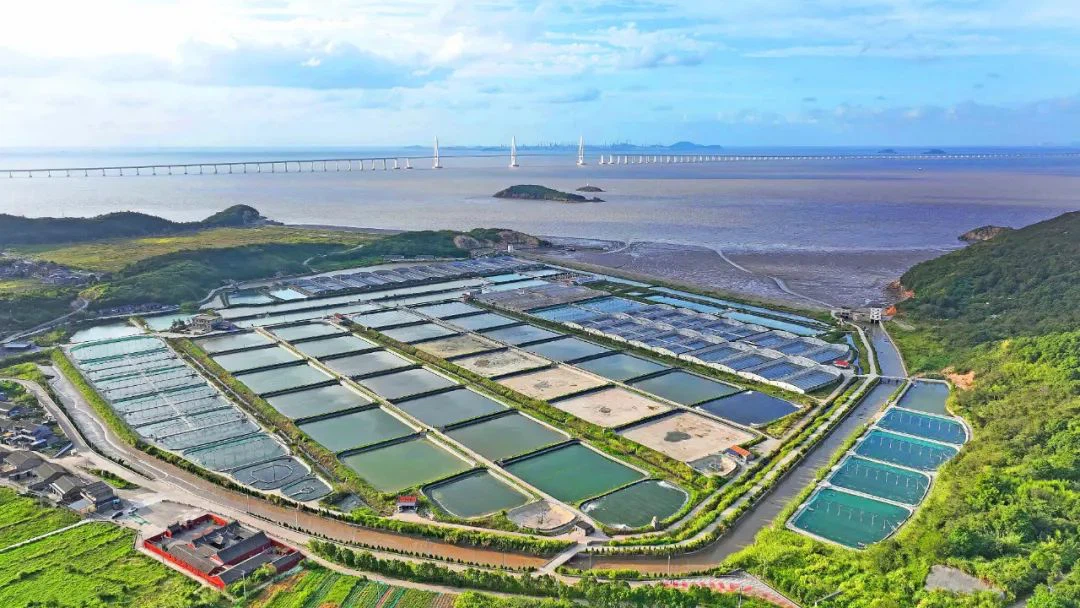
Titanium alloy, known for its light weight, high strength, and outstanding corrosion resistance-especially against saltwater and marine atmospheric environments-has become a strategic material in marine engineering. Its unique physical and chemical properties have made it a rising star in seawater aquaculture equipment manufacturing.
With the growing global demand for high-quality seafood and continuous technological advances in aquaculture, titanium-based equipment is gaining momentum, particularly in major farming countries such as China where both farming area and output rank among the highest worldwide.
Exceptional corrosion resistance
Seawater contains high levels of salt, chloride ions, and various microorganisms that aggressively corrode metals. Titanium alloys naturally form a dense oxide layer (titanium dioxide) that effectively blocks corrosive agents, preventing electrochemical corrosion, pitting, and crevice corrosion. This offers a significant advantage over traditional steel, which requires frequent protective coatings, and copper alloys that can pollute the environment.
Lightweight reduces installation and maintenance costs
Titanium (4.5 g/cm³) is half as dense as steel and lighter than copper alloys. This results in lighter equipment such as cage frames, underwater pipes, and harvesting tools, easing transportation, installation, and reducing the load on supporting structures like seabed piles or floats. Lighter equipment also simplifies daily maintenance and handling, lowering labor and machinery costs.

High strength and toughness ensure structural safety
With remarkable strength relative to their mass, titanium alloys retain consistent mechanical properties throughout a wide operational temperature window spanning from -253°C to 600°C. Aquaculture equipment must endure wave impacts, farmed animal interactions, and harsh weather like typhoons. Titanium's robust strength guarantees long-lasting, secure aquaculture structures.
Excellent biocompatibility minimizes environmental impact
Titanium alloys are chemically stable and non-toxic, releasing no harmful heavy metals such as lead or cadmium. This ensures no pollution to the water or harm to aquatic life. Titanium surfaces also resist biofouling (e.g., barnacles, algae), reducing cleaning frequency and limiting the need for chemical antifouling agents, which can cause secondary pollution.
Long service life offers better overall cost efficiency
While traditional steel equipment requires maintenance or replacement every 3-5 years, titanium alloy equipment can last more than 20 years. Though initial investment is higher, lower maintenance and replacement needs, plus reduced aquaculture risks, result in superior long-term cost-effectiveness, especially for large-scale, long-term operations.
Flexible processing and customization
Titanium alloys can be welded, forged, and cast into various components like cage frames, aquaculture nets, pipelines, and deep-sea platform parts, meeting diverse farming needs such as nearshore cages, offshore deep-water farms, and land-based recirculating systems. Its lightweight nature also allows for efficient integration with other materials like plastics and composites to optimize performance.
Overall, titanium alloy's combination of durability, corrosion resistance, environmental safety, and processing versatility positions it as a key material driving the sustainable and efficient development of the seawater aquaculture industry.


