
A team of researchers from the University of Liverpool has created an innovative material that can effectively capture coronavirus particles. This breakthrough could greatly enhance the efficiency of face masks and filters, playing a crucial role in preventing the spread of Covid-19 and other viruses.

In their study published in Nature Communications, the Liverpool scientists demonstrated that the new material, when integrated into a standard face mask, exhibited an impressive 93% increase in capturing proteins, including those of the coronavirus. Remarkably, this improvement had minimal impact on breathability.
The development of this material was led by Professor Peter Myers, an expert in chromatography, and Dr Simon Maher, a specialist in mass spectrometry. They had been collaborating on advanced liquid chromatography processes, focusing on proteins adhering to chromatographic support materials.
During the pandemic, Professor Myers had an insightful realization that reversing this process could lead to the absorption of proteins, particularly the S1 spike protein that coats the outer lipid membrane of the SARS-CoV-2 virus.
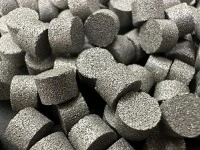
The research team from the University of Liverpool's Department of Chemistry and Electrical Engineering and Electronics worked together to modify the surface of their chromatography spherical silica particle. They made it highly adhesive to the Covid-19 S1 spike protein by "re-tuning" it. Additionally, they increased the particle's porosity, resulting in an enormous surface area of 300m2 per gram, similar to that of a tennis court. The internal volume of the silica sphere was also expanded to accommodate a large viral load.
Although still in the proof of concept stage, the new material has already demonstrated its effectiveness in face masks and various air filters, such as those used in airplanes, cars, and air conditioning systems.
The research group, which includes the Liverpool School of Tropical Medicine, also devised a method to attach these adhesive particles to conventional face masks.
Professor Peter Myers emphasized that this research is just the beginning, with vast potential beyond the Covid-19 threat. The team aims to develop more advanced sticky surfaces capable of capturing a range of bioaerosols, including the new BA.2.86 Covid variant, influenzas, and other deadly viruses like Nipah.