

As industrial operations face mounting pressure to improve efficiency, reduce energy use, and comply with stricter environmental regulations, the selection of electrode material has become a decisive factor in many electrochemical processes. In recent years, titanium based coated electrodes, commonly called titanium electrodes, have moved from a secondary choice to a core technology. Their application range is now spreading rapidly across chemicals, energy, environmental protection, surface finishing, and other sectors.

What Makes Titanium Electrodes Stand Out Beyond Long Life and Energy Savings
Compared with conventional graphite or lead electrodes, titanium electrodes offer a distinct set of practical benefits. Their dimensional stability keeps the anode to cathode gap nearly unchanged during extended electrolysis, which helps maintain a steady cell voltage and supports uninterrupted production. They also operate at lower voltages, typically cutting DC power consumption by 10 to 20 percent. This delivers meaningful savings when energy costs remain high.
Service life is another strong advantage. In diaphragm process chloralkali plants, for example, titanium electrodes often last more than six years, while traditional graphite anodes last only about eight months. This drastically reduces downtime for electrode replacement and lowers maintenance labor. The lightweight nature of titanium also makes handling easier.
Compared with conventional graphite or lead electrodes, titanium electrodes offer a distinct set of practical benefits. Their dimensional stability keeps the anode to cathode gap nearly unchanged during extended electrolysis, which helps maintain a steady cell voltage and supports uninterrupted production. They also operate at lower voltages, typically cutting DC power consumption by 10 to 20 percent. This delivers meaningful savings when energy costs remain high.
Service life is another strong advantage. In diaphragm process chloralkali plants, for example, titanium electrodes often last more than six years, while traditional graphite anodes last only about eight months. This drastically reduces downtime for electrode replacement and lowers maintenance labor. The lightweight nature of titanium also makes handling easier.
Where Titanium Electrodes Are Already Making a Difference

Chemical industry as the backbone of chloralkali production
Titanium electrodes have become standard in chloralkali plants. They help produce higher concentration caustic soda and purer chlorine free of CO₂ impurities while lowering overall energy consumption. Beyond chloralkali, they also enable cleaner and more stable continuous production in aluminate manufacturing and organic electrosynthesis.
Energy and environment as a versatile tool for green hydrogen, wastewater treatment, and desalination
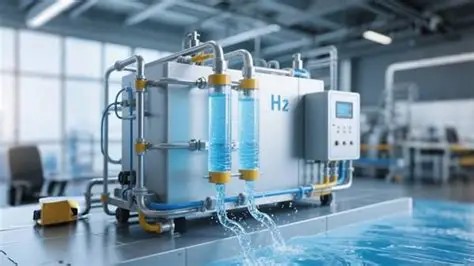
Driven by carbon neutrality goals, titanium electrodes are gaining ground in water electrolysis for hydrogen and oxygen production. Their ability to handle high current densities with low energy use directly supports the economic viability of green hydrogen. In environmental applications, they are widely used for industrial wastewater treatment, electrodialysis desalination of seawater and brackish water, as well as disinfection of drinking water and food contact utensils. Compared to conventional alternatives, titanium electrodes offer higher treatment efficiency, stable operation, and no secondary pollution.

Surface finishing as a quality enhancer for electroplating
Whether for steel sheet galvanizing, chrome plating, or ruthenium plating, titanium electrodes provide uniform and stable current distribution. This results in denser coatings with stronger adhesion. Their corrosion resistance prevents impurities derived from the electrodes from entering the plating bath, reducing coating defects. Consequently, they have become a preferred choice for high end surface finishing lines.
Other emerging uses including battery manufacturing and cathodic protection
In battery production, titanium electrodes are used in the preparation and recycling of certain electrode materials. For large metal structures such as ships, pipelines, and storage tanks, titanium based auxiliary anodes are increasingly adopted in cathodic protection systems because of their long service life and high reliability. Meanwhile, the technology for producing titanium based metal oxide coatings continues to expand, supporting new material development.


A Default Option in the Era of Green Manufacturing
From energy intensive traditional electrolysis to purity sensitive and environmentally demanding emerging fields, titanium electrodes are redefining efficiency limits in electrochemistry. Industry observers note that as coating technologies improve and manufacturing costs gradually decline, the application range of titanium electrodes will keep growing. This is especially true in renewable powered hydrogen production, high value metal electrowinning, and seawater resource utilization, where titanium electrodes are likely to become standard materials.
For industrial enterprises aiming to reduce costs, increase efficiency, and operate more cleanly, adopting titanium electrodes is no longer just a technology upgrade. It is a strategic move for the future.


