

In the textile industry, spandex (elastane) is the secret behind the comfort and stretch of modern clothing-from underwear to activewear. However, few realize that behind every elastic garment lies an extremely demanding production environment: high temperature, high pressure, highly corrosive chemicals, and precise temperature control at every step.
Titanium pipe fittings rise to this challenge. With their unique combination of properties, they serve as the "invisible guardian" across the entire spandex manufacturing chain-from raw materials to finished products. This article reveals why titanium fittings are indispensable.
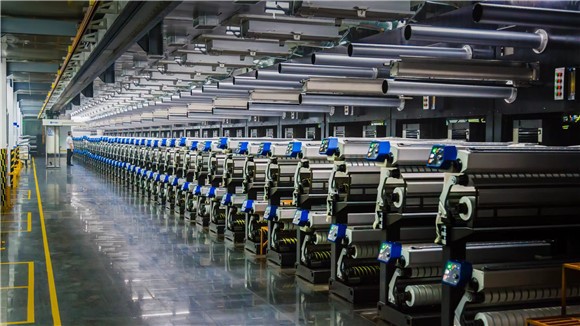
The first step in spandex production is polymerization, which takes place in a reactor operating under high temperature and pressure. Internal components must resist both thermal deformation and corrosive attack.
Titanium pipe fittings solve this dual problem. They retain excellent mechanical and chemical stability even under extreme heat, resisting deformation or failure. Against aggressive chemical agents inside the reactor, titanium acts like a shield-its outstanding corrosion resistance ensures long-term, trouble free operation, laying a solid foundation for downstream processes.
Temperature control directly affects spandex quality and production efficiency, both during polymerization and in subsequent steps. Heat exchangers demand materials with high heat resistance, corrosion resistance, and thermal conductivity.
Titanium fittings excel in all three areas: they withstand hot fluid streams without losing structural integrity, maintain efficient heat transfer for rapid and precise thermal exchange, and resist chemical attack-reducing damage and maintenance. This cuts operating costs and ensures continuous production.
Throughout spandex production, various chemicals (monomers, polymerization agents, solvents) must be transferred. Many are highly corrosive or temperature sensitive. Ordinary pipes can corrode, leak, deform, or clog.
Titanium fittings provide unmatched corrosion and temperature resistance. Whether the medium is acidic, alkaline, or otherwise aggressive, titanium prevents leakage and structural damage. Even under temperature fluctuations, the piping remains stable, ensuring safe and reliable transport of all chemical streams.
Spinning is the core step: the spandex solution is extruded through tiny holes to form filaments. The purity and uniformity of these filaments determine the final fabric's stretch and feel. Spinning components must have a smooth, non contaminating surface.
Titanium's naturally smooth surface reduces flow resistance, prevents debris from adhering to the solution, and keeps filaments pure. Its non staining, non contaminating nature means spinning parts retain stable performance over long periods, reducing cleaning and replacement frequency and boosting productivity.
Full Process Coverage – From Filtration to Recovery
Titanium pipe fittings perform equally well in other stages of spandex production:

Filtration systems
Titanium's corrosion resistance and high strength allow it to withstand aggressive filter media and high pressures, ensuring effective removal of impurities.
Storage and transfer vessel connections
The sealing ability and corrosion resistance of titanium prevent chemical leaks, keeping storage and transfer safe.
Recovery systems
In harsh chemical environments (acidic, alkaline, etc.), titanium remains stable, helping recycle waste liquids and unreacted monomers. This improves resource efficiency and lowers production costs.
From the polymerization reactor to the spinning pack, from heat exchange to solvent recovery, titanium pipe fittings are the silent workhorses that enable safe, efficient, and high quality spandex production. Their unique blend of heat resistance, corrosion resistance, smooth surface, and structural stability makes them the only choice for this demanding industry.
For any spandex producer aiming to maximize uptime, product consistency, and safety, titanium pipe fittings are not an option-they are a necessity.


