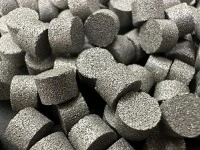

Titanium electrodes are commonly used in cathodic protection systems to prevent corrosion of metal structures, such as pipelines, tanks, and offshore platforms. Cathodic protection is a technique used to protect metal surfaces from corrosion by making them the cathode in an electrochemical cell.
In a cathodic protection system, a DC current is applied to the metal structure using a power source and a set of electrodes. The current flows from the anode to the cathode, which is the metal structure being protected. The anode material is usually sacrificial, meaning it corrodes instead of the metal structure.
Titanium is a popular choice for cathodic protection electrodes because of its excellent corrosion resistance, high strength-to-weight ratio, and biocompatibility. Titanium electrodes are also resistant to chlorine, which makes them suitable for use in seawater and other harsh environments.
The types of titanium electrode in cathodic protection

Titanium electrodes

MMO electrodes

Electrode
There are several types of titanium electrodes used in cathodic protection systems, including solid titanium electrodes, mixed metal oxide (MMO) coated titanium electrodes, and platinized titanium electrodes. MMO coated titanium electrodes are the most commonly used because of their high electrocatalytic activity and long service life.
Overall, the use of titanium electrodes in cathodic protection systems is an effective and reliable way to prevent corrosion and extend the service life of metal structures in various industries, including oil and gas, water treatment, and marine engineering.