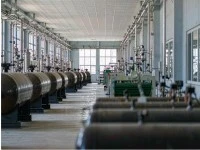


Water loops through growing systems and picks up grit, organics, scale, and algae along the way. That stuff ends up stuck in pipes, valves, pumps, emitters, and nozzles. Standard treatment isn't enough. That's where the titanium filter comes in.
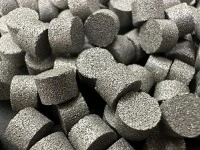
Sintered titanium is different from mesh screens or wound cartridges. It's a solid block of porous metal with interconnected voids-like a sponge made of titanium. You push water through it; particles get trapped inside those pores. The metal doesn't rust, even when you're running saline water, liquid fertilizer, or acidic cleaning solutions through it. And when the pores clog up, you don't toss the filter. Backflush it, or soak it in a cleaning bath, and it goes right back into service. Some operations get years out of a single element.
Irrigation Water Pretreatment
Take irrigation water. It looks clean but rarely is. Groundwater brings fine silt. Surface water carries algae, dead plant matter, and dissolved iron that precipitates later. None of that stops the system instantly. What it does is fill up the tiny passages in drip emitters and spray nozzles over time, little by little, until the spray pattern falls apart and parts of the field go dry.
The titanium filter goes right before the main irrigation line. Water passes through the porous wall; suspended solids stay behind. You pick the pore size according to what's in the water and how fine the downstream passages are. Too coarse and you let particles through that will plug emitters. Too fine and you're cleaning the filter every hour.
Cleaning a titanium filter isn't complicated. You reverse the flow direction and most of the captured solids wash right out. For tougher stuff-biofilm that clings, or mineral scale that's built up over time-a mild acid or caustic soak breaks it loose. The big advantage with sintered titanium is that you can do this over and over. The pore structure doesn't collapse or distort, and the metal itself doesn't shed corrosion particles into the water. That matters when you're running irrigation season after season and you don't want to budget for replacement elements every year.
Which brings us to what the titanium element really offers: it stays put, stays reusable, and stays predictable from one cleaning cycle to the next.
Liquid Organic Fertilizer Processing

Take liquid organic fertilizers-digestate out of biogas digesters, manure slurry from livestock barns, that sort of thing. They've still got nitrogen, phosphorus, potassium, and organic residue worth putting back on the ground. But they also carry stuff you don't want in drip lines: undigested plant fibers, partially rotted solids, and biological flocs that just won't settle out on their own.
These solids are not a major concern when the material is handled in bulk. They become more difficult to manage when the liquid is fed into drip irrigation equipment. A small amount of fiber or sediment can collect inside a pipe or around an emitter and gradually restrict the flow.
Filtration before the distribution line removes part of this suspended material while the dissolved nutrients stay in the fertilizer solution. A titanium filter can be used at this point to reduce the amount of solid material entering the irrigation system.
The composition of the fertilizer also affects the choice of filter material. Organic acids and other compounds left from fermentation or digestion can create a more aggressive liquid than ordinary irrigation water. Titanium has good corrosion resistance in many such environments, which is helpful when the filter is exposed to the liquid repeatedly and cleaned for further use.
Water Treatment in Recirculating Aquaculture
In a recirculating aquaculture system, water stays in the system instead of being discharged after one pass. Fish feed, fecal matter, and biological debris are added to the water during normal operation. These solids have to be removed somewhere in the treatment loop. Otherwise, they keep moving through the system and place more load on pumps, pipes, and other equipment.
Sintered titanium filters can be used for mechanical removal of suspended particles. The water passes through the porous element and the solid material is held back. Taking out part of the solids before the next treatment stage reduces the amount of material carried further through the system.
The porous surface may also provide places for microorganisms to attach. This can be useful in systems where mechanical and biological treatment are used together. It is not, however, the same as having a dedicated biofilter. Biological treatment depends on the conditions in the whole system, including oxygen, temperature, water movement, and the microorganisms present.
The filter material also needs to cope with the conditions found in aquaculture. Salt water, cleaning chemicals, and repeated cleaning can affect less resistant metals. Titanium is able to withstand many of these conditions without the corrosion problems normally associated with ordinary steel.
Specialized Agricultural Water Systems
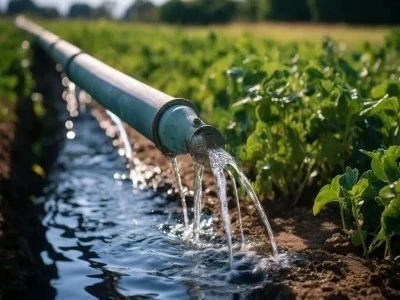
Water gets pumped around in hydroponic systems, greenhouse cooling loops, soilless growing benches, and farm wastewater recovery setups-they all recirculate. Run that water long enough and the fine suspended solids start coming out of suspension wherever the flow slows or changes direction. Elbows, tees, valve ports, or any section where the pipe narrows-those are the places where stuff settles out.
Nutrient solutions in hydroponics and soilless cultivation aren't always stable. Precipitates form as pH shifts or concentrations change. Root sheddings break off into the stream, along with other tiny fragments. These materials don't stay suspended forever. They travel with the flow until they hit a spot where the water slows-around a valve seat, inside an emitter body-and there they accumulate, gradually constricting the passage until the flow pattern is compromised. Removing them earlier reduces the amount of material reaching these narrow passages.
Agricultural wastewater normally goes through several treatment stages. A titanium filter can be installed before finer filtration or membrane equipment to remove larger suspended particles first. This takes part of the solid load out before the water reaches the later stages of treatment.
Misting systems in greenhouses have a similar problem. The openings inside misting nozzles are very small, and the water does not need to look dirty for particles to cause trouble. Fine material can slowly affect the spray pattern or restrict the nozzle. Filtering the water before the nozzle line helps prevent this buildup.
Key Advantages of Titanium Filtration
Corrosion Resistance
Fertilizer salts, organic acids, dissolved minerals, saline water, and cleaning chemicals all show up in agricultural liquids. Titanium handles corrosion in many of these fluids and does not rust the way steel does. Which grade to use depends on the specific liquid, its concentration, temperature, and the operating conditions.
Reusable Porous Structure
A sintered titanium filter is a solid piece of metal with connected pores running through it. Particles get trapped in these pores during operation. When the filter fills up, it can be cleaned and put back to work. Backwashing takes care of most deposits. For tougher buildup, other cleaning methods may be needed. This matters in systems where changing out the filter often is not an option.


Controlled Filtration Performance
The pore structure is set during the sintering process, so filters can be made to different specifications. Irrigation water, organic fertilizer, nutrient solution, and aquaculture water each carry different types and sizes of particles. The filtration requirements change accordingly. Pore size has to be chosen based on the liquid being filtered and the equipment downstream.
Material Stability
Titanium does not corrode like steel. When left in contact with water or process fluids for long periods, the material holds up well and rarely releases corrosion byproducts into the stream. That becomes important when the filter is expected to stay in the system for a long service life.
More farms are turning to water recycling and fertigation. Hydroponic operations and soilless systems depend on recirculation as well. Treated wastewater gets reused on farms instead of being sent out. But the more it circulates, the more suspended solids it picks up, and those solids tend to settle in pipes and block them.
The titanium filter handles corrosive fluids well. It stays solid through normal use, and you can clean it repeatedly without breaking it down.
Which filter works best depends on what the system requires. Water quality, particle size, solids loading, flow rate, system pressure, pore size, and cleaning method all come into play. With the right sizing and specifications, titanium filter elements do the job in irrigation pretreatment, fertilizer lines, hydroponics, water reuse, and aquaculture systems.