

 Titanium has a profound affinity with aviation. In 1953, the use of titanium materials in the engine nacelles and firewalls of the DC-T aircraft engine by Douglas Aircraft Company marked the beginning of titanium's aviation applications. Since then, titanium has been utilized in aviation for over half a century. Titanium's extensive use in aviation is attributed to its valuable characteristics that are well-suited for aircraft applications. Today, TOPTITECH will delve into the reasons why aircraft materials must incorporate titanium alloys.
Introduction to Titanium
It was only in 1948 that DuPont in the United States began mass-producing sponge titanium using the magnesium reduction method. This marked the commencement of industrial titanium production. Titanium alloys, with their high strength, excellent corrosion resistance, and high heat resistance, have been widely employed in various fields.
Characteristics of Titanium
High Strength: Titanium surpasses aluminum alloys by 1.3 times, magnesium alloys by 1.6 times, and stainless steel by 3.5 times, standing as the champion among metallic materials.
High Thermal Strength: Titanium can operate at temperatures several hundred degrees higher than aluminum alloys, allowing for prolonged usage at temperatures ranging from 450 to 500°C.
Superior Corrosion Resistance: Titanium exhibits resistance to acids, alkalis, and atmospheric corrosion. It possesses exceptional resistance against pitting and stress corrosion cracking.
Excellent Low-Temperature Performance: Titanium alloys with minimal interstitial elements, such as TA7, retain a certain level of plasticity even at -253°C.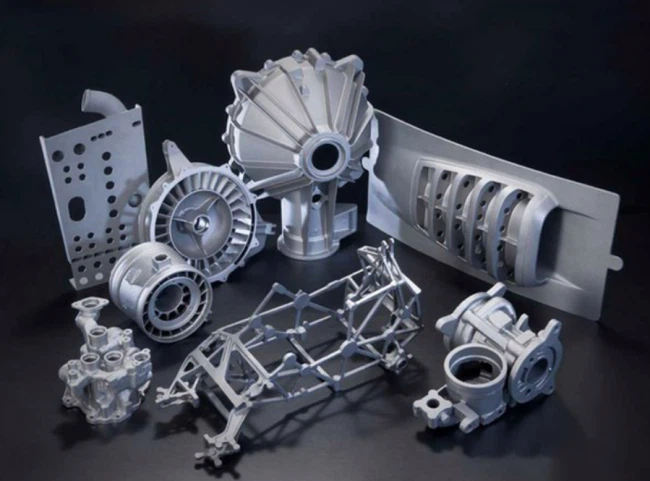
Chemical Reactivity: Titanium exhibits heightened chemical activity at high temperatures, readily engaging in chemical reactions with impurities like hydrogen and oxygen in the air, resulting in the formation of a hardening layer.
Low Thermal Conductivity and Elastic Modulus: Titanium's thermal conductivity is approximately one-fourth that of nickel and one-fifth that of iron, while various titanium alloys exhibit a reduction of approximately 50% in thermal conductivity compared to pure titanium. The elastic modulus of titanium alloys is roughly half that of steel.
Aircraft Applications of Titanium Alloys
Titanium alloys primarily find application in the manufacturing of aircraft and engine components, including forged titanium fan blades, compressor discs, engine casings, exhaust systems, and structural framework such as wing beams. Aerospace applications rely on the high strength, corrosion resistance, and low-temperature performance of titanium alloys for producing pressure vessels, fuel tanks, fasteners, instrument straps, frameworks, and rocket casings. Titanium alloy sheets have been employed in artificial satellites, lunar modules, manned spacecraft, and space shuttles, facilitating the construction of welded assemblies.