
Products


GR1 Titanium Plate With Sandblasted Surface For Corrosion-resistant Gasket
Engineered Surface for Superior Seal Integrity
Excellent Mechanical Stability and Stress Retention
Thermal Stability and Galling Resistance
Send Inquiry
Product Introduction
GR1 Titanium Plate with Sandblasted Surface for Corrosion-resistant Gasket delivers unmatched sealing integrity in aggressive chemical and marine environments. This specification leverages the inherent corrosion resistance of commercially pure GR1 titanium, which forms a stable, self-healing oxide layer when exposed to oxidants. The critical sandblasting pre-treatment, followed by mandatory acid passivation, creates a uniformly activated surface topography with controlled roughness (Ra). This optimized surface ensures superior adhesion for gasket coatings or sealants while eliminating potential sites for crevice corrosion initiation. The process guarantees a contaminant-free, metallurgically consistent interface capable of withstanding prolonged exposure to chlorides, acidic media, and high-temperature steam without degradation or galvanic embrittlement common in alternative materials.


GR1 Titanium Plate with Sandblasted Surface for Corrosion-resistant Gasket provides reliable performance in critical sealing applications across chemical processing, offshore oil & gas, and power generation systems. Its non-galling properties and stable coefficient of friction under load prevent sealing surface damage during bolt-up and thermal cycling. The material's exceptional fatigue strength and low modulus of elasticity allow for effective stress retention in bolted flanged connections, maintaining a leak-free seal. This plate serves as the optimal substrate for fabricating spiral-wound gaskets, ring-type joint gaskets, or custom seals, offering long-term durability that eliminates frequent maintenance shutdowns and reduces total lifecycle cost compared to polymer-based or lower-grade metallic gasket materials.
Specifications
- Material: GR1 titanium
- Size: 40mmx20mm
- Thickness: 2mm
- Surface: Sandblasted

Features
1. Unmatched Corrosion and Chemical Resistance
This gasket utilizes GR1 commercially pure titanium, guaranteeing minimum 99.5% titanium content for maximum corrosion resistance. Its stable, self-repairing oxide layer provides superior performance in chloride and oxidizing acid environments compared to stainless steels. The sandblasted and acid-passivated surface ensures a completely clean, active substrate that promotes optimal passive film formation.

2. Engineered Surface for Superior Seal Integrity
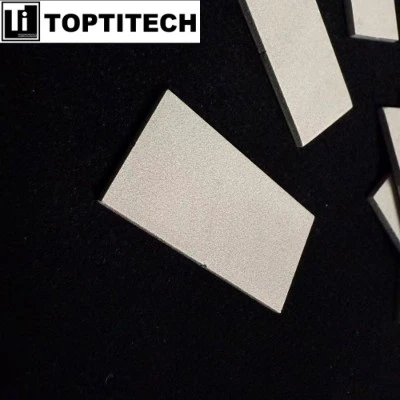
Controlled sandblasting creates a specific, uniform surface roughness profile essential for sealing applications. This topography maximizes mechanical bonding for PTFE or graphite coatings, ensuring they do not delaminate. The uniform matte finish prevents leak paths by allowing consistent, plastic deformation and bite into mating flange surfaces.
3. Excellent Mechanical Stability and Stress Retention
GR1 titanium's inherent ductility and low modulus of elasticity allow the gasket to conform to flange imperfections without cracking. The surface peening effect from blasting introduces beneficial compressive stresses, enhancing fatigue resistance under cyclic loads. This combination ensures reliable long-term stress retention in bolted connections, preventing seal loosening.

4. Thermal Stability and Galling Resistance

The material maintains mechanical properties and oxidation resistance across a wide temperature range. Titanium's low thermal expansion coefficient minimizes stress fluctuations in connections during operational thermal cycling. The non-galling, abrasive-resistant sandblasted surface prevents adhesive wear and seizing during assembly or disassembly.
Specific Applications in Corrosion-Resistant Gasketing

1. Flange Sealing in Aggressive Chemical Processing
This plate serves as the core sealing material for pipe and reactor flange connections handling chlorine, wet chlorine gas, and hot oxidizing acids like nitric and chromic. The sandblasted surface topology ensures zero leak initiation by providing an optimal sealing bite for spiral-wound gaskets filled with PTFE or flexible graphite. It prevents catastrophic failure in systems where corrosive media penetration would compromise joint integrity.
2. Critical Seals in Offshore and Marine Systems
The material is specified for seawater-cooled heat exchanger manways, brine injection line flanges, and subsea equipment connections. Its resistance to crevice corrosion and biofouling in chloride-saturated environments maintains seal performance where stainless steels suffer from pitting and stress corrosion cracking. The consistent surface profile allows for reliable metal-to-metal sealing in ring-type joint (RTJ) gasket configurations under high hydrostatic pressure.
3. High-Purity and High-Temperature Steam Service
In power generation plants, this gasket material seals superheated steam and clean steam line flanges. The contaminant-free, passivated surface prevents product contamination and scale adhesion. Its stability at elevated temperatures ensures lasting flange load retention without the relaxation common to polymer-based gaskets.
4. Sealing for Concentrated Sulfuric and Hydrochloric Acid Service
The plate is fabricated into gaskets for pumps, valves, and column flanges in acid concentration and pickling lines. The GR1 substrate's corrosion kinetics in reducing acids, combined with the enhanced surface uniformity, supports the use of non-porous, non-absorbent gasket designs. This application eliminates swelling, degradation, and acid weepage associated with organic materials.
5. Combustion Gas and Emission Control System Gaskets
It is employed in flue gas desulfurization (FGD) units, ductwork expansions joints, and SCR system connections exposed to acidic condensates and sulfates. The material withstands cyclic thermal loading and acidic dew point corrosion. The sandblasted finish improves the adhesion and longevity of any required secondary sealant or coating applied to the gasket face.
6. Sealing Solutions in Electrowinning and Electrorefining
The plate is used for cell covers, busbar connections, and heat exchanger gaskets in copper, nickel, and zinc electrowinning tankhouses. It resists electrolyte spray and mist containing sulfuric acid and metal ions. The robust surface maintains a stable, low-resistance electrical contact path when used in electrically live flange assemblies, a critical safety and performance factor.

Manufacturing Process for Sandblasted Titanium Plates

Material Selection
The process starts with certified GR1 titanium, verified against ASTM B265 standards. This ensures optimal purity for corrosion resistance and formability.
Hot Rolling & Annealing
Slabs are precision hot-rolled above the beta transus temperature, then annealed. This creates a uniform, recrystallized grain structure essential for consistent performance.
Precision Sandblasting
A controlled abrasive blasting process creates a specific surface roughness profile. This engineered topography is critical for sealing performance and coating adhesion.
Chemical Etching & Passivation
A mandatory HF-HNO3 acid etch removes embedded media and activates the surface. Subsequent passivation reforms a stable, protective oxide layer.
Precision Cutting & Finishing
CNC cutting achieves final dimensions without contaminating the surface. The product undergoes final cleaning and packaging to preserve surface integrity.
Contact us

Tel: 0917-3873009

Phone: +86 18992731201

Email: zhangjixia@bjygti.com

Fax: 0917-3873009

Address: No. 195, Gaoxin Avenue, High-tech Development Zone, Baoji City, Shaanxi, China

Whatsapp: +86 18992731201
Hot Tags: gr1 titanium plate with sandblasted surface for corrosion-resistant gasket, China, suppliers, manufacturers, customized, usage, pricelist, for sale, in stock, free sample, porous material, pure Gr1 titanium wire, titanium round bar welcomed package, nitinol wire properties, titanium foil, Pure ASTM B265 Titanium Foil Sheet 0.01mm, nitinol wire
Send Inquiry
You Might Also Like