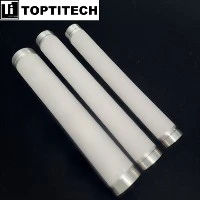

Catalyst recovery is a core cost-saving and quality-control process in chemical synthesis, petrochemical refining, pharmaceutical manufacturing, and new energy catalytic reactions. Fine catalyst particles (including nickel, palladium, platinum, and zeolite catalysts) are extremely prone to loss with process fluid, causing high production costs, reduced product purity, and pipeline blockage. Traditional filter bags, paper filters, and common mesh filters struggle to balance high-precision interception, continuous operation stability, and reusable regeneration in complex catalytic working conditions. As a premium industrial filtration solution, sintered stainless steel powder filters have become the preferred medium for industrial catalyst recovery due to their uniform porous structure, ultra-high filtration accuracy, and excellent backwash regeneration performance. This article deeply analyzes the selection logic, filtration efficiency advantages, and long-term regeneration stability of sintered stainless steel powder filters for catalyst recovery scenarios.
1. Core Pain Points of Traditional Filtration in Catalyst Recovery
Most catalytic reaction processes feature high temperature, certain pressure, corrosive medium, and fine catalyst particle size (0.5μm–20μm). Conventional filtration media have obvious technical bottlenecks in actual production:
First, low interception accuracy and severe catalyst loss. Ordinary woven mesh filters have irregular pore sizes and can only intercept large particles, while fine catalyst fines easily penetrate the medium, resulting in 5%–15% catalyst waste in long-term operation.
Second, poor high-temperature and corrosion resistance. Disposable filter bags and fiber filters are susceptible to aging, fiber shedding, and structural damage under high-temperature catalytic slurry and acidic/alkaline media, which will contaminate finished products and affect catalytic reaction purity.
Third, non-reusable and high operating costs. Most traditional filter media are disposable, requiring frequent shutdown replacement, which interrupts continuous production and greatly increases labor and material costs for catalyst recovery systems.
Different from traditional media, sintered stainless steel powder filters ( 316L stainless steel) are formed by high-temperature sintering of metal powder, with a three-dimensional interconnected porous structure, perfectly solving the above pain points of catalyst recovery filtration.
2. Filtration Efficiency Advantages of Sintered Stainless Steel Powder Filters for Catalyst Recovery
Filtration efficiency is the primary indicator for evaluating catalyst recovery filter performance, determining the catalyst recycling rate and final product quality. Sintered stainless steel powder filters achieve precision depth filtration rather than simple surface filtration, with unique efficiency advantages in fine catalyst interception.
2.1 Uniform Pore Structure Ensures Stable High-precision Interception
The sintering process strictly controls powder particle size and sintering parameters, forming uniform and consistent micropores with filtration accuracy ranging from 0.22μm to 100μm. For conventional fine catalyst particles (1μm–20μm), the filter achieves a filtration efficiency of over 99.9%, effectively trapping nearly all catalyst fines in the process fluid. Compared with traditional filters with fluctuating accuracy, its stable pore distribution avoids catalyst penetration caused by local oversized pores, maximizing the recovery of precious metal catalysts and reducing production costs.
2.2 Large Dirt Holding Capacity Adapted to Continuous Catalytic Operation
The three-dimensional layered porous structure provides sufficient dust holding space. During the catalyst recovery process, particles are intercepted layer by layer inside the medium, instead of accumulating only on the surface. This feature greatly improves the dirt holding capacity, avoids rapid pressure drop surge and frequent clogging, and adapts to long-term uninterrupted operation of industrial catalytic reactors. Even in high-concentration catalyst slurry working conditions, it can maintain stable filtration flux and continuous and efficient recovery effects.
2.3 High Temperature and Pressure Resistance Guarantees Consistent Efficiency
Industrial catalyst recovery often operates under harsh conditions of high temperature (up to 350°C) and high pressure (up to 20bar). Sintered stainless steel powder filters have integral metal molding structure, no loose fibers or splicing gaps, and will not deform, expand or leak pores under high temperature and pressure. The filtration accuracy remains stable without attenuation, ensuring zero catalyst leakage and zero medium pollution throughout the whole production cycle.
3. Regeneration Performance Analysis: Core Advantage of Long-term Low-cost Operation
Reusable regeneration performance is the key reason why sintered stainless steel powder filters replace disposable filters in catalyst recovery. Precious metal catalyst production enterprises have high requirements for filter reuse rate and service life, and the excellent backwash and cleaning regeneration performance of sintered stainless steel filters can effectively reduce comprehensive operating costs.
3.1 Diversified Regeneration Methods for Different Catalyst Working Conditions
According to different catalyst types (powder catalyst, granular catalyst, precious metal catalyst) and pollution degrees, the filter supports multiple efficient regeneration methods. For conventional catalyst cake fouling, gas backflush or liquid reverse washing can be adopted to quickly peel off the intercepted catalyst particles on the surface and internal pores, with a one-time regeneration cleaning rate of over 98%. For stubborn residual catalyst dirt, ultrasonic cleaning or high-temperature steam sterilization cleaning can be used to thoroughly dredge the pore channels.
3.2 Stable Performance After Repeated Regeneration
Unlike filter paper and filter cloth that are prone to pore damage and efficiency decline after cleaning, the metal sintered structure has ultra-high structural stability. After 50+ times of repeated backwashing and regeneration, the pore size distribution, filtration accuracy and flux of the filter element have no obvious attenuation, and the recovery efficiency of fine catalysts is always maintained above 99%. The long service life greatly reduces the frequency of filter replacement and equipment maintenance downtime.
3.3 Low Residue and No Secondary Pollution
The smooth inner wall of the sintered pores is not easy to adsorb catalyst impurities. After professional regeneration cleaning, there is almost no residual catalyst and dirt in the pore channels, which will not cause cross-contamination of subsequent batches of catalytic reactions. It fully meets the high-purity production standards of pharmaceutical and fine chemical catalyst recovery.
4. Professional Selection Criteria for Stainless Steel Sintered Filters in Catalyst Recovery
To maximize filtration efficiency and regeneration cycle, enterprises need to select filters according to actual working condition parameters, instead of choosing specifications blindly:
First, confirm filtration accuracy according to catalyst particle size. For precious metal fine catalysts (0.5μm–5μm), select 0.22μm–5μm high-precision sintered filters; for large-particle industrial catalysts (5μm–20μm), select 10μm–20μm medium-precision specifications to balance flux and interception effect.
Second, match material according to medium corrosiveness. 316L stainless steel sintered filters are preferred for acidic, alkaline and organic solvent catalytic media, with stronger corrosion resistance and wider adaptability; 304 stainless steel is suitable for conventional neutral water-phase catalyst recovery scenarios to control costs.
Third, customize structure according to operating pressure and temperature. For high-temperature and high-pressure catalytic reaction systems, optimize filter wall thickness and pore layer structure to ensure pressure resistance and regeneration stability.
Fourth, configure regeneration scheme according to operating cycle. For continuous production lines, support automatic online backwash filter elements to realize uninterrupted production and automatic regeneration; for intermittent production, match manual ultrasonic cleaning specifications.
5. Application Value and Industry Advantages
In petrochemical FCC catalyst recovery, pharmaceutical precious metal catalyst recycling, and new energy catalytic synthesis processes, sintered stainless steel powder filters bring significant economic and technical value. Its high-efficiency interception reduces precious catalyst loss by more than 90%, and reusable regeneration reduces filter replacement costs by more than 80% compared with disposable filter media. At the same time, stable filtration accuracy avoids product pollution caused by medium failure, improves the qualified rate of catalytic reaction products, and realizes dual improvement of production efficiency and economic benefits.
6. Conclusion
Catalyst recovery filtration requires high matching of precision, stability and regeneration performance. Sintered stainless steel powder filters stand out in industrial catalytic filtration by virtue of uniform micropore structure, 99.9%+ high filtration efficiency for fine catalysts, excellent high temperature and pressure resistance, and stable repeated regeneration performance. Scientific selection of pore size, material and structural specifications according to actual working conditions can maximize catalyst recovery rate, reduce enterprise operating costs, and provide reliable long-term filtration support for industrial catalytic production. For chemical, pharmaceutical and new energy enterprises pursuing high efficiency, low consumption and high stability of catalyst recovery systems, sintered stainless steel powder filters are the most cost-effective long-term filtration solution.