
Superplastic forming has become a cornerstone in producing complex thin-walled titanium parts for airframes and propulsion systems. Among the available methods, gas pressure forming and vacuum forming are the two most frequently deployed. Their selection directly affects dimensional accuracy, wall thickness distribution, tooling cost, and production lead time, yet the choice is often misunderstood. The decision hinges on part geometry, sheet thickness, required deformation magnitude, and the precision demanded on inner versus outer surfaces.
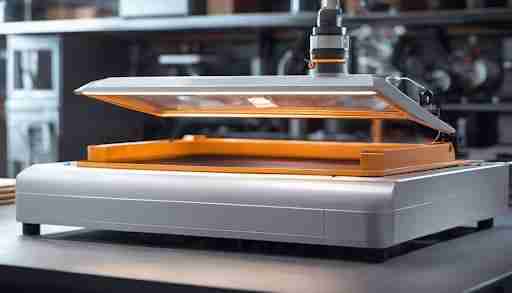
Vacuum forming operates on a pressure differential limited to one atmosphere. It employs either a male die for components requiring internal dimensional accuracy, such as deep containers, or a female die for external surface precision in shallower parts. The driving force is modest, which restricts the process to thin gauges-typically under two millimeters-and to shapes with gentle curvature and shallow draw ratios. Where these conditions are met, vacuum forming delivers clean, oxidation-mitigated parts with minimal residual stress and no springback, all at low equipment cost. Its simplicity makes it attractive for non-structural fairings, antenna reflectors, and certain medical-grade titanium enclosures.
Gas pressure forming, by contrast, introduces inert argon at regulated pressures well above atmospheric, commonly ranging from 0.3 to 2.0 MPa. This elevated driving force enables deep draws, sharp curvatures, and large overall deformations that would be impossible under vacuum alone. The process can be executed as free blow forming, producing axisymmetric shapes like spheres without a die, or as die-assisted forming with either male or female tooling. The male die variant yields high inner-surface precision and large depth-to-width ratios, while the female die option improves demolding and material economy at the cost of reduced draw depth. For aerospace structural bulkheads, engine casings, and integrally stiffened panels, gas pressure forming is the only viable route.
The forming mechanism itself differs fundamentally. In gas pressure forming, the metal undergoes viscous or semi-viscous flow with minimal friction-especially in free blow configurations-so nearly all applied energy contributes to deformation. This promotes a more uniform wall thickness distribution than traditional stamping. Vacuum forming, while gentler, lacks the pressure head to overcome local thinning or to force the sheet into fine die details, often resulting in thicker bottom sections relative to sidewalls in male-die setups, and the inverse in female-die configurations. These thickness variations must be accounted for during design and subsequent machining allowance planning.
In practice, many aerospace manufacturers adopt a hybrid approach. Vacuum is applied initially to eliminate wrinkles and achieve preliminary shape conformity, followed by high-pressure gas for final precision forming. This combination leverages the wrinkle-free start of vacuum and the detailed conformity of gas pressure, reducing cycle time and improving repeatability. The hybrid sequence is particularly effective for large skin panels and double-curvature components where single-method forming would produce unacceptable thinning or die mismatch.
Ultimately, the process decision is not a matter of one method being superior, but of selecting the right tool for the specific geometry and performance requirements. Thin, shallow, low-deformation parts suit vacuum forming; deep, complex, high-deformation components demand gas pressure forming. When neither alone satisfies all criteria, the hybrid route offers a practical compromise. As superplastic forming continues to evolve, understanding these distinct capabilities remains essential for design engineers and manufacturing planners aiming to balance cost, quality, and structural integrity in titanium aerospace structures.