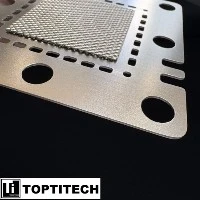

Laser cutting is an advanced manufacturing technology that employs high-power-density laser beams in conjunction with CNC equipment to perform non-contact material processing. The technology traces its origins to 1965, when the first laser cutting machine was applied to diamond die drilling, with the United Kingdom achieving the first laser-assisted oxygen cutting of metals in 1967. During the 1970s, laser cutting technology began penetrating the aerospace sector, and following the widespread adoption of CO₂ lasers in the 1980s, it progressively supplanted conventional plasma cutting processes.
As a thermal cutting method, laser cutting is distinguished by superior cut quality, high efficiency, and exceptional flexibility, enabling production ranging from single-unit custom jobs to high-volume manufacturing.
Operating Principles
1.1 Laser Generation and Beam Characteristics

Laser (Light Amplification by Stimulated Emission of Radiation) produces a highly coherent, monochromatic beam through stimulated emission. A laser system consists of three fundamental components: an active medium (solid, liquid, or gas), an energy source (pumping mechanism), and an optical resonator. When the active medium is energized, it emits photons; the resonator reflects these photons back and forth through the medium, amplifying and aligning the light waves to ultimately generate a high-energy-density laser beam.
Laser beams differ from ordinary light in several critical aspects: high intensity, extremely narrow frequency range (monochromaticity), sharp collimation, and high coherence.
1.2 Physical Cutting Mechanism
The laser cutting process involves two simultaneous operations:
Material Heating and Phase Transformation: A focused, high-power-density laser beam irradiates the workpiece surface, causing the irradiated region to experience rapid temperature escalation, quickly melting, vaporizing, ablating, or igniting the material.
Melt Ejection: A high-velocity assist gas, coaxial with the beam, blows the molten material from the kerf, achieving material separation. This gas stream simultaneously protects the focusing optics from vapor and spatter contamination.
1.3 Precision and Process Parameters
Laser cutting achieves dimensional accuracy of ±0.05mm, kerf widths of 0.10–0.20mm, and surface roughness on the order of tens of microns. Key parameters influencing cut quality include:
Laser power and power density: Determine achievable material thickness and cutting speed
Beam focal position: Affects kerf width and verticality
Assist gas type and pressure: Dictates melt ejection efficiency
Nozzle diameter: Typically ranges from 0.8mm to 3mm, selected based on material and thickness
It is worth noting that highly reflective materials such as copper and aluminum exhibit extremely low absorption rates for specific laser wavelengths, presenting significant processing challenges.
Primary Process Classifications and Technical Characteristics
Laser cutting processes are categorized into four major types based on material removal mechanisms:
2.1 Laser Vaporization Cutting
A high-energy-density laser beam heats the workpiece, rapidly reaching the material's boiling point and causing direct vaporization. The high-velocity vapor ejection simultaneously forms the kerf.
Power density requirement: Typically >10⁸ W/cm²
Applicable materials: Extremely thin metals and non-metallic materials (paper, fabric, wood, plastics, rubber, etc.)
Characteristics: High energy demand; suitable for applications requiring avoidance of molten residue
2.2 Laser Melting Cutting
Laser heating melts the material, and a non-oxidizing assist gas (Ar, He, N₂, etc.) expels the molten metal through high pressure to form the kerf.
Energy efficiency: Requires only 1/10 the energy of vaporization cutting
Applicable materials: Stainless steel, titanium, aluminum and their alloys-materials resistant to oxidation or reactive metals
Process advantage: Produces oxide-free cut edges with high edge quality
2.3 Laser Oxygen Cutting (Flame Cutting)
Analogous to oxyacetylene cutting, this process employs the laser as a preheating heat source and oxygen as the cutting gas. The oxygen reacts exothermically with the metal, while simultaneously blowing out molten oxides.
Energy efficiency: Requires only 1/2 the energy of melting cutting; cutting speed significantly exceeds both vaporization and melting cutting
Applicable materials: Carbon steel, titanium steel, and heat-treated steels-metals susceptible to oxidation
Process limitations: Wider kerf, larger heat-affected zone, susceptibility to corner burning, and relatively inferior edge quality
2.4 Laser Scribing and Controlled Fracture
Laser scribing employs a high-energy-density laser to scan the surface of brittle materials, vaporizing a shallow groove through thermal evaporation, followed by mechanical force to fracture the material along the groove. Controlled fracture utilizes the steep thermal gradient generated by laser grooving to create localized thermal stress in the brittle material, causing separation along the groove.
Applicable materials: Ceramics, semiconductors, and other brittle materials
Typical lasers: Q-switched lasers, CO₂ lasers
Application Domains and Industry Value

Laser cutting technology has permeated multiple critical industrial sectors:
Automotive Manufacturing: Body frames, airbag components, interior panels
Aerospace: Engine components, titanium alloy ducts, fuselage skin stiffeners
Electronics Manufacturing: Precision micro-components, circuit boards, connectors
Medical Devices: Coronary stents, surgical instruments, microfluidic devices
Sheet Metal Fabrication: Has become the dominant process, displacing conventional methods
Conclusion
As a core manufacturing technology, laser cutting continues to drive industrial transformation through its combined advantages of high precision, high efficiency, and exceptional flexibility. From vaporization cutting to oxygen-assisted cutting, and from CO₂ lasers to fiber lasers, continuous technological evolution has expanded the application boundaries of laser cutting, enabling high-quality, efficient processing across a broader range of materials and thicknesses.