
Titanium plates deliver exceptional corrosion resistance and high specific strength across chemical processing, marine engineering, aerospace, and emerging hydrogen energy applications. TOPTITECH's titanium powder metallurgy porous plates, for instance, withstand temperatures up to 300°C while maintaining structural integrity in acidic, alkaline, and chloride-rich electrolytes-enabling reliable filtration performance in petroleum refining, pharmaceutical manufacturing, and nuclear industry settings. Yet even titanium-despite its robust passive TiO₂ film-remains vulnerable to localized degradation mechanisms under specific aggressive conditions. Crevice corrosion, hydrogen embrittlement, galling wear, and high-temperature oxidation can each compromise service life prematurely when operating parameters exceed critical thresholds.
This article provides engineers, maintenance supervisors, and material specifiers with actionable strategies across four critical domains: material grade selection, environmental control, surface engineering, and systematic maintenance protocols. Each section delivers quantifiable parameters and process thresholds essential for maximizing titanium plate longevity in chemical plants, offshore platforms, aerospace structures, and industrial heat transfer equipment.
1. Material Selection: Grade Optimization for Aggressive Media
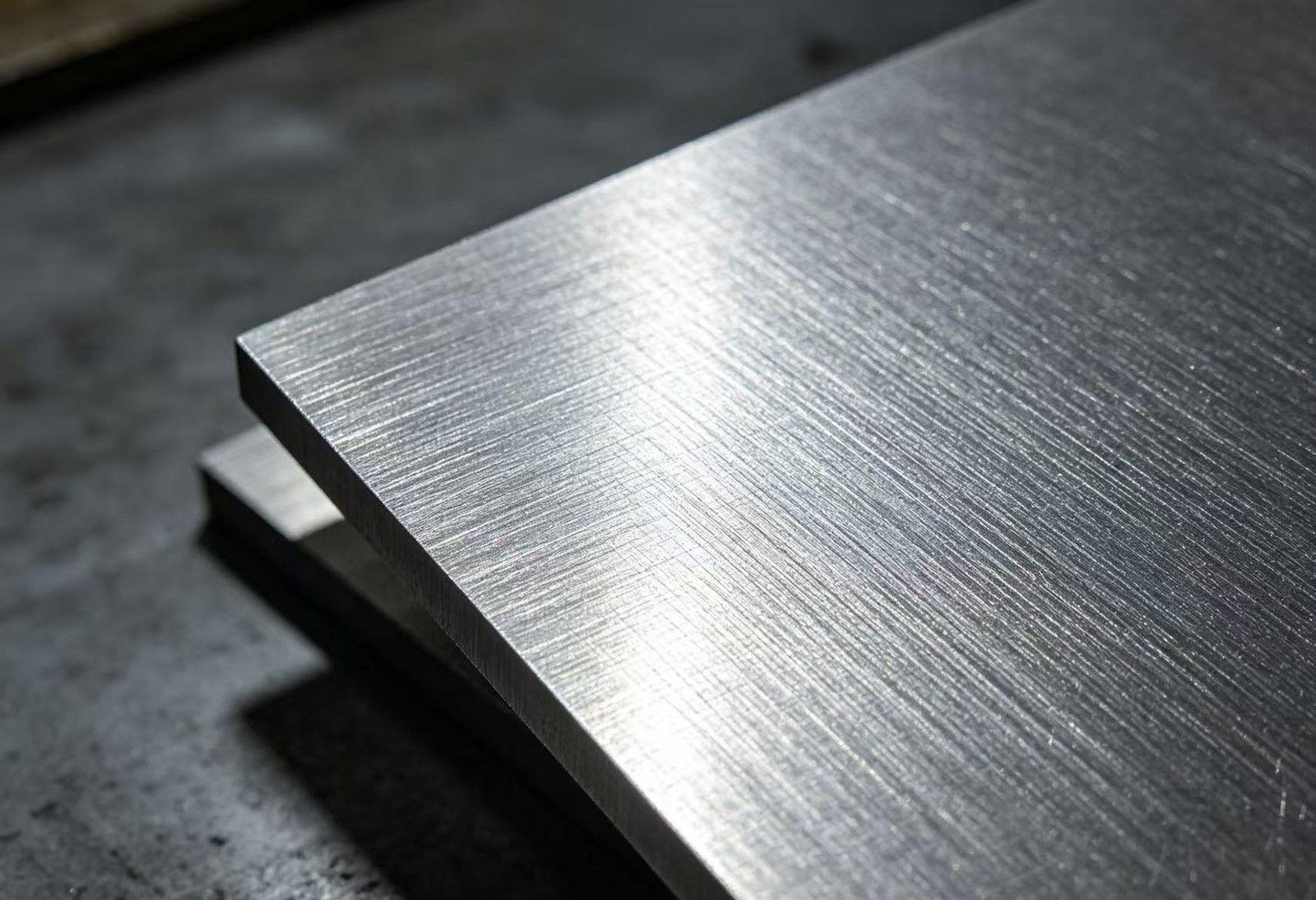
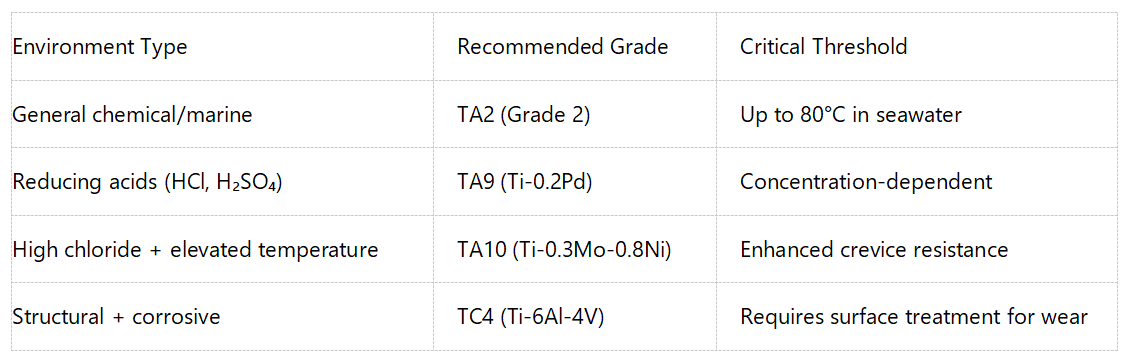
Not all titanium grades perform equivalently under corrosive attack. Commercially pure grades-TA1 (Grade 1), TA2 (Grade 2), and TA3 (Grade 3)-offer excellent corrosion resistance across most oxidizing environments, with TA2 serving as the default industrial choice due to its balanced combination of strength, formability, and weldability. TA1 provides maximum ductility for deep drawing applications, while TA3 delivers higher tensile strength (approximately 450 MPa) at the cost of reduced formability.
However, pure titanium exhibits significant vulnerability in specific chemical environments. Hydrofluoric acid aggressively attacks titanium at any concentration. Reducing acids-including hydrochloric and sulfuric acids-can destabilize the passive film under certain temperature-concentration combinations. Wet chlorine gas environments also pose risks for standard grades.
For these aggressive conditions, palladium-alloyed grades provide superior protection. TA9 (Ti-0.2Pd, Grade 7) and TA10 (Ti-0.3Mo-0.8Ni, Grade 12) incorporate noble metal additions that lower hydrogen evolution overpotential, shifting the corrosion potential into the passive region even in reducing acid media. TA10 demonstrates outstanding crevice corrosion resistance and outperforms TA2 in chloride-containing and reducing environments. TA9 offers enhanced corrosion resistance compared to TA2 while maintaining good weldability. For applications involving saturated chlorine with salt traces at temperatures of 120–130°C and pH 2, Ti-0.5Pd (Grade 7) provides proven crevice-corrosion resistance.
- Selection Protocol:
When specifying titanium plate per ASTM B265-the governing standard covering annealed titanium and titanium alloy strip, sheet, and plate-the chemical composition requirements for nitrogen, carbon, hydrogen, iron, and oxygen must be verified against the intended service environment.