In the previous two articles, we systematically examined the root causes and corrective actions for non‑uniform chemical polishing of titanium alloys. Starting from defect classification, we clarified the mechanisms behind orange peel, flow marks, and pitting. We then discussed the critical process variables-HF/HNO₃ ratio, temperature control, bath aging, and fluid dynamics-demonstrating that non‑uniformity is not a random defect but a predictable consequence of parameters drifting outside their optimal ranges.
However, even a perfectly controlled polishing process can be ruined by improper post‑treatment. In this third installment, we focus on the steps that follow polishing: rinsing, passivation, drying, and alloy‑specific considerations. We will explain why the "last few steps" often become the true source of non‑uniform defects, and provide actionable checkpoints to ensure that a uniform polish is preserved through to the finished part.
7. Post-Polishing Treatment: Rinsing, Passivation, and Drying
Even a perfectly uniform polish can be ruined by improper post-treatment. After removal from the polishing bath, the workpiece carries a layer of acidic solution that continues to react if not rinsed. Delayed rinsing produces uneven etch marks as solution drains and pools on the surface.
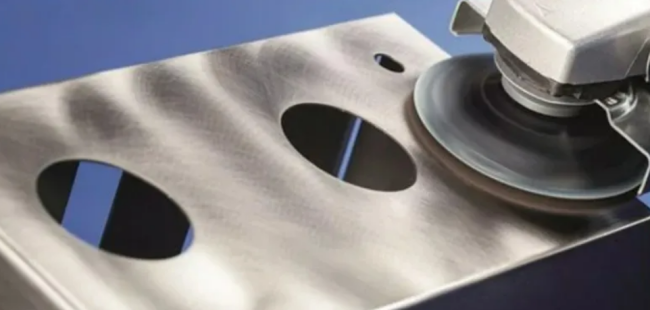
The recommended sequence: immediate immersion in flowing deionized water, followed by a second rinse in fresh deionized water. For critical applications, a neutralizing rinse in 3–5% nitric acid removes residual fluorides and promotes the formation of a clean, uniform passive layer. Nitric acid is an effective passivating agent for titanium, and this step substantially improves corrosion resistance uniformity.
Drying should be performed with clean, filtered warm air. Airborne particulates landing on a wet polished surface will spots that cannot be easily removed without re-polishing. For high-value components, a final hot deionized water rinse followed by centrifugal or vacuum drying eliminates water-spotting entirely.
8. Alloy-Specific Considerations
Different titanium alloys respond differently to chemical polishing. CP titanium (Grade 1–4), being single-phase α, generally polishes more uniformly than α+β alloys like Ti-6Al-4V (TC4) or near-β alloys like Ti-10V-2Fe-3Al (TB6). In two-phase alloys, the β phase has different electrochemical behavior than the α phase. Under certain HF/HNO₃ ratios, the β phase dissolves preferentially, producing a micro-roughness that appears as orange peel at the macro scale.
For two-phase alloys, slightly higher HNO₃ concentrations within the acceptable range help control β phase attack by promoting a more uniform passive film. For near-β and β alloys, some practitioners reduce the HF concentration to 2–3% and increase processing time correspondingly to achieve leveling without differential phase attack. There is no universal recipe-batch testing on representative samples is essential when switching alloy grades.
Conclusion
Titanium chemical polishing non-uniformity is not an inevitable production defect but a predictable outcome of specific process variables operating outside their optimal ranges. The most common root causes-HF/HNO₃ ratio imbalance, temperature gradients, bath aging, inadequate agitation, and inconsistent pre-treatment-are all addressable through disciplined process control.
For shops experiencing recurring uniformity issues, a systematic audit of these five parameters will identify the primary contributor in most cases. The solution rarely requires exotic chemistry or equipment. Instead, it demands attention to the fundamentals: stable temperature control, active solution movement, regular bath maintenance, and rigorous pre-cleaning. When these elements are properly managed, titanium chemical polishing delivers the bright, uniform surfaces that the process is capable of producing.