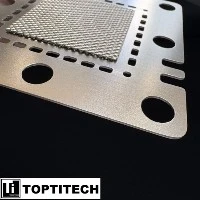

 Porous metal filters are functional materials manufactured from metal powders, woven meshes, or fibers through precision sintering processes, forming three-dimensional interconnected pore structures that combine the mechanical properties of metals with the filtration characteristics of porous materials. Their industrial applications extend far beyond simple solid-liquid separation, serving as multifunctional core components across various sectors.
I. Precision Filtration and Separation Technology
The core functionality of porous metal filters lies in their precisely controllable pore size distribution, enabling filtration at different accuracy grades:
Ultra-Clean Gas Filtration: Nickel-based or 316L stainless steel porous filters in semiconductor manufacturing achieve ULPA (Ultra Low Penetration Air) classification, ensuring particulate concentrations below 0.1μg/m³ in cleanroom environments.
High-Temperature Gas Dedusting: Filters made from Hastelloy or Inconel series materials operate continuously at 800°C, deployed in high-temperature flue gas treatment systems for coal-fired power plants.
Emulsion Separation: Through surface energy modulation, titanium-based porous membranes achieve efficient demulsification of oil-water emulsions with separation efficiency exceeding 99.9%.
II. Fluid Dynamics Control Systems
The unique pore structure of porous metals makes them ideal fluid control elements:
Pressure Buffering Devices: Multi-layer sintered metal filters in high-pressure natural gas transmission systems control pressure fluctuations within ±0.5bar while simultaneously filtering particulates.
Precision Flow Regulation: Gradient pore design enables linear flow control within Reynolds number ranges of 5-5000, used in chemical process metering systems.
Acoustic Attenuation: Porous metal silencers in aircraft engine fuel systems reduce fluid noise by 20-35dB while maintaining fuel filtration functionality.
 III. Process Intensification and Reaction Engineering
As functionalized carriers, porous metals play crucial roles in process industries:
Catalytic Reactors: Catalyst-loaded porous metal substrates demonstrate 3-5 times higher mass transfer efficiency than traditional packed-bed reactors with 60% reduced pressure drop.
Gas Distribution Systems: Titanium porous gas spargers in bioreactors achieve oxygen mass transfer coefficients (kLa) exceeding 200h⁻¹.
Electrochemical Reactors: As porous transport layers (PTL) in PEM electrolyzers, sintered titanium materials provide excellent electron conduction and gas management capabilities.
IV. Safety Protection Systems
The flame arrestment and explosion-proof characteristics stem from their high specific surface area and thermal conductivity:
Flame Arrestors: Stainless steel porous flame arrestors comply with EN ISO 16852 certification, preventing deflagration flame propagation exceeding 300m/s.
Breather Valve Protection: Porous metal filters installed before chemical storage tank breather valves enable simultaneous vapor recovery and explosion protection.
Nuclear-Grade Filters: Nickel-alloy porous filters for nuclear power plant ventilation systems meet ASME N509 standards.
V. Thermal Management and Energy Systems
The unique structure of porous metals shows significant potential in energy applications:
Phase Change Heat Exchangers: Copper porous wicks in heat pipes generate capillary forces exceeding 20kPa, with heat transfer density 5-8 times higher than conventional radiators.
Fuel Cells: As gas diffusion layers in PEMFCs, carbon fiber-reinforced porous metals provide exceptional electrical conductivity and water management capabilities.
Liquid Metal Cooling: Porous tungsten materials effectively control flow and heat transfer of liquid lithium-lead alloys in fusion reactor blanket systems.