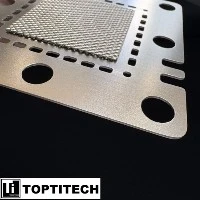

What are the inspection standards for sintered mesh filter elements?
Regular inspection and maintenance are essential to ensure filters' optimal performance and longevity. Here are the recommended steps for inspecting and maintaining sintered mesh filter elements:
1. Visual Inspection:
- Begin by visually inspecting the filter element for any signs of physical damage, such as cracks, dents, or deformities.
- Check for loose or damaged components, including seals, gaskets, or support structures.
- Look for signs of corrosion or chemical attack on the mesh surface or the filter housing.
2. Cleanliness Check:
- Examine the filter element for accumulated dirt, debris, or contaminants.
- If the filter appears clogged or excessively dirty, it may require cleaning or replacement.
3. Pressure Drop Measurement:
- Measure the pressure drop across the filter element using a pressure gauge.
- A significant increase in pressure drop indicates a potential clogging or reduced filter efficiency.
4. Integrity Testing:
- Perform an integrity test to ensure the filter element's structural integrity and the absence of any leaks.
- Common integrity testing methods include bubble point test, pressure decay test, or diffusive flow test.
5. Particle Retention Efficiency:
- If feasible, conduct a particle retention efficiency test to verify the filter element's filtration performance.
- Use calibrated test equipment to introduce known-sized test particles and measure their retention by the filter.
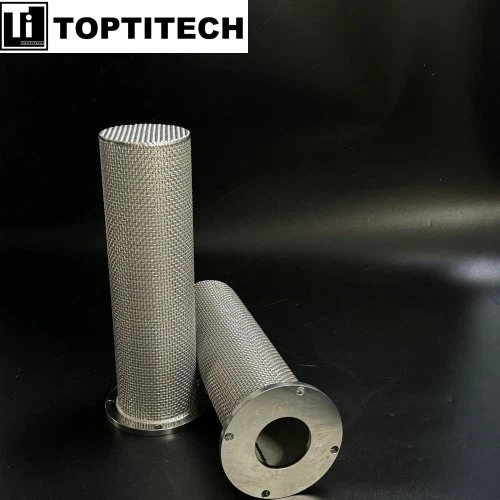

How to maintain and repair sintered mesh filters?
1. Cleaning:
- If the filter element is dirty but still within acceptable pressure drop limits, consider cleaning it.
- Follow the manufacturer's guidelines for the appropriate cleaning method, including backwashing, ultrasonic cleaning, or chemical cleaning.
2. Replacement:
- It should be replaced if the filter element is damaged, excessively clogged, or fails to meet performance requirements.
- Use genuine replacement parts recommended by TOPTITECH to ensure compatibility and optimal performance.
- Follow proper installation procedures, including correct orientation and sealing of the new filter element.
3. Documentation:
- Maintain comprehensive records of inspections, maintenance, and repairs performed on the sintered mesh filter elements.
- Document the dates, observations, test results, and any corrective actions taken.
- This documentation will help track the filter's service life, identify recurring issues, and plan preventive maintenance.