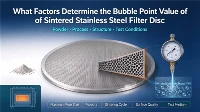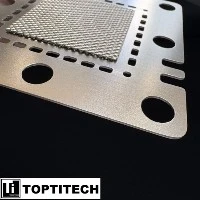


Titanium felt (also known as sintered titanium fiber felt) is a three-dimensional porous functional material manufactured from micron-sized titanium metal fibers through a process of layering and high-temperature vacuum sintering. It combines the strength of metal, the corrosion resistance of titanium, and the air and water permeability of porous materials, making it a core material in the filtration, catalysis, and electrochemical sectors.
In the current market environment, the price of titanium felt can range drastically from tens of RMB to tens of thousands of RMB per unit. This significant price disparity is not accidental but is determined by multiple dimensions, including the underlying raw material basis, process complexity, application-specific customization, and supply chain brand premiums.
This article from TOPTITECH provides a systematic analysis of the following dimensions:
Raw Material Costs: The Genetic Difference Between Pure Titanium and Alloys
The price of titanium felt is first determined by its "genes"-that is, the raw material. Depending on the type of metal fiber used, costs exhibit significant gradations.
Standard Materials: Conventional industrial filtration using commercially pure titanium is more expensive than stainless steel but remains relatively controllable.
High-End Materials: Titanium alloys (e.g., titanium-palladium alloy) used in medical or highly corrosive environments, or coated titanium felts (e.g., platinum-coated, iridium-coated) for specialized electrochemical functions, involve exponentially higher raw material costs.

Upstream Linkage Effect: The upstream material for titanium felt is titanium sponge. Since 2025, strong demand from the aerospace and military sectors for high-end titanium sponge (Grade 0) has kept its price at a persistently high level, hovering between 52,000 and 54,000 RMB per ton. This directly increases the blank material cost for high-end titanium felt. In contrast, the price fluctuation of ordinary titanium sponge is relatively stable. This "structural differentiation" in upstream raw materials is directly transmitted downstream to titanium felt products.
Production Processes: The Threshold of Transformation from Fiber to Finished Product
Transforming titanium raw material into felt is a high-energy-consumption, technology-intensive process. The complexity of the process is a core factor driving price differentiation.
Difficulty of Fiber Preparation: Titanium fiber preparation primarily uses drawing or cutting methods. The drawing method can produce micron-sized fibers with uniform diameter but suffers from low yield and high energy consumption; felt made from these high-cost fibers commands a price far higher than products made using ordinary processes.
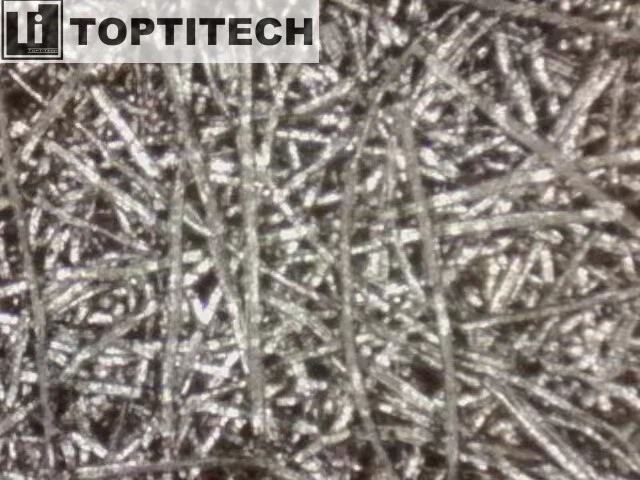
Sintering Process Control: Sintering must occur at high temperatures (typically above 1000°C) in a vacuum or protective atmosphere. For products requiring specific porosity, thickness, or graded pore sizes, the control of the sintering temperature curve and time is extremely stringent. The equipment investment and technical yield are directly reflected in the price. For example, titanium felt used as a gas diffusion layer in PEM electrolyzers requires extremely high and uniformly distributed porosity; its processing cost often exceeds the cost of the raw material itself.
Performance Indicators and Downstream Applications: The Value Gap Between General Use and Specialized Use
 The ultimate application scenario dictates the stringency of the required performance indicators, representing the most intuitive manifestation of price differences.
Low-End Market (General Filtration): Used for ordinary liquid filtration in the chemical and pharmaceutical industries, requirements for precision and pressure resistance are relatively lenient, and products tend to be standardized. This segment faces intense competition, resulting in lower prices.
Mid-End Market (Industrial Grade): Used in the chlor-alkali industry and general electrolysis environments, requiring good corrosion resistance and electrical conductivity. Prices for such products typically range from hundreds to thousands of RMB per square meter.
High-End Market (Strategic Emerging Industries): This represents the "ceiling" for titanium felt prices, particularly in the hydrogen energy sector (PEM water electrolysis, fuel cells).
Gas Diffusion Layer (GDL) Application: In PEM electrolyzers, titanium felt serves as the gas diffusion layer, needing to perform multiple functions: conducting electrons, expelling gases, and supporting the membrane electrode assembly. With the proliferation of megawatt-scale electrolyzers, stringent requirements are placed on thickness uniformity (e.g., below 200 microns), surface contact resistance, and long-term dynamic stability of the titanium felt.
Global Differences in Supply Chain, Branding, and Certification
In the context of globalized supply chains, origin and branding also contribute significantly to price disparities.
Domestic vs. International Price Gap: European manufacturers (e.g., Bekaert), leveraging decades of patent accumulation and technological monopoly, hold a dominant position in the high-end gas diffusion layer market. Their quoted prices for similar products are typically 2-3 times higher than those of Chinese domestic manufacturers.
Certification Premium: Titanium felt intended for use in aerospace, nuclear industry, or medical implants must undergo stringent quality system certifications (e.g., ASME, ISO 58322 medical standards). These certification costs and the associated time investment are ultimately reflected in the product's high price.
Procurement Volume and Customization: Price differences between single-unit purchases and small-batch customizations are substantial. For instance, one manufacturer lists a single-unit price for titanium felt at approximately 120 RMB, while the per-unit price for batches of 20 or more can drop to around 100 RMB, demonstrating the economies of scale in bulk purchasing. For customers requiring custom-molded dimensions, specific thicknesses, or surface coatings (e.g., platinum, iridium), the price is typically several times that of standard products.
Conclusion
In summary, the vast price range in the titanium felt market is essentially a superimposition of three factors: "Material Genes + Technological Barriers + Application Scenarios."
For general industrial users, products meeting basic filtration needs are readily available, with transparent prices and intense competition. However, for users in strategic fields such as hydrogen energy and aerospace, they are purchasing not just titanium felt, but a high-precision, highly stable engineering solution. Consequently, the price commanded is correspondingly higher.