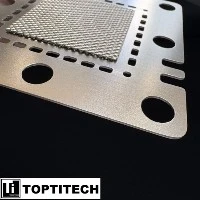

The titanium fiber felt market presents a perplexing reality for procurement specialists and engineers: seemingly identical specifications carry price tags that vary by 300-500% across suppliers. As global demand surges-with the market projected to grow from $27 million in 2024 to $60 million by 2032 at a CAGR of 12%-understanding the technical drivers behind these price differentials becomes essential for informed purchasing decisions.
The answer lies not in supplier markup strategies but in five critical raw material and processing parameters that fundamentally alter product performance, longevity, and manufacturing yield.
1. Titanium Sponge Grade and Chemical Composition
The foundation of any titanium fiber felt begins with the raw titanium sponge-and the grade selection creates the first significant cost divergence.

Commercial pure titanium grades (TA1/Gr1 vs. TA2/Gr2) establish baseline pricing differentials of 20-40%. Grade 1 titanium (TA1) requires oxygen content below 0.18% and iron below 0.20%, while Grade 2 (TA2) permits higher interstitial element concentrations with oxygen up to 0.25% and iron up to 0.30%. This seemingly minor compositional difference translates directly into corrosion resistance capabilities and mechanical performance.
For demanding applications-PEM electrolyzer gas diffusion layers operating in highly oxidative environments, aerospace hydraulic systems, or medical implants requiring biocompatibility certification-Grade 1 purity (99.7% minimum titanium content) remains non-negotiable. The extraction and refining processes required to achieve this purity level consume substantially more energy and generate higher scrap rates, driving raw material costs upward by 30-50% compared to Grade 2 alternatives.
The price differential extends beyond raw sponge. Impurity control-particularly for oxygen, nitrogen, and hydrogen-demands rigorous testing protocols. Suppliers serving high-reliability sectors maintain in-house spectrographic analysis capabilities and lot traceability systems, adding 15-25% to quality assurance costs that low-end competitors circumvent.
2. Fiber Diameter Uniformity and Aspect Ratio
The transition from titanium sponge to functional fibers represents the most technically demanding stage of production-and the largest variable cost center.
Fiber diameter directly correlates with both performance and price. Standard commercial grades typically utilize 30-60 micron diameter fibers, offering acceptable performance for general filtration applications at moderate price points. However, advanced applications demand finer fibers:
- 20-30 micron fibers: Required for high-efficiency PEM electrolyzer gas diffusion layers, enabling optimized water management and reduced ohmic losses. Achieving a consistent diameter below 30 microns requires precision fiber drawing or melt-spinning equipment with capital costs exceeding $2 million per production line.
- Sub-20 micron fibers: Emerging applications in high-performance fuel cells and battery electrodes demand fiber diameters below 20 microns, pushing manufacturing yields below 60% and elevating finished product costs by 100-150%.

The critical parameter often overlooked is fiber diameter distribution uniformity. Premium manufacturers employ laser diffraction particle sizing and automated optical inspection to ensure standard deviations below 5 microns. In contrast, low-cost producers accept broader distributions (10-15 micron deviations), which create localized current density variations in electrochemical applications and premature failure in filtration systems.
The fiber aspect ratio (length-to-diameter) equally impacts felt integrity. Fibers produced via cluster drawing technology maintain optimal aspect ratios (100:1 to 500:1) that maximize fiber entanglement strength during sintering. Cheaper production methods using chopped fibers create shorter aspect ratios, reducing mechanical integrity and necessitating thicker, heavier felts to achieve equivalent strength.
3. Porosity Control and Permeability Specifications
Porosity represents the most frequently manipulated specification-and the most common source of quality deception in the titanium fiber felt market.

Porosity percentage ranges from 30% for dense, high-strength configurations to 80% for maximum permeability applications. Each 10% increase in porosity typically adds 15-20% to manufacturing costs due to:
- Reduced fiber packing density, requiring more precise layering control
- Increased sintering complexity to maintain structural integrity
- Higher rejection rates for porosity uniformity failures
The true differentiator lies in pore size distribution and maximum pore diameter. Suppliers targeting premium markets utilize bubble point pressure testing to certify maximum pore diameters within ±5 microns of specifications. This testing adds $500-2,000 per batch in quality control costs but ensures predictable pressure drop characteristics.
Low-cost suppliers often certify only average pore size-a statistically misleading metric-while accepting maximum pore diameters 2-3 times the specified values. For filtration applications, these oversized pores allow contaminant bypass. For electrochemical applications, they create hot spots and uneven current distribution that accelerate degradation.
Permeability (typically expressed in L/min·cm² at specified pressure differentials) further distinguishes premium products. High-end titanium fiber felt achieves permeability variations below ±5% across entire sheet surfaces through automated fiber layering systems with closed-loop thickness control. Entry-level products often exhibit ±15-20% permeability variation, forcing designers to oversize systems to accommodate worst-case pressure drops.