

-
Titanium electrodes have many advantages, today TOPTITECH will give an introduction for you:
►The size of the anode remains stable, ensuring a consistent cell voltage during electrolysis operations.
-
►Low working voltage results in reduced power consumption, saving approximately 10% to 20% of DC power. -
►Titanium anodes have a long working life, with resistance to chlorine and alkali corrosion, lasting over 6 years compared to graphite anodes' 8-month lifespan. -
►Titanium electrodes prevent dissolution issues found in graphite and lead anodes, improving product purity. -
►They allow for higher current density electrolysis operations. -
►In chlor-alkali production, titanium anodes enhance product quality by increasing purity, reducing CO2 content, and raising alkali concentration, resulting in energy savings. -
►Titanium anodes exhibit strong corrosion resistance, making them suitable for electrolytic processes with corrosive and specialized electrolytes. -
-
►They prevent short circuit problems associated with deformed lead anodes, improving current efficiency.
-
►Titanium anodes are lightweight, reducing labor intensity. -
►They enable high-temperature and high-current-density chlorate electrolysis. -
Factors Affecting the Service Life of Titanium Anodes:
-
Current density: Anode life decreases with higher current density. -
Titanium substrate: The anode substrate should be pure titanium, preferably TA1 or higher, as insufficient purity reduces corrosion resistance and affects anode life. -
Electrolyte: Avoid electrolytes containing fluoride ions, cyanide ions, or sulfur ions, as they significantly impact anode life. -
Polarity reversal: Avoid polarity reversal during anode repair to prevent damage to the passivated coating. -
Minimize power outages: Extended immersion in the solution during power outages can damage the anode coating. -
Man-made damage: Anode surfaces should be free from hard scratches, as even small scratches can rapidly corrode and passivate the anode, leading to failure. -
Short circuits: Prevent cathode-anode contact during power-on situations, as the resulting high-current can burn the plates.
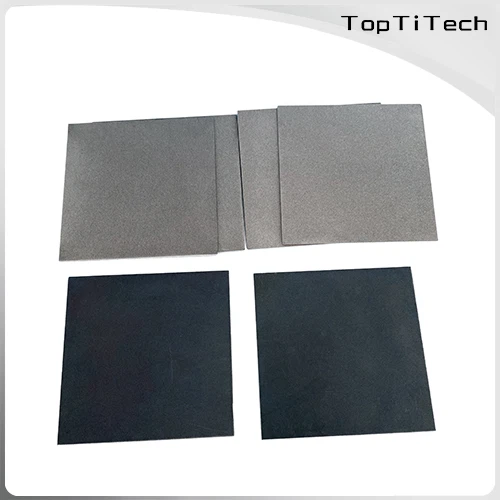 titanium anode and titanium cathode
 titanium electrode
 titanium anodes