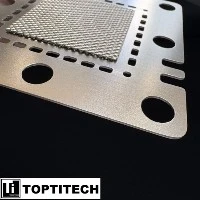

The manufacturing of titanium heads involves spinning and forging techniques. During the spinning process, a flat or hollow blank is secured onto a spinning machine's die. As the blank rotates, it undergoes localized plastic deformation under the pressure applied by a rotating wheel or rod. This deformation gradually extends across the entire surface of the blank, shaping it into the desired form.
Spinning offers advantages in terms of equipment and mold simplicity, allowing for the creation of various curved shapes. However, it has drawbacks such as low productivity and high labor intensity, making it suitable mainly for trial production and small batches.
To withstand the high loads encountered during spinning, it is necessary to use high-strength forging dies and apply hard lubricating film treatments to prevent wear and adhesion. Intermediate annealing may be performed to prevent cracking and ensure deformability. Phosphatization of the stainless steel head can be done to maintain optimal lubrication.
In cases where a welded joint is present in the titanium head, a welding process card and evaluation are required. The welding method employed, such as electrode arc welding, submerged arc automatic welding, or gas-shielded welding, depends on the head material and plate thickness. Post-weld heat treatment is crucial, and different heat treatment categories may be necessary depending on the material and forming process.
For larger assembled heads, it is important to ensure that the excess height of the weld meets specified requirements to prevent friction and hinder metal flow during stamping. Welds located near the edge of the plate should be ground flat to reduce friction during the punching process.
Understanding the pressing and stamping spinning process for titanium heads is crucial. Heads play a critical role in pressure vessel equipment used in industries such as food, pharmaceuticals, petrochemicals, and atomic energy. The quality of heads directly impacts the long-term safety and reliability of pressure vessels, as they cannot be disassembled after welding. Following the appropriate stamping process is essential to ensure optimal performance.