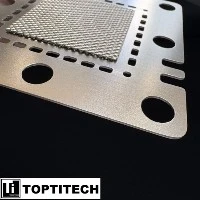

Why is titanium alloy considered a challenging material to work with? This is primarily due to the limited understanding of its processing mechanisms and phenomena.
1. Complex Physical Phenomena in Titanium Processing
Processing titanium alloy poses significant difficulties despite its cutting force being only slightly higher than that of steel with similar hardness. The physical phenomena involved in titanium alloy processing are far more intricate compared to steel.
Titanium alloys exhibit extremely low thermal conductivity, approximately 1/7th that of steel and 1/16th that of aluminum. This characteristic leads to heat being retained within the cutting area, resulting in elevated temperatures exceeding 1,000°C. Consequently, the cutting tool experiences rapid wear, cracks, and "built-up edge" formation, exacerbating heat generation and reducing tool lifespan.
The high temperatures generated during cutting also compromise the surface integrity of titanium alloy parts, diminishing their precision and fatigue strength due to work hardening.
The elastic deformation of titanium alloy workpieces, while advantageous for part performance, becomes a significant cause of vibration during cutting. The cutting pressure causes the "elastic" workpiece to move away from the tool and rebound, leading to increased friction between the tool and the workpiece. This friction generates additional heat, exacerbating the poor thermal conductivity of titanium alloys.
This problem becomes more pronounced when machining thin-walled or ring-shaped parts prone to deformation. Achieving the desired dimensional accuracy for thin-walled titanium alloy parts is challenging. As the tool pushes against the workpiece, localized deformation of the thin wall exceeds the elastic limit, resulting in plastic deformation and increased strength and hardness at the cutting point. Consequently, the original cutting speed becomes too high, further accelerating tool wear.

2. Technical Know-How for Titanium Alloy Processing
Based on an understanding of the titanium alloy processing mechanism and previous experience, the following key tips are crucial for processing titanium alloys:
(1) Use tools with a positive cutting-edge angle to minimize cutting force, heat generation, and workpiece deformation.
(2) Maintain a constant feed rate to prevent work hardening. The tool should always be in a feeding state during cutting, with a radial feed equal to 30% of the milling radius.
(3) Utilize high-pressure, high-flow cutting fluids to ensure thermal stability during processing, prevent surface degradation of the workpiece, and mitigate tool damage caused by high temperatures.
(4) Maintain sharp tool edges, as dull tools contribute to heat accumulation and wear, leading to tool failure.
(5) Whenever possible, process titanium alloys in their softest state. Processing becomes more challenging after hardening, as heat treatment improves data strength but increases blade wear.
(6) Employ large tip arc radii or chamfering cuts to engage as much of the tool edge as possible, reducing cutting forces and heat at each point and preventing localized damage. In milling titanium alloys, cutting speed (VC) has the most significant impact on tool life, followed by radial cutting depth (milling depth, ae).
3. Addressing Titanium Processing Challenges through Tooling
Groove wear on the blade is a common issue in titanium alloy machining, occurring at the front and back along the cutting depth direction. This wear is often attributed to the hardened layer left from previous processing. Chemical reactions and diffusion between the tool and workpiece data at temperatures above 800°C also contribute to groove wear. During processing, titanium molecules accumulate in front of the blade and "weld" to it under high pressure and temperature, forming chip adhesion. When these nodules detach from the blade, they carry away the carbide coating. Therefore, special tool information and shapes are required for machining titanium alloys.
4. Tool Structures Suited for Titanium Processing
The primary focus in titanium alloy processing is managing heat, and the use of high-pressure cutting fluids allows for timely and efficient heat removal. Specialized milling cutters with unique structures for titanium alloy processing are available on the market.
By understanding the complexities of titanium alloy processing and employing appropriate techniques and tooling, manufacturers can overcome the challenges associated with this remarkable material and achieve high-quality results.
Contact:
If you have any questions, please feel free to contact us. Working hours: 8:30 a.m. to 17:30 p.m.
E-mail: zhangjixia@bjygti.com