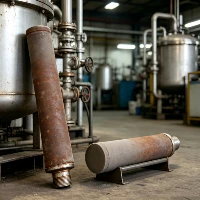


Titanium tubes, known for their exceptional performance, exhibit unique advantages in various fields. Among these, hardness stands as a crucial indicator of titanium tube performance, significantly influencing its lifespan and stability. As a fundamental physical property, hardness measures a material's ability to resist external pressures and abrasion. Through precise processing, titanium tubes typically achieve a hardness range of HR 30-40. This remarkable hardness ensures excellent wear resistance and corrosion resistance, preventing deformation and enhancing their pressure-bearing capacity.
The hardness of titanium tubes is closely linked to their overall performance. High hardness not only signifies excellent wear and corrosion resistance but also enables them to maintain stable performance in harsh environments, such as high temperatures and pressures. Moreover, as hardness increases, titanium tubes exhibit higher tensile and yield strength, reducing the risk of deformation or fracture under heavy loads.
In practical applications, hardness plays a vital role in determining the lifespan of titanium tubes. Tubes with higher hardness exhibit longer service lives and maintain optimal performance in complex environments. For instance, in industries such as chemical reactors, pressure vessels, marine, and aerospace, employing high-hardness titanium tubes significantly improves equipment durability and safety.



To maximize the benefits of titanium tubes, manufacturers and engineers focus on optimizing hardness. By fine-tuning the processing parameters and alloy composition, they can achieve desired hardness levels tailored to specific applications. This approach ensures that titanium tubes possess the ideal balance of hardness, strength, and corrosion resistance, providing extended service life and reliable performance in demanding operational conditions.
The exceptional hardness of titanium tubes opens up a wide range of applications across industries. In the aerospace sector, titanium tubes with high hardness contribute to the lightweight design of aircraft while maintaining structural integrity under extreme conditions. In the medical field, they find utility in orthopedic implants, benefiting from their hardness and biocompatibility. Furthermore, advancements in manufacturing techniques, such as additive manufacturing and surface treatments, continue to expand the possibilities for achieving customized hardness profiles in titanium tubes, further enhancing their performance and applicability.