

Titanium alloy welding wire is a high-performance welding material composed of titanium alloy and flux. With various types such as Ti-6Al-4V, Ti-5Al-2.5Fe, and Ti-8Al-1Mo, categorized based on the composition of the titanium alloy, and flux containing elements like tin, nickel, and chromium, titanium alloy welding wire caters to different welding requirements.
How to Choose the Right Titanium Alloy Welding Wire
When selecting titanium alloy welding wire, several factors need to be considered, including the material of the workpiece, usage requirements, and welding process. Here are some fundamental principles to guide the selection process while minimizing repetition:
1. Match the Composition:
Choose welding wire with a composition similar to the workpiece to ensure welding quality and joint performance.
2. Consider Process Requirements:
Select welding wire with appropriate composition and diameter based on specific process requirements. For instance, thicker workpieces require larger diameter wires.
3. Quality Control:
Pay attention to the impurity content and surface quality of the welding wire, as excessive impurities or poor surface quality can impact welding results.
4. Hardness Selection:
Choose welding wire with the desired hardness based on the specific needs, as excessively high or low hardness can affect welding performance.
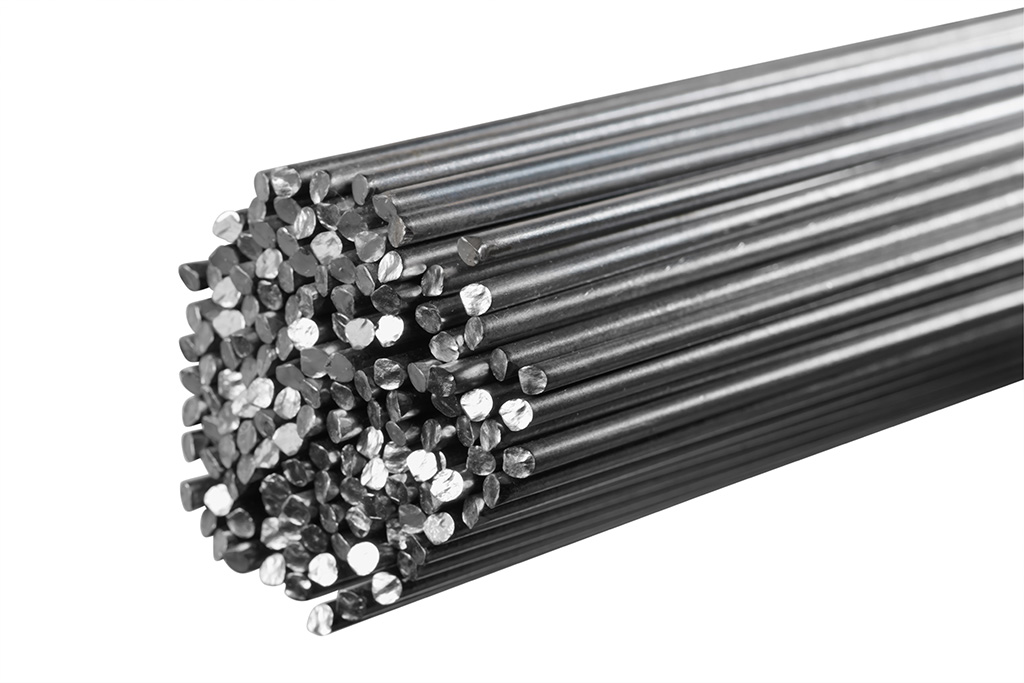
Advantages of Titanium Alloy Welding Wire:

Titanium alloy welding wire offers several significant advantages, making it an ideal choice for various high-end applications:
1. Excellent Corrosion Resistance:
Titanium alloy exhibits excellent corrosion resistance in various environments, ensuring long-term structural stability.
2. High Strength:
Titanium alloy possesses high strength and hardness, enabling it to withstand substantial loads and impacts.
3. Lightweight:
With its low density, titanium alloy helps reduce the weight of structures, enhancing overall efficiency.
4. Ease of Processing:
Titanium alloy welding wire is easy to process and shape, facilitating subsequent operations like cutting and turning.
Applications of Titanium Alloy Welding Wire

Titanium alloy welding wire finds extensive applications in aerospace, automotive, and chemical industries
- Aerospace
Used in manufacturing aircraft, rockets, and other aerospace components, titanium alloy welding wire ensures stability and safety under extreme conditions.
- Automotive
In automotive manufacturing, titanium alloy welding wire is employed to produce critical components such as engine parts and chassis, enhancing corrosion resistance and strength.
- Chemical Industry
Ideal for corrosive and high-strength components in chemical equipment, titanium alloy welding wire is a preferred choice.
Differentiating the Quality of Titanium Alloy Welding Wire
To assess the quality of titanium alloy welding wire, the following methods can be employed:
1. Sound Test
Roll the welding wire in your palm and listen to the sound. A clear and crisp sound indicates a dry wire, while a dull sound suggests moisture contamination.
2. Short Circuit Test
Short-circuit the welding wire in the welding circuit for a few seconds and observe the flux coating for particle-like spots. The presence of such spots indicates possible moisture contamination.
3. Rust Inspection
Check the core of the welding wire for signs of rust. Rusty wires should not be used for critical projects involving low hydrogen welding.
4. Bend Test
For wires with thick coatings, slowly bend them up to 120 degrees and inspect the coating for signs of detachment or cracks, indicating moisture contamination.


