Shape Memory: Shape memory refers to a phenomenon where a material, such as Nitinol, can regain its original shape after undergoing deformation. This occurs through a thermally induced phase transformation process. When the parent phase is cooled below the Mf temperature, forming martensite, and then deformed at a temperature below Mf, it can automatically return to its original shape upon heating below the Af temperature.
Superelasticity: Superelasticity, also known as pseudoelasticity, describes the ability of a material to exhibit a large recoverable strain under external forces. Unlike shape memory, superelasticity does not involve thermal effects. When subjected to stress, the alloy undergoes stress-induced martensitic transformation while in the parent phase, resulting in mechanical behavior distinct from ordinary materials. Its elastic limit exceeds that of conventional materials, and it does not follow Hooke's Law.
In comparison to shape memory properties, superelasticity does not rely on temperature changes. Hyperelasticity refers to stress-strain behavior within a specific deformation range, where stress does not increase proportionally with strain. Hyperelasticity can be classified as linear or nonlinear. Linear hyperelasticity exhibits a stress-strain relationship close to linear, while nonlinear hyperelasticity involves stress-induced martensitic transformation and its inverse during loading and unloading, often referred to as transformation pseudoelasticity.

Sensitivityto Intraoral Temperature Change: Stainless steel and CoCr alloy orthodontic wires are generally not affected by changes in intraoral temperature. However, the orthodontic force exerted by superelastic nickel-titanium alloy orthodontic wire can vary with oral temperature.
When the deformation amount remains constant, an increase in temperature enhances the recovery power. This can accelerate tooth movement by stimulating blood flow in the capillaries affected by orthodontic devices. The increased blood flow nourishes repair cells, maintaining their vitality and normal function. However, orthodontists may face challenges in precisely controlling or measuring orthodontic forces in the oral environment.

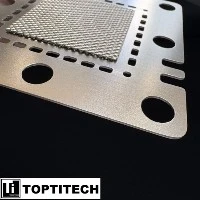
NiTi alloy from TopTiTech

NiTi alloy wire from TopTiTech
Corrosion Resistance: Studies indicate that the corrosion resistance of nickel-titanium wire is comparable to that of stainless steel wire.
Biocompatibility: Nickel-titanium shape memory alloy, such as Nitinol, possesses unique chemical composition, consisting of atomic alloys like nickel-titanium with approximately 50% nickel content. Nickel is known to have carcinogenic and cancer-promoting effects. However, the surface layer of titanium oxide acts as a barrier, resulting in good biocompatibility of Ni-Ti alloys.