Sintered mesh and sintered felt are commonly used filter products, but they differ in several aspects. Below, the editor of TOPTITECH will analyze the five major differences between these two filtration products.
1. Dirt-Holding Capacity: Sintered felt has a higher dirt-holding capacity compared to sintered mesh due to differences in their production processes.
2. Cleaning Cycle: Sintered felt requires a longer cleaning cycle compared to sintered mesh due to its ability to hold a larger amount of dirt.
3. Filtration Precision: Sintered mesh is made by sintering overlapped metal woven meshes with different structures, while sintered felt is
created by layering metal fiber wires with varying pore sizes. As a result, sintered mesh offers greater filtration accuracy than sintered felt.
4. Blind Porosity: Sintered mesh has minimal or no blind holes, whereas sintered felt may have a small number of blind holes due to its production process.
5. Production Materials: Sintered mesh is made from metal woven mesh, while sintered felt is composed of metal fiber wire.
In summary, sintered mesh and sintered felt differ in terms of dirt-holding capacity, cleaning cycle, filtration precision, blind porosity, and production materials. These distinctions influence their performance and suitability for various filtration applications.

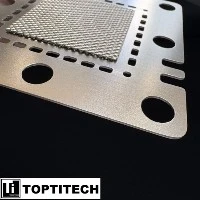
Sintered mesh
 Sintered fiber felt