

The water circulation system filter is a type of filter that utilizes its filtering function to directly capture impurities in water. It effectively removes suspended and particulate impurities, reducing water turbidity, purifying water quality, and minimizing dirt, bacteria, and algae in the system. This enables the purification of water for reuse in the circulation system.
The working principle of the water circulation system filter involves the following steps. Water enters the filter through the inlet and initially passes through a coarse filter, which removes larger particulate impurities. The water then reaches a finer filter. During the filtration process, impurities gradually accumulate within the finer filter, forming a layer of filtered impurities. As the impurity layer builds up on the inner side of the filter, a noticeable pressure difference develops between the inner and outer sides of the filter.
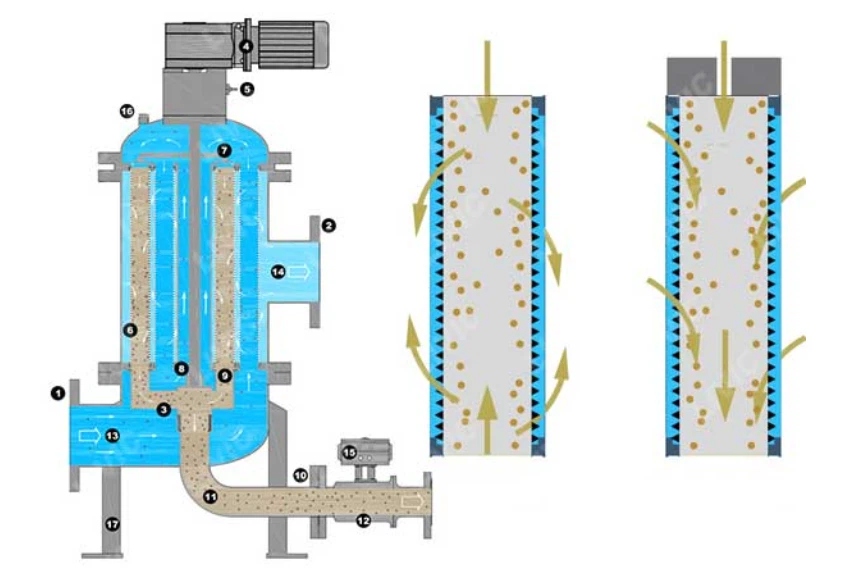
Once the pressure difference in the water circulation system filter reaches a predetermined value, the automatic cleaning process is initiated. During this process, clean water continues to flow into the system. When the cleaning valve is opened, the water pressure within the cleaning chamber and the sewage suction device drops significantly. The pressure difference in the sewage suction pipe creates a suction force between the suction nozzle and the cleaning chamber, facilitating the suction of sewage.
Simultaneously, an electric motor drives the suction pipe to perform a spiral movement along the axial direction. This combination of axial and rotary movements of the dirt suction device effectively cleans the entire inner surface of the filter screen. The entire cleaning process can be completed within a matter of seconds. Once cleaning is finished, the blowdown valve closes, and the filter is ready for the next flushing cycle.