
The potential of hydrogen as a clean energy source is gaining recognition worldwide, and China is making remarkable strides in this field. While electrolyzing water with renewable energy has been making headlines, Chinese scientists have taken it a step further by directly electrolyzing seawater, a groundbreaking innovation.
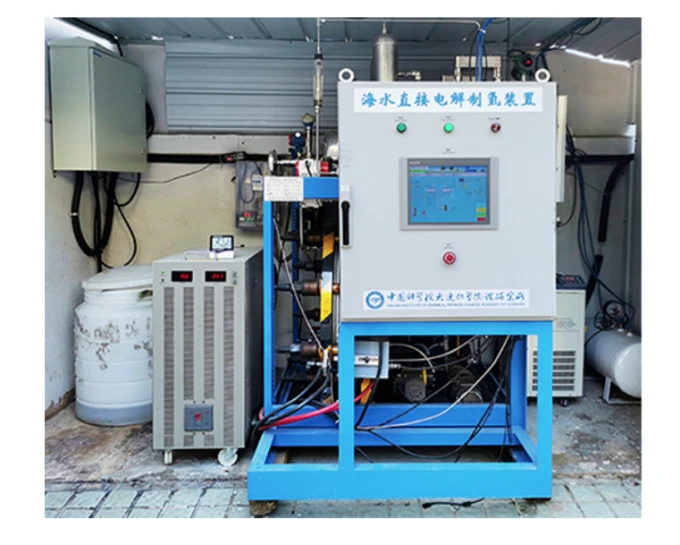
Led by scientist Wang Erdong from the Dalian Institute of Chemical Physics, a branch of the Chinese Academy of Sciences, the team recently announced a major achievement: over 2000 consecutive hours of stable hydrogen production from seawater. What sets their system apart is not only its effectiveness but also its impressive energy efficiency, with an average DC power consumption of just 4.04 kWh per cubic meter of hydrogen.
Direct electrolysis of seawater may sound simple, but it poses significant challenges. The sea is a complex mixture of various ionic elements, including chloride, magnesium, and calcium ions. These ions have been known to trigger unwanted side reactions, leading to issues such as chlorine precipitation and equipment corrosion, which hinder the reliability and efficiency of the process.
To overcome these challenges, the team adopted a comprehensive approach. They conducted extensive research, developed specialized materials, and designed integrated systems. Their efforts focused on catalyst development, electrode reactions, and electrolyte regulation.
Their achievements include the creation of advanced chlorine-resistant electrodes for oxygen evolution, electrodes that prevent calcium and magnesium ion deposition during hydrogen evolution, a highly efficient electrolyzer design tailored for seawater, and automated control technology for electrolyte concentration. These innovations are not merely theoretical; the team has filed 17 patent applications related to seawater electrolysis, establishing a strong intellectual property portfolio.
The performance of their 1 cubic meter per hour seawater electrolysis unit is particularly impressive. Utilizing natural seawater from the Dalian Sea, the unit exhibited outstanding results during its 2000-hour test run: an average chamber voltage of 1.69V, energy efficiency of 4.04 kWh per cubic meter of hydrogen, and an oxygen chlorine content of less than 20 parts per billion.
Driven by their ambition, Wang Erdong and his team are already working on the next iteration, aiming to double the current density of the electrolyzer under the same voltage, further enhancing its efficiency.