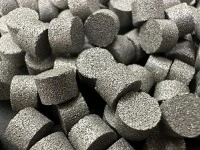

The economics of green hydrogen face a well-known hurdle: production costs. Today, making a kilogram of hydrogen from renewables sets you back $3.5 to $6.5, compared with $2.0 to $3.5 for the natural-gas route with carbon capture. The difference comes down largely to what you pay upfront for the electrolyzer stack. In PEM designs, the bipolar plates and diffusion layers alone account for over 40% of stack cost, making them an obvious target for cost reduction. The platinized titanium felt used on the anode side of the cell contributes to lower overall hydrogen costs through three distinct channels.
Electricity typically eats up about half to three‑quarters of the operating budget for a running electrolyzer-figures generally fall between 47% and 78%, depending on local power prices and the system's efficiency. By depositing platinum onto the titanium fibers, the contact barrier at the catalyst‑plate junction drops noticeably. With that barrier lowered, ohmic losses shrink, and the cell needs less voltage to push the same current. Less voltage across the cell means fewer kilowatt‑hours consumed per kilogram of hydrogen produced.


Service life is another important factor. The anode environment in a PEM cell is notoriously aggressive-high potential, strong acidity, and abundant oxygen. Titanium stands up to these harsh surroundings better than most other metals, which is why titanium parts alone can represent around 70% of the material bill for a typical PEM stack. Platinum does two things here-it carries current and it keeps the titanium beneath from oxidizing. Without that protection, an oxide film would gradually form on the surface, pushing contact resistance up and dragging cell performance down. The coating sticks well to the titanium substrate and takes heat cycling and repeated on‑off switching in stride, without flaking or peeling off. A diffusion layer that lasts longer lets the upfront investment in the stack be recovered over a greater number of operating hours and more hydrogen production, easing the depreciation burden on each kilogram.
Higher current density is often cited as a strength of PEM electrolysis, yet that strength comes with stricter requirements for mass transport. The felt has an open, fibrous structure-roughly 70% of its volume is void space-so liquid feed can reach the catalyst and oxygen bubbles can get away from the surface without much trouble. This helps avoid the concentration losses and voltage swings that plague poorly designed diffusion layers. When gas leaves the electrode quickly, the cell holds steady at elevated current densities, turning the same active area into more hydrogen per hour. That extra output from each stack lowers the capital cost attributable to every kilogram of hydrogen produced.

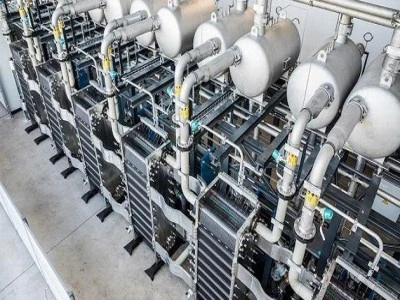
Add up those three benefits-less electricity consumption, longer service life, and the ability to run at higher current densities-and the platinized titanium felt turns out to be far more than a simple conductive element. It makes a real difference in the overall economics of PEM electrolysis. With the global market for this material projected to grow from about $23 million in 2025 to roughly $125 million by 2032, its part in driving down the cost of green hydrogen will only become more pronounced.